


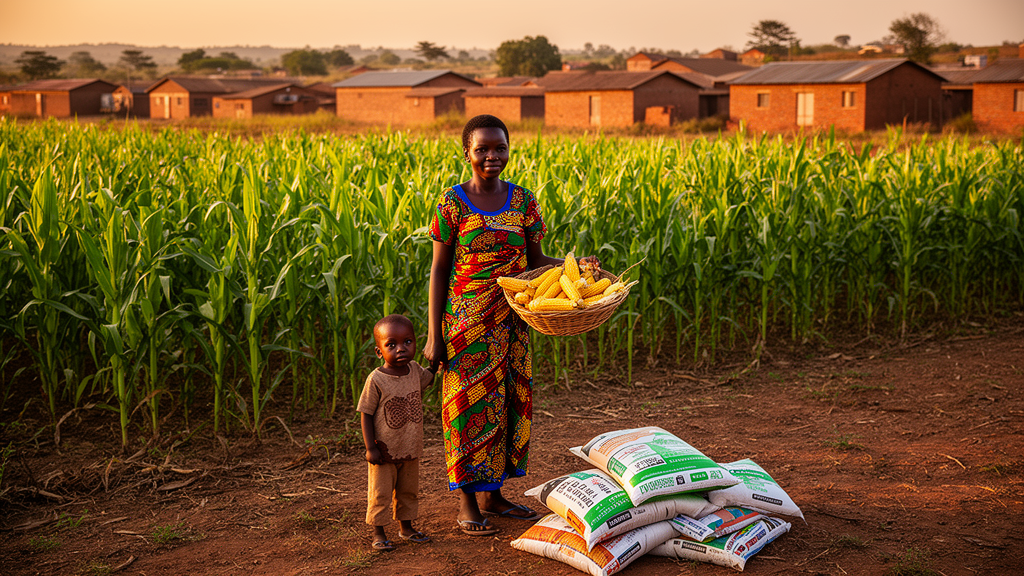
A study of Malawi’s Farm Input Subsidy Program has found that agricultural input subsidies are associated with better nutrition among children under five, even as food security alone showed no significant influence on child nutrition. The research, published open access in BMC Nutrition on 17 October 2026 by Abigail Chari, analysed data from two waves of the Integrated Household Survey (2019/20 and 2024/25) conducted by the Malawi National Statistics Office, and used thematic maps alongside instrumental variable methods to examine how input availability, food security and child nutrition interact.
The findings reveal stark regional disparities across Malawi in child nutrition, subsidy receipt and food security. The southern region had a higher proportion of households receiving farm input subsidy program coupons than the central and northern regions. Yet despite this greater access to subsidised inputs, the southern region also experienced a high prevalence of food insecurity and child undernutrition, measured in terms of low height-for-age, low weight-for-age and low weight-for-height. This combination of higher coupon coverage and worse outcomes in the south underscores that subsidy distribution alone does not map neatly onto nutritional well-being across the country.
Child undernutrition remains a global health challenge that burdens developing countries most heavily, particularly poor households in rural areas. In Malawi, food insecurity, low agricultural productivity and child undernutrition have persisted despite government efforts to provide subsidised agricultural inputs to farmers. Previous studies have established the factors affecting child nutrition, but less has been known about the interaction between input schemes, food security and nutrition among children under five in Malawi, a gap the study set out to address.
Using instrumental variable methods, the study found that agricultural input subsidies are associated with better child nutrition. Because the analysis is observational, this association does not by itself prove that subsidies cause improved nutritional outcomes, but the statistical approach was chosen to strengthen the inference drawn from the survey data. In contrast, the study indicated that food security insignificantly influences child nutrition in Malawi, a result the authors highlight as important for understanding where undernutrition originates.
The disaggregated results add further nuance. The association between agricultural inputs and child nutrition was stronger among children from rural households and among children from patrilineal households. This pattern suggests that the benefits of subsidised inputs are not distributed uniformly across Malawian society, and that household structure and location shape how input access relates to children’s nutritional status.
The authors argue that policymakers should integrate agricultural input subsidies into health and nutrition strategies to achieve significant improvements in nutrition status, noting that such integration would contribute towards the attainment of the Sustainable Development Goals. Understanding the interaction between input availability, food security and child nutrition, they write, is essential for determining where undernutrition originates and for enhancing resource allocation to those who need it.
The study’s reliance on two waves of a national household survey means its conclusions rest on the quality and coverage of that data, and the authors note that the research adds to existing literature rather than closing the question. The abstract indicates the work is being shared early to provide faster access to peer-reviewed, accepted research; this version is citable and carries a permanent DOI but remains subject to further edits before the final Version of Record is published.
For Malawi, where the government has long invested in subsidising agricultural inputs in an effort to raise productivity and food security, the study’s central message is that the pathway from subsidised seeds and fertiliser to a child’s height-for-age and weight runs through mechanisms that food security measures alone do not fully capture. The regional mapping of coupon receipt, food insecurity and undernutrition provides a geographic picture that could inform where nutrition-focused interventions are targeted alongside agricultural support.
Subject of Research: The association between Malawi's agricultural input subsidy scheme, food security and nutrition among children under five
Article Title: Agricultural input subsidy scheme, food security and nutrition among under-five children in Malawi
Article References: Chari, A. (2026). Agricultural input subsidy scheme, food security and nutrition among under-five children in Malawi. BMC Nutrition. https://doi.org/10.1186/s40795-026-01516-9
Image Credits: AI Generated
DOI: 10.1186/s40795-026-01516-9
Keywords: Malawi, Farm Input Subsidy Program, child nutrition, food security, under-five children, agricultural subsidies, undernutrition, Integrated Household Survey, regional disparities, instrumental variable methods, BMC Nutrition, rural households
News Source: Daisy Hatcher. (October 29, 2026). Farm input subsidies linked to better child nutrition in Malawi study. Scienmag.



