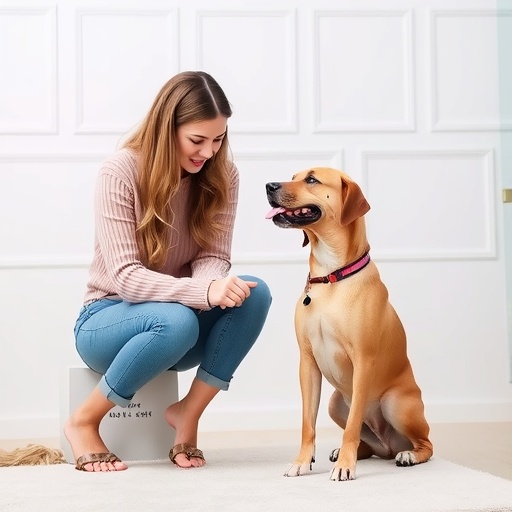
Title: Understanding the Dynamics of Dog-Directed Communication: Insights on Size and Familiarity
In the evolving landscape of human-animal interactions, understanding the nuances of dog-directed communication, particularly among female dog owners, has emerged as a critical area of research. A recent study spearheaded by Filep et al. provides invaluable insights into how a dog’s body size and the owner’s familiarity with the pet influence their communicative behaviors. The findings suggest that these factors significantly shape how owners interact with their dogs, ultimately paving the way for improved pet training and human-canine bonding.
The study delves into the intricacies of how female owners modify their verbal and non-verbal communication based on the size of their canine companions. Larger breeds may elicit a more dominant communicative style, characterized by authoritative tones and commanding gestures, while smaller breeds might trigger a softer, more nurturing approach. This dynamic illustrates the importance of breed-specific factors in training methodologies and social interactions between dogs and their owners.
As the research unfolds, it becomes clear that familiarity plays a pivotal role in these communication patterns. Owners who have had longer relationships with their dogs exhibit different styles compared to those who are new owners. Familiarity fosters a unique understanding of the pet’s behavior, leading to more tailored and effective communication. This individualized approach is critical for improving training outcomes and enhancing the overall relationship between dogs and their owners.
The study incorporates a multidisciplinary perspective, combining elements from psychology, ethology, and behavioral science to analyze dog-directed communication. The researchers utilized observational studies, where female owners interacted with dogs of varying sizes, enabling them to gather a wealth of data on vocalizations, gestures, and emotional responses. This comprehensive approach ensures a rich understanding of the communication landscape between humans and dogs.
Moreover, the implications of these findings extend beyond mere academic interest. As dog ownership continues to rise globally, understanding the complex dynamics of human-dog interactions can lead to more effective training techniques and improved welfare for pets. Owners can utilize these insights to adapt their communication styles, ensuring that their dogs are not only well-trained but also emotionally supported.
The study also raises questions about the universality of these communication patterns across different demographics. While the focus has been on female owners, it invites further exploration into how male owners or owners from various cultural backgrounds may exhibit different styles of communication with their dogs. This line of inquiry could lead to a more comprehensive understanding of how gender and cultural factors influence human-animal interactions.
Significantly, the research contributes to the ongoing discussion about the anthropomorphism of pets. Fostering strong emotional connections between humans and their dogs often leads to more pronounced communicative behaviors, sometimes blurring the line between treating pets as companions and as children. This phenomenon warrants careful consideration and additional research, particularly regarding its psychological implications for both parties.
The potential for these findings to influence veterinary practices and pet training programs cannot be underestimated. Educators and trainers can incorporate these insights into their curricula, emphasizing the importance of adapting communication techniques based on a dog’s size and the owner’s experience level. This evidence-based approach enhances the efficacy of training programs and encourages a deeper understanding of canine psychology.
Looking forward, further studies could explore how these communication patterns evolve as dogs age or when new family members are introduced. Understanding these dynamics can provide invaluable knowledge for owners navigating the complexities of multi-pet households or transitioning through significant life changes. The relationship between dog owners and their pets is continually evolving, and recognizing each individual dog’s needs is essential for fostering lasting bonds.
In examining the societal implications of this research, it becomes apparent that as dog ownership increases, so does the responsibility of owners to cultivate effective communication strategies with their pets. The commitment to understanding and adapting their interactions can lead to healthier, more meaningful relationships. Ultimately, this research advocates for a dialogue on responsible pet ownership, emphasizing education and awareness around dog-directed communication.
As we continue to unravel the complexities of human-animal relationships, studies like those conducted by Filep et al. not only shed light on the importance of understanding dog behavior but also underscore the emotional and psychological connections we share with our pets. These findings could inspire a new wave of research, addressing the varying dimensions of human-animal communication.
In conclusion, the interplay of familiarity, the body size of dogs, and the communicative behaviors of female owners offers groundbreaking insights into the world of dog-directed communication. By acknowledging and applying these findings, we can enhance the bonds we share with our canine companions while ensuring their training and socialization are rooted in understanding and empathy.
With the expanding field of animal cognition and communication, continued research holds the promise of enriching both human and canine experiences. As we look to the future, it is vital for dog owners to consider the insights provided by such studies, not only to improve their relationship with their dog but to foster an environment of respect and understanding that benefits everyone involved.
By embracing these revelations, we stand on the cusp of transforming how we perceive and interact with our dogs, paving the way for a deeper connection that transcends verbal communication. The journey towards enhanced dog-directed communication is one worth embarking upon, leading to richer relationships and greater fulfillment for both humans and their beloved pets.
Subject of Research: Dog-directed communication among female owners in relation to dog body size and familiarity.
Article Title: The effect of familiarity and dog’s body size on female owners’ dog-directed communication.
Article References: Filep, L.A., Koós-Hutás, É., Hollay, F. et al. The effect of familiarity and dog’s body size on female owners’ dog-directed communication. Anim Cogn (2026). https://doi.org/10.1007/s10071-025-02041-1
Image Credits: AI Generated
DOI: https://doi.org/10.1007/s10071-025-02041-1
Keywords: Dog communication, human-animal interactions, dog size, owner familiarity, pet training, behavioral science.
Tags: authoritative vs nurturing communication stylesbreed-specific communication techniquesdog communication stylesdog training methodologies for different breedsenhancing human-canine bonding through communicationfemale dog owner behaviorshuman-animal interaction dynamicsimpact of dog size on communicationinsights into owner-dog relationshipsrole of familiarity in pet trainingunderstanding canine body languageverbal and non-verbal communication with dogs