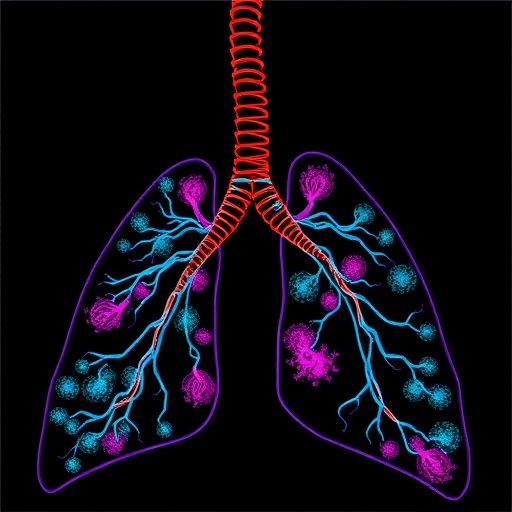
Small cell lung cancer (SCLC) accounts for approximately 15% of lung cancer diagnoses and remains one of oncology’s most aggressive diseases. Its rapid growth, early spread to distant organs, and tendency to recur after an initial response have contributed to a five-year survival rate of below 7%. Although platinum-based chemotherapy, radiation, and newer immunotherapies can temporarily control the disease, durable responses remain uncommon. In contrast to non-small cell lung cancer, where molecularly targeted treatments have transformed care for selected patients, SCLC has yielded relatively few actionable therapeutic drivers.
A new experimental study published in The Journal of Higher Education Press reports that alternative forms of focal adhesion kinase, or FAK, may represent an important and previously underexplored vulnerability in SCLC. The research, titled “Unraveling the intricacies of small cell lung cancer: FAK splicing variants as a new feature and therapeutic vulnerability of small cell lung cancer,” examined how changes in RNA processing produce FAK protein variants with properties distinct from the canonical form of the kinase. The findings suggest that these variants may influence tumor growth, invasion, and resistance to treatment.
Alternative splicing is a molecular process that allows a single gene to generate multiple messenger RNA transcripts. By selectively including or excluding specific exons, cells can produce proteins with different domains, structures, locations, and biochemical activities. This mechanism is essential in normal tissues, but it can become distorted in cancer. Abnormal splicing may create protein isoforms that support uncontrolled proliferation, alter interactions between tumor cells and their surroundings, or weaken responses to therapy. In SCLC, however, the full range and functional importance of these splicing events remain incompletely characterized.
FAK is a non-receptor tyrosine kinase that normally transmits signals generated at focal adhesions, specialized structures connecting cells to the extracellular matrix. Through its kinase activity and interactions with signaling proteins, FAK helps regulate adhesion, cytoskeletal organization, migration, survival, and mechanical responses. In many cancers, elevated FAK activity is associated with aggressive behavior and poor clinical outcomes. The new study focused on whether alternative splicing could create FAK forms that are particularly important in SCLC, where the disease’s defining genetic alterations—near-universal loss of TP53 and RB1 function—have not directly translated into effective targeted therapies.
The investigators identified FAK splicing variants that were preferentially expressed in SCLC compared with normal lung tissue and non-small cell lung cancer. According to the study, these variants arose through alternative exon inclusion or exclusion, producing proteins with altered functional characteristics. Compared with canonical FAK, the variant proteins displayed enhanced kinase activity and distinct patterns of subcellular localization. Such differences are biologically significant because the location of a signaling protein within the cell can determine which substrates it encounters and which downstream pathways it activates.
Laboratory experiments indicated that the FAK variants promoted several malignant features of SCLC cells. Cells expressing the variants showed increased proliferation, migration, and invasion, while reducing variant expression impaired tumor-associated behavior in cell-based systems and in animal models. The reported effects were linked to activation of major signaling networks, including the PI3K/AKT, MAPK, and STAT3 pathways. These pathways regulate cell survival, metabolism, proliferation, inflammatory signaling, and resistance to stress, making their coordinated activation potentially important for the highly aggressive biology of SCLC.
The study also connected FAK splicing variants to treatment resistance. SCLC is initially sensitive to chemotherapy and radiation in many patients, but surviving tumor cells can rapidly repopulate the disease. In the experiments, cells with high levels of the FAK variants displayed reduced apoptosis after exposure to chemotherapy or radiation. Apoptosis is a programmed form of cell death that many anticancer treatments are designed to trigger. Conversely, suppressing the variants increased treatment sensitivity, suggesting that altered FAK signaling may help tumor cells survive DNA damage and other stresses imposed by standard therapies.
To test the therapeutic implications of the findings, the researchers used small-molecule FAK inhibitors. These compounds reduced the kinase activity associated with the FAK variants and increased the sensitivity of SCLC cells to chemotherapy. In preclinical models, combining FAK inhibition with conventional treatment produced synergistic effects, meaning the combined response was greater than that achieved with either intervention alone. The results provide a rationale for evaluating FAK-directed combinations in SCLC, although laboratory success does not guarantee clinical benefit. Drug exposure, toxicity, tumor heterogeneity, and the ability of cancer cells to bypass blocked pathways will all require careful assessment.
The findings raise the possibility that FAK splicing variant expression could become a biomarker for selecting patients most likely to benefit from FAK-targeted therapy. They also underscore the broader importance of examining RNA processing, rather than focusing solely on DNA mutations, when searching for cancer vulnerabilities. Several questions remain unresolved, including which splicing factors drive the production of these variants, how their expression changes during tumor progression, and whether they are linked to specific SCLC subtypes or degrees of neuroendocrine differentiation. Clinical trials will ultimately be necessary to determine whether inhibiting FAK variants can improve outcomes for patients whose disease remains one of the most difficult challenges in cancer medicine.
Subject of Research: Experimental study
Article Title: Unraveling the intricacies of small cell lung cancer: FAK splicing variants as a new feature and therapeutic vulnerability of small cell lung cancer
Web References: https://doi.org/10.1007/s11684-026-1215-1
References: DOI: 10.1007/s11684-026-1215-1
Image Credits: HIGHER EDUCATION PRESS
Keywords: Small cell lung cancer, focal adhesion kinase, FAK splicing variants, alternative splicing, cancer therapy resistance, chemotherapy, radiation, PI3K/AKT, MAPK, STAT3, targeted therapy
Tags: alternative splicing in oncologycancer cell signaling pathwaysFAK protein isoformsFAK splicing variantsmolecular heterogeneity in lung cancernovel targets for SCLC treatmentRNA processing in cancersmall cell lung cancertargeted therapy developmenttherapeutic vulnerabilitytreatment resistance in SCLCtumor invasion mechanisms