Scientists in Korea investigate the abundance, characteristics, and potential sources of microplastic pollutants in agricultural soil samples
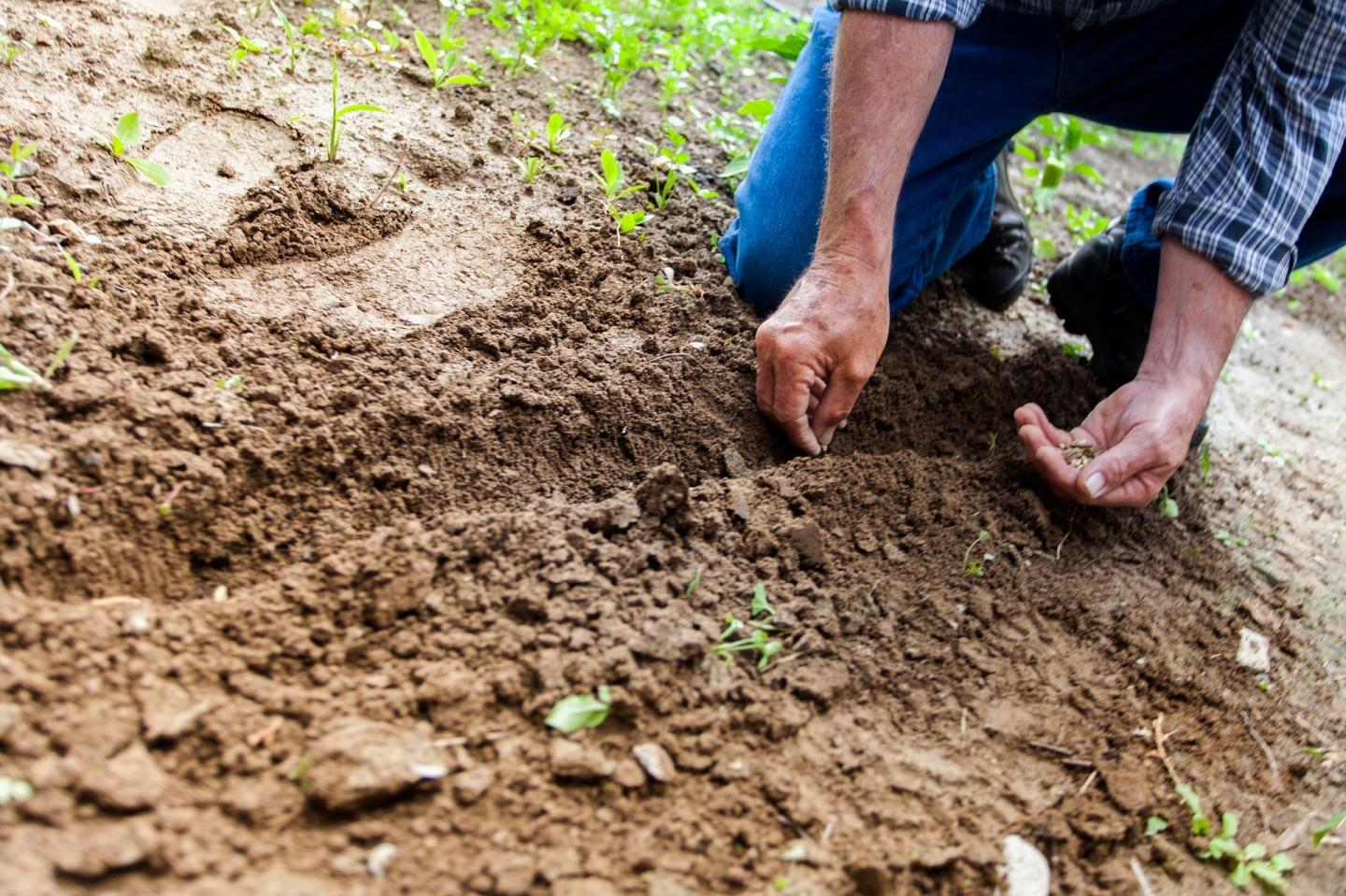
Credit: StockSnap from Pixabay
Plastic, with its unabated global production, is a major and persistent contributor to environmental pollution. In fact, the accumulation of plastic debris in our environment is only expected to increase in the future. “Microplastics” (MP)–plastic debris
Scientists from Incheon National University, Korea, headed by Prof. Seung-Kyu Kim, now explore these questions in their latest study published in Journal of Hazardous Materials. “Most studies on MPs have focused on the marine environment, but substantial amounts of MPs can be generated in the agricultural environment via weathering and fragmentation of plastic products used in agricultural practices. We hoped to find out the amount of MPs in Korean agricultural soils and how they change according to different agricultural practices and environmental conditions,” says Prof. Kim.
For their study, the scientists examined four soil types corresponding to different agricultural practices: soils from outside and inside a greenhouse (GS-out and GS-in, respectively), mulching (MS), and rice field soil (RS). Of these, the former three samples represented the use of polyethylene film, while the RS sample represented little to no use of plastic. To minimize the effect of non-agricultural sources of MP, scientists collected the samples from rural farmlands during the dry season. They only considered MPs in the size range of 0.1-5 and classified them as per their shapes: fragment (uneven), sheet (thin an even), spherule (round), and fiber (thread-like).
As expected, scientists found the highest average MP abundance in GS-in and GS-out (GS-in > GS-out), but surprisingly, they found the lowest MP content in MS rather than RS. Further, they found that among the different shapes of MPs, fragments dominated GS-in; fibers, GS-out and MS; and sheets, RS. Interestingly, all soils except GS-in had a major contribution from sheets, which hinted towards potential internal sources of fragment-type MPs within greenhouses.
Scientists also observed an interesting trend regarding MP size distribution in the soil samples. They found that, unlike GS-out, MS, and RS (which showed MP abundance only for a range of sizes), GS-in showed an increasing abundance for progressively smaller sizes. They attributed this to the absence of “environmental fate effect,” causing the removal of MPs by surface-runoff, infiltration, and wind in the GS-in samples. Prof. Kim explains, “Contrary to previous studies which stress on MPs originating mostly from external sources, our study reveals that MPs in agricultural soil can come from external as well as internal sources, and that their concentration and sizes can be strongly affected by environmental conditions,”
These findings can contribute to an enhanced understanding of the role of agricultural environment as an MP source. Hopefully, assessing potential risks of MPs in agricultural soils and establishing efficient management strategies can help us to reduce the threat from MPs.
###
Reference
Authors: Seung-Kyu Kim (1,2), Ji-Su Kim (1), Hwang Lee (2), and Hee-Jee Lee (1)
Title of original paper: Abundance and characteristics of microplastics in soils with different
agricultural practices: Importance of sources with internal origin and environmental fate
Journal: Journal of Hazardous Materials
DOI: 10.1016/j.jhazmat.2020.123997
Affiliations:
(1) Department of Marine Science, College of Natural Sciences, Incheon National University
(2) Research Institute of Basic Sciences, Incheon National University
About Incheon National University
Incheon National University (INU) is a comprehensive, student-focused university. It was founded in 1979 and given university status in 1988. One of the largest universities in South Korea, it houses nearly 14,000 students and 500 faculty members. In 2010, INU merged with Incheon City College to expand capacity and open more curricula. With its commitment to academic excellence and an unrelenting devotion to innovative research, INU offers its students real-world internship experiences. INU not only focuses on studying and learning but also strives to provide a supportive environment for students to follow their passion, grow, and, as their slogan says, be INspired.
Website: http://www.
About the author
Professor Seung-Kyu Kim received a BS in Oceanography, as well as a MS and a PhD in Environmental Chemistry, from Seoul National University in Korea. He is an environmental chemist interested in the environmental fate and transport of environmental pollutants, as well as assessing their human and ecological effects. Over the past few years, his team has assessed the behavior, distribution, budget, and exposure of microplastics and their associated chemicals from freshwater systems to the open ocean. Their research goal is to determine their mass flows on a regional and global scale, through lab- and field-based studies.
Media Contact
Seung-Kyu Kim
[email protected]
Original Source
http://www.
Related Journal Article
http://dx.