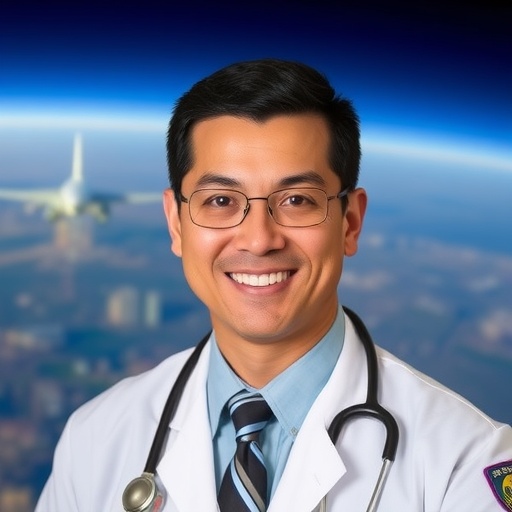
Melchor Antuñano, an aerospace medicine specialist who spent 34 years helping shape aviation health and safety policy in the United States, has joined the University of Central Florida’s College of Medicine. His appointment places one of the field’s most experienced leaders at the center of UCF’s effort to build a major program focused on the medical challenges of flight, space travel and extreme environments. Antuñano will serve as a professor, chief technologist and medical innovation officer, bringing decades of experience in aviation physiology, pilot certification, human factors and aerospace safety to a university preparing for a new era of commercial spaceflight and long-duration exploration.
At UCF, Antuñano will help develop technologies and procedures designed to protect astronauts, pilots and passengers from the physical stresses of flight. He will also contribute to the creation of a master’s degree in aerospace medicine and a residency program for physicians who want to specialize in the health risks associated with aviation and space travel. His work will extend beyond the College of Medicine, with teaching and collaboration planned across UCF’s colleges. The goal is to connect medicine with engineering, computer science, psychology and other disciplines capable of solving problems that become increasingly complex as humans travel farther and remain in hostile environments longer.
Antuñano is also joining UCF’s Center for Aerospace and Extreme Environments Medicine, known as CASEEM. The multidisciplinary center is designed to investigate how the human body responds to conditions such as microgravity, radiation, isolation, extreme temperatures and restricted mobility. These stresses can affect nearly every major physiological system. Microgravity, for example, causes fluids to shift toward the upper body, changes cardiovascular regulation and accelerates bone and muscle loss. Radiation exposure may damage cells and increase long-term health risks, while isolation and disrupted sleep can affect cognition, mood and decision-making. Research addressing these challenges may also generate medical innovations for patients on Earth, including improved remote monitoring, compact diagnostic devices and new approaches to preventing tissue damage.
The center’s research will not be limited to astronauts. CASEEM is intended to serve people operating in other extreme environments, including military personnel, deep-sea explorers, mountain climbers and emergency responders. These populations face overlapping medical problems: limited access to care, environmental stress, delayed evacuation and the need to make rapid decisions with incomplete information. Aerospace medicine therefore depends on more than treating illness after it occurs. It emphasizes prevention, risk assessment, physiological monitoring and the design of systems that allow people to remain healthy and effective under pressure. Antuñano’s new role will focus on translating that knowledge into practical tools, clinical procedures and training programs.
Before becoming a physician, Antuñano had already begun working in emergency care and aviation. Born in Mexico City, he volunteered with the Red Cross and a national rescue squad as a paramedic, rescue worker and emergency medical technician. His early experiences taught him to improvise when equipment and resources were limited. He has recalled constructing a red emergency light for his car from a cooking pot because he could not afford a standard device. That resourcefulness later became a defining feature of his scientific career, influencing how he approached laboratory research, medical technology and operational safety.
During medical school at the National Autonomous University of Mexico, Antuñano encountered aviation medicine and began volunteering at the Mexican government’s National Center of Aviation Medicine. There, he studied aviation physiology, including the effects of altitude and the operation of pressure-related training systems. He also gained experience in human factors during aircraft accident investigations and in the medical certification of pilots. Aviation medicine examines how flight environments influence the body and how human limitations can interact with aircraft design, workload, fatigue and decision-making. The discipline is crucial because a pilot’s health can affect not only individual survival but also the safety of everyone aboard an aircraft.
Antuñano later pursued postgraduate training in the United States after discovering that Wright State University School of Medicine in Dayton, Ohio, offered the country’s only civilian aerospace medicine residency program at the time. He reportedly wrote to senior federal officials, including President Ronald Reagan, to learn where he could receive specialized training. At Wright State, he earned both a residency and a master’s degree in aerospace medicine. His graduate research examined a portable head-cooling system intended to protect Air Force personnel from heat exposure. To conduct the experiments, he created a makeshift thermal chamber in the kitchen of a residents’ lounge by combining heaters and other equipment. The project earned him the Aerospace Medical Association’s Young Investigator Award.
His research career continued with a two-year postdoctoral fellowship through the National Research Council at the U.S. Air Force School of Aerospace Medicine. He then worked as a contract scientist developing personal cooling technology for people wearing protective suits against nuclear, biological and chemical hazards. Such suits can prevent heat from escaping the body, creating a serious risk of heat stress during demanding operations. Cooling systems must therefore remove enough heat to protect the wearer without restricting movement or interfering with breathing, communication or protective performance. This combination of physiology, engineering and operational design became a foundation for Antuñano’s later work in aviation and aerospace safety.
Antuñano joined the Federal Aviation Administration in 1992 and held leadership positions in its Medical Education and Medical Certification divisions at the Civil Aerospace Medical Institute in Oklahoma City. The institute evaluates aviation health risks, trains physicians who conduct pilot examinations in the United States and approximately 90 other countries, and performs research in aerospace medicine and human factors. Antuñano became its director in 2001 and remained in the position until retiring earlier this year, making him the longest-serving director in the institute’s history and the longest-serving senior executive in the FAA’s history. At UCF, he will now apply that operational experience to a rapidly changing field in which private space companies, expanding commercial launch activity and plans for lunar and Martian missions are creating new medical questions. The university has also opened an aerospace medicine clinic that provides medical certification examinations for astronauts and pilots in the region. Antuñano says his next mission is to advance research while training future physicians, scientists and innovators who can turn extreme-environment medicine into safer exploration and better healthcare on Earth.
Subject of Research: Aerospace medicine, aviation physiology, space medicine, human factors, medical innovation and health risks in extreme environments.
Article Title: FAA Aerospace Medicine Leader Melchor Antuñano Joins UCF to Advance Human Health in Space and Extreme Environments
Web References:
https://med.ucf.edu/aerospace-medicine/
https://med.ucf.edu/aerospace-medicine/caseem-center-for-aerospace/
https://mediasvc.eurekalert.org/Api/v1/Multimedia/d4fcab99-5f02-4ef3-bacd-b9086bd35cfb/Rendition/low-res/Content/Public
References: UCF College of Medicine; Federal Aviation Administration Civil Aerospace Medical Institute; Aerospace Medical Association.
Image Credits: Photo by UCF College of Medicine.
Keywords: Space medicine, space research, medical specialties, aviation, airplanes, spacecraft, aircraft, aerospace medicine.
Tags: aerospace medical education programsAerospace medicineaerospace safety technology developmentastronaut health protectionaviation health and safety policycommercial spaceflight health risksextreme environment medicineinterdisciplinary collaboration in aerospace medicinelong-duration space exploration healthpilot certification and human factorsspace travel medical challengesUCF College of Medicine