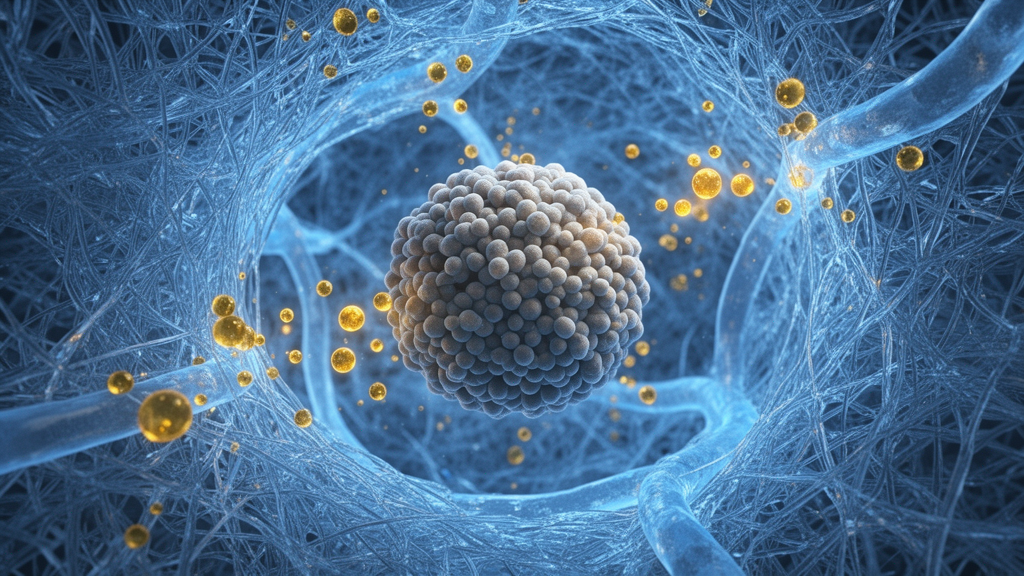
A multidisciplinary investigation has demonstrated that extracellular matrix composition and glucose availability cooperatively determine the metabolic phenotypes of cancer spheroids grown within three-dimensional hydrogels. Reporting in Cancer & Metabolism, researchers examined how human lung adenocarcinoma cells and human pancreatic cancer cells adapt their energetic pathways when cultured inside tunable collagen type I and fibrin matrices across differing nutrient conditions. The experiments revealed that while nutrient supply served as the primary driver of bioenergetic behavior in collagen scaffolds, metabolic adaptation within fibrin hydrogels required coordinated regulation between structural properties and external fuel levels. By systematically testing both cell types across defined matrix concentrations and glucose concentrations ranging from physiological abundance to complete starvation, the authors showed that structural microenvironments govern how cancer cells perceive and exploit accessible nutrients, uncovering context-dependent bioenergetic vulnerabilities.
Solid tumors establish complex microenvironments wherein malignant cells continuously process biochemical and biophysical inputs that stimulate metabolic reprogramming, an established hallmark of cancer. Previous investigations established that tumors frequently rely on opportunistic modes of nutrient scavenging, including increased consumption of glucose and glutamine, to fuel rapid biomass generation and macromolecular synthesis. While an aberrant increase in extracellular matrix stiffness has been widely documented to trigger intracellular mechanotransduction cascades that accelerate glycolytic flux, natural stroma remains structurally and compositionally heterogeneous. The investigators set out to decouple mechanical stiffness from polymer composition, addressing a longstanding question regarding whether local nutrient availability overrides matrix-derived mechanical cues or whether matrix architecture dictates the metabolic flexibility of malignant spheroids.
To establish defined three-dimensional testing environments, the researchers fabricated hydrogels using three distinct polymer concentrations for each biomaterial, corresponding to 6.0, 4.0, and 2.5 milligrams per milliliter for collagen type I, and 5.6, 3.9, and 2.2 milligrams per milliliter for fibrinogen. Rheological characterization using a hybrid rheometer revealed fundamental differences in gelation physics between the platforms. Collagen mixtures initiated gelation upon reaching thirty degrees Celsius, with lower protein concentrations requiring slightly elevated polymerization temperatures, whereas fibrin polymerized through enzymatic cleavage driven by thrombin without exhibiting a thermal gelation threshold. Storage modulus measurements during continuous strain testing demonstrated concentration-dependent stiffness across both materials, with high and medium collagen formulations achieving greater overall elastic rigidity than corresponding fibrin networks. However, oscillatory stress sweeps demonstrated that while collagen hydrogels initiated strain-stiffening around twenty percent deformation, fibrin networks exhibited strain-stiffening earlier at seven percent strain and withstood exceptionally high deformation before mechanical rupture.
Biophysical assessments further characterized the internal microarchitecture of the scaffolds by estimating theoretical mesh sizes from shear rheology data based on classical rubber elasticity theory. Calculated average mesh dimensions ranged between 34 and 95 nanometers in collagen hydrogels and between 74 and 134 nanometers in fibrinogen networks, confirming that lower polymer concentrations yielded more porous matrices. To track how growing cancer spheroids altered scaffold mechanics over time, the team employed a texture analyzer utilizing the Kobe method with a spherical probe to quantify compressive elastic moduli at day two and day ten. Across all conditions, acellular collagen hydrogels displayed higher stiffness than fibrin, reaching baseline values up to 40.12 kilopascals in the dense 6.0 milligram per milliliter formulation. Over ten days of culture, embedded cancer spheroids degraded and remodeled collagen networks, driving substantial softening in medium and low density formulations, whereas fibrin scaffolds displayed minimal cellular degradation, maintaining stable mechanical properties between 25.40 and 30.79 kilopascals.
Cellular proliferation and spheroid formation assays over ten days revealed divergent morphological adaptations between lung and pancreatic cancer lines across the six matrix formulations and three glucose regimens, comprising high glucose at 4.5 grams per liter, low glucose at 1.0 gram per liter, and glucose-free conditions. Quantitative Alamar Blue tracking demonstrated that lung adenocarcinoma cells preferred medium-density collagen scaffolds under nutrient-restricted regimes, establishing compact spherical structures. In contrast, when cultured within fibrin hydrogels, lung cancer cells formed few spheroids, displaying a marked tendency toward two-dimensional planar spreading that became more pronounced at lower fibrinogen concentrations. Pancreatic cancer cells exhibited an opposing behavioral pattern, generating large, robust spheroids within softer fibrin networks without showing planar dissemination. Although both malignant lines produced greater total numbers of spheroids in collagen than in fibrin, pancreatic spheroids formed in lower collagen concentrations appeared highly dispersed, indicating elevated cellular motility when surrounding protein barriers were less dense.
Real-time metabolic flux profiling using the Seahorse XFe96 analyzer provided quantitative measurements of oxygen consumption rates and extracellular acidification rates during mitochondrial stress testing. Spheroids maintained within collagen scaffolds demonstrated phenotypic adaptations dominated by ambient sugar levels. Under high and low glucose conditions, lung adenocarcinoma spheroids shifted aggressively toward glycolytic metabolism, while glucose deprivation forced them into a quiescent energetic state. Although collagen concentration exerted a comparatively subtle effect on overall energy maps, denser collagen matrices consistently promoted elevated glycolytic flux under nutrient-replete conditions. Pancreatic cancer spheroids displayed intrinsically higher baseline glycolytic activity across all collagen formulations, maintaining an active bioenergetic posture even when confronted with substantial nutrient limitations.
When evaluated within fibrin matrices, both cancer types exhibited a pronounced shift toward metabolic quiescence, mirroring the subdued phenotypic profiles observed only under total glucose deprivation in collagen cultures. This quiescent baseline indicated that fibrin provides mechanical and biochemical signals that suppress aggressive glycolytic engagement regardless of external sugar concentrations. Nevertheless, subtle material-dependent respiratory modulations remained measurable within fibrin hydrogels. In lung cancer spheroids cultivated under low glucose, ATP-linked oxygen consumption increased as fibrinogen density decreased, whereas total respiratory capacity peaked within intermediate fibrin matrices. Pancreatic spheroids maintained stable respiratory metrics across differing fibrin concentrations in high glucose, but exhibited significant increases in both total respiratory capacity and spare capacity within soft, low-concentration fibrin gels during complete glucose starvation, demonstrating that reduced matrix density partially restores oxidative flexibility under extreme energetic stress.
To validate the bioenergetic phenotypes identified through Seahorse flux analysis, the research team collected conditioned culture media at the ten-day endpoint after forty-eight hours of cellular exposure to quantify extracellular metabolite utilization. In high-glucose media, cellular glucose consumption per cell correlated directly with matrix stiffness in collagen, reaching peak uptake in the stiffest 6.0 milligram per milliliter formulation. Conversely, glucose consumption within fibrin hydrogels rose as polymer concentration dropped, aligning with the enhanced diffusion permitted by larger mesh dimensions. Extracellular lactate measurements corroborated these glycolytic trends, with lung adenocarcinoma spheroids generating substantial lactate in stiff collagen networks under high glucose, whereas spheroids in the softest collagen formulations consumed ambient lactate. Under glucose-deprived conditions, lung cancer spheroids produced up to 4 nanograms of lactate per cell in soft collagen, compared to a maximum of 1 nanogram per cell observed for pancreatic spheroids across stiff matrices.
Extracellular glutamine analysis revealed unexpected metabolic kinetics across both malignant cell models. Rather than depleting available glutamine as a supplementary fuel source, cultures displayed net negative consumption values, reflecting robust active secretion of glutamine into the surrounding culture medium. This net glutamine production escalated substantially under glucose-restricted and glucose-free conditions, establishing an inverse relationship with cellular glucose uptake. Lung adenocarcinoma spheroids secreted exceptionally high concentrations of glutamine during carbohydrate starvation, whereas pancreatic cancer spheroids produced lower, more uniform amounts across all tested matrix stiffnesses. The simultaneous secretion of glutamine alongside persistent lactate generation in soft environments suggests that metabolically stressed spheroids activate anaplerotic survival pathways, potentially recycling glycolytic end-products to maintain tricarboxylic acid cycle intermediates and survive severe nutrient scarcity.
The study highlights fundamental differences in metabolic plasticity between the two solid tumor types, validating mechanical classifications established in earlier mechanobiology literature. Lung adenocarcinoma cells exhibited marked rigidity-dependence, dynamically shifting their respiratory and glycolytic parameters in direct response to surrounding scaffold stiffness and mesh-dependent diffusion barriers. Conversely, pancreatic cancer cells demonstrated profound metabolic rigidity, preserving high baseline glycolytic activity across varied collagen stiffnesses and adjusting their bioenergetic programming only when subjected to absolute nutrient starvation.
The authors identified specific experimental boundaries that contextualize their conclusions, noting that mesh size calculations were derived indirectly through rubber elasticity equations applied to shear rheology rather than direct physical measurement via scanning electron microscopy or macromolecular diffusion assays. Furthermore, while differences in matrix remodeling between lung and pancreatic spheroids implied divergent proteolysis, the study did not quantify matrix metalloproteinase or tissue inhibitor expression levels directly. Despite these technical constraints, the findings establish that three-dimensional matrix composition and polymer architecture critically govern cancer bioenergetic phenotypes alongside nutrient availability. By demonstrating that provisional fibrin scaffolds induce metabolic quiescence while structural collagen matrices promote glycolytic aggressiveness, this work underscores the necessity of incorporating tissue-specific mechanical cues and diffusion constraints into advanced preclinical tumor models to pinpoint authentic metabolic vulnerabilities for therapeutic intervention.
Subject of Research: Regulation of cancer spheroid bioenergetics by extracellular matrix composition and glucose availability in 3D hydrogels
Article Title: Matrix composition and glucose availability cooperatively determine cancer spheroid bioenergetics in 3D hydrogels
Article References: Guerrero-López, P., Drobac, G., Silva, E. A., Hagland, H. R., & García-Aznar, J. M. (2025). Matrix composition and glucose availability cooperatively determine cancer spheroid bioenergetics in 3D hydrogels. Cancer & Metabolism, 13(1), Article 45. https://doi.org/10.1186/s40170-025-00413-2
Image Credits: AI Generated
DOI: 10.1186/s40170-025-00413-2
Keywords: extracellular matrix, cancer metabolism, tumor spheroids, hydrogels, collagen type I, fibrinogen, glucose availability, bioenergetics, glycolysis, oxidative phosphorylation, A549 cells, Panc1 cells, Seahorse flux analysis, shear rheology, matrix stiffness, lactate production, glutamine metabolism
News Source: Nathaniel Bowman. (November 11, 2026). Extracellular Matrix Composition and Glucose Availability Control Cancer Spheroid Metabolism. Scienmag.