• HOME
  • NEWS
  • EXPLORE
    • CAREER
      • Companies
      • Jobs
    • EVENTS
    • iGEM
      • News
      • Team
    • PHOTOS
    • VIDEO
    • WIKI
  • BLOG
  • COMMUNITY
    • FACEBOOK
    • INSTAGRAM
    • TWITTER
Friday, May 1, 2026
BIOENGINEER.ORG
No Result
View All Result
  • Login
  • HOME
  • NEWS
  • EXPLORE
    • CAREER
      • Companies
      • Jobs
        • Lecturer
        • PhD Studentship
        • Postdoc
        • Research Assistant
    • EVENTS
    • iGEM
      • News
      • Team
    • PHOTOS
    • VIDEO
    • WIKI
  • BLOG
  • COMMUNITY
    • FACEBOOK
    • INSTAGRAM
    • TWITTER
  • HOME
  • NEWS
  • EXPLORE
    • CAREER
      • Companies
      • Jobs
        • Lecturer
        • PhD Studentship
        • Postdoc
        • Research Assistant
    • EVENTS
    • iGEM
      • News
      • Team
    • PHOTOS
    • VIDEO
    • WIKI
  • BLOG
  • COMMUNITY
    • FACEBOOK
    • INSTAGRAM
    • TWITTER
No Result
View All Result
Bioengineer.org
No Result
View All Result
Home NEWS Science News Biology

Extinct ‘monkey lemur’ shows similarities to fossil humans

Bioengineer by Bioengineer
December 12, 2022
in Biology
Reading Time: 2 mins read
0
Archaeolemur skull
Share on FacebookShare on TwitterShare on LinkedinShare on RedditShare on Telegram

Analysis of teeth of extinct lemurs has revealed fascinating clues to the evolution of humans, a University of Otago study has found.
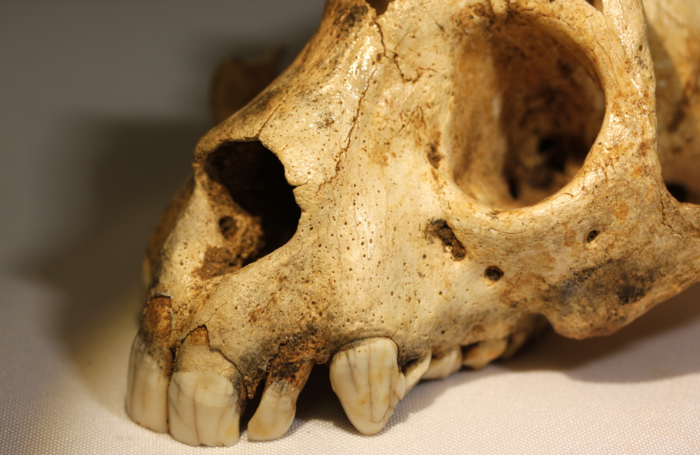
Archaeolemur skull

Credit: Ian Towle

Analysis of teeth of extinct lemurs has revealed fascinating clues to the evolution of humans, a University of Otago study has found.


Lead author Dr Ian Towle, of the Sir John Walsh Research Institute in the Faculty of Dentistry, says the “surprisingly large” monkey lemur, Archaeolemur, had novel anatomical features not seen in living lemurs, such as lacking a ‘tooth comb’ in the front of the mouth for grooming.


“These extinct lemurs are so different to those alive today. They also show fascinating similarities to monkeys and apes, including humans,” he says.


The study, published in the American Journal of Biological Anthropology, aimed to assess the diet of Archaeolemur by analysing chipping in 447 teeth, comparing chipping frequencies to those of other primates.


The results were surprising – with these remarkable extinct lemurs with dentitions resembling baboons in shape; but presenting tooth chipping patterns similar to fossil hominins such as Neanderthals.


“Archaeolemur tooth chipping patterns are unlike any living primate, with their front teeth showing substantial fractures, often with numerous tooth chips on a single tooth, yet very little chipping on their back teeth.


“Similar tooth fracture patterns are observed in fossil hominins, such as Neanderthals. Typically, in Neanderthals these fracture patterns are thought to be related to tool-use behaviours,” Dr Towle says.


The results fit with previous research on Archaeolemur, in particular evidence that their large and robust front teeth may have been used to process a diet containing hard and tough foods.


Dr Towle thinks the study raises the “fascinating possibility” that stone tools do not necessarily explain the high rate of fractures on Neanderthal teeth.


“Archaeolemur shows similar tooth chipping patterns, yet there is no evidence to suggest they were capable of, or used, such tools.


“Studying extinct primates not only provides crucial insight into their diet and behaviour, but also elucidates our own evolutionary history.”


Given the overlap in skull and dental shape, and potential similarities in diet and behaviour, it is perhaps not surprising that Archaeolemur was thought to be an ape when first discovered in Madagascar over 100 years ago.


“Archaeolemur is a brilliant example of convergent evolution, showing remarkable similarities to monkeys and apes. This species also highlights the extent to which lemurs in Madagascar diversified into a variety of ecological niches.”


Dr Carolina Loch, also from Sir John Walsh Research Institute, and who mentored Dr Towle during his tenure as postdoctoral fellow at the SJWRI, says the research is another great example of the “breadth and depth of multidisciplinary research” at the Faculty of Dentistry.


Journal

American Journal of Biological Anthropology

DOI

10.1002/ajpa.24674

Share12Tweet8Share2ShareShareShare2

Related Posts

Successful Birth Following Uterus Transplant Marks Medical Breakthrough — Biology

Successful Birth Following Uterus Transplant Marks Medical Breakthrough

May 1, 2026
Cockatoos Mimic Peers to Sharpen Adaptation Skills, Study Finds — Biology

Cockatoos Mimic Peers to Sharpen Adaptation Skills, Study Finds

May 1, 2026

Gut Microbe’s Sulfated Bile Acid Eases Pediatric Sepsis

May 1, 2026

AI Breakthrough Solves One of Science’s Most Challenging Math Problems

May 1, 2026

POPULAR NEWS

  • Research Indicates Potential Connection Between Prenatal Medication Exposure and Elevated Autism Risk

    831 shares
    Share 332 Tweet 208
  • New Study Reveals Plants Can Detect the Sound of Rain

    712 shares
    Share 284 Tweet 178
  • Scientists Investigate Possible Connection Between COVID-19 and Increased Lung Cancer Risk

    67 shares
    Share 27 Tweet 17
  • Salmonella Haem Blocks Macrophages, Boosts Infection

    61 shares
    Share 24 Tweet 15

About

We bring you the latest biotechnology news from best research centers and universities around the world. Check our website.

Follow us

Recent News

Dr. Hannah Cabré Named Assistant Professor and Director of Aging, Gynecology, and Endocrinology Lab at Pennington Biomedical

Strategies to Prevent Supply Chain Disruptions Amid the Rapid Growth of Drone and Robot Manufacturing

Innovative Nanoreactor Design Enhances Catalysis by Optimizing Transport and Reaction Kinetics

Subscribe to Blog via Email

Enter your email address to subscribe to this blog and receive notifications of new posts by email.

Join 82 other subscribers
  • Contact Us

Bioengineer.org © Copyright 2023 All Rights Reserved.

Welcome Back!

Login to your account below

Forgotten Password?

Retrieve your password

Please enter your username or email address to reset your password.

Log In
No Result
View All Result
  • Homepages
    • Home Page 1
    • Home Page 2
  • News
  • National
  • Business
  • Health
  • Lifestyle
  • Science

Bioengineer.org © Copyright 2023 All Rights Reserved.