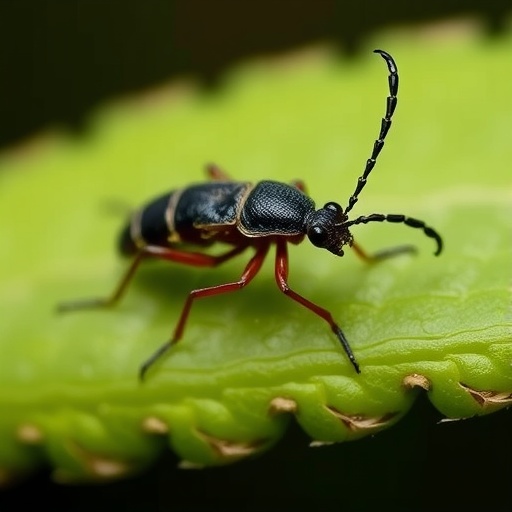
In an enlightening breakthrough in the field of molecular genetics, a research team led by experts Wang, L., Song, Y., and Sheng, R. has unveiled intriguing insights into the histone acetyltransferase gene family within the notorious pest, Bursaphelenchus xylophilus, a nematode responsible for significant damage to pine forests worldwide. This crucial research, published in BMC Genomics, paves the way for a deeper understanding of the molecular mechanisms underlying the pathogenicity of this microorganism.
Histone acetyltransferases (HATs) play an essential role in the modification of histones, which are proteins that help package DNA into structural units called nucleosomes. This process is crucial for the regulation of gene expression, impacting processes such as cell differentiation, proliferation, and response to environmental stimuli. By characterizing the gene family of HATs in Bursaphelenchus xylophilus, the researchers aimed to bridge the gap in understanding how these nematodes adapt and thrive in their environments—often at the expense of vital forest ecosystems.
The identification of these genes involved meticulous genomic studies. The researchers employed advanced sequencing techniques to thoroughly analyze the genome of Bursaphelenchus xylophilus, utilizing both bioinformatics tools and laboratory experiments. Through this combination, they successfully identified multiple HATs, shedding light on their genomic organization, expression patterns, and evolutionary relationships. These insights not only contribute to the fundamental understanding of nematode biology but also illuminate potential vectors for controlling their populations.
Furthermore, the functional characterization aspect of this study revealed that several of the identified HAT genes are significantly upregulated during specific developmental stages of the nematode or in response to environmental stresses. This suggests that these enzymes might be crucial players in the nematode’s life cycle, contributing to its survival and adaptability in hostile environments. Understanding these processes could lead to innovative strategies in pest management, potentially reducing the impact of Bursaphelenchus xylophilus on forestry.
Another critical finding of the research was the deep evolutionary conservation of certain HAT genes across various species, suggesting their indispensable role in cellular functions. The evolutionary significance of HATs indicates that while Bursaphelenchus xylophilus has adapted specifically to its environmental niches, the foundational biological processes governed by these genes remain remarkably similar across diverse life forms. This finding underscores the importance of HATs not only in nematodes but also across a broader spectrum of organisms.
The research team emphasized the potential implications of their work extending beyond mere genomic identification. The elucidation of HAT functions could provide fertile ground for the development of targeted biocontrol strategies that exploit the specific vulnerabilities of Bursaphelenchus xylophilus. Such strategies could involve the designing of molecules that could inhibit HAT activity, thereby affecting the nematode’s growth and reproductive capacity.
Additionally, this study invites further investigations into the interplay between histone acetylation and other epigenetic modifications. Understanding how these modifications work in concert could unveil a more comprehensive picture of gene regulation in Bursaphelenchus xylophilus and potentially other pests. The multifaceted approach adopted by the researchers, integrating genomic analysis with functional experiments, exemplifies a modern methodology that has the potential to unravel the complexities of nematode biology.
Moreover, considering the alarming rate at which forests are being threatened by pests like Bursaphelenchus xylophilus, this research addresses a pressing need within the scientific community for effective management strategies. With ongoing climate change and the associated shifts in habitat and pest behavior, the urgency for solutions that can balance ecosystem health with pest control has never been greater. The insights gained from understanding histone acetylation mechanisms could play a vital role in shaping the future of pest management in forestry.
The research also highlights the necessity of multidisciplinary collaboration in tackling global challenges like pest-related forestry damage. By leveraging expertise across genomics, bioinformatics, and ecological studies, the findings from Wang and colleagues advance the collective knowledge within the domain of nematology and pest management. Such collaborative efforts are essential as they combine resources and knowledge, creating a broader impact and fostering innovation in research.
In summary, the identification and functional characterization of the histone acetyltransferase gene family in Bursaphelenchus xylophilus represents a significant advancement in our understanding of this pest’s biology. The research not only provides insights into the molecular underpinnings of gene regulation in nematodes but also opens up avenues for innovative pest control strategies. As researchers continue to delve into the intricacies of epigenetics, the potential for developing environmentally friendly solutions to combat these pests becomes increasingly promising.
In conclusion, this pivotal study marks a crucial step towards unraveling the complexities of histone modifications in nematodes and their ecological implications. The foundational work laid out by Wang, L., Song, Y., and Sheng, R. underscores the importance of ongoing research in this area as we seek to protect our vital forest ecosystems from the threats posed by invasive species like Bursaphelenchus xylophilus.
Subject of Research: Histone acetyltransferase gene family in Bursaphelenchus xylophilus
Article Title: Identification and functional characterization of the histone acetyltransferase gene family in Bursaphelenchus xylophilus
Article References:
Wang, L., Song, Y., Sheng, R. et al. Identification and functional characterization of the histone acetyltransferase gene family in Bursaphelenchus xylophilus.
BMC Genomics 26, 990 (2025). https://doi.org/10.1186/s12864-025-12175-8
Image Credits: AI Generated
DOI: https://doi.org/10.1186/s12864-025-12175-8
Keywords: Histone Acetyltransferase, Bursaphelenchus xylophilus, Nematode Biology, Gene Regulation, Pest Management, Epigenetics, Forestry.
Tags: advanced sequencing techniques in genomicsbioinformatics in molecular biologyBursaphelenchus xylophilus researchenvironmental adaptation of nematodesforest ecosystem impactsgene expression regulation in nematodesgenomic studies in pestshistone acetylation and cell differentiationhistone acetyltransferase gene familyhistone modification and gene expressionmolecular genetics in nematodespathogenicity of Bursaphelenchus xylophilus