

• HOME
  • NEWS
  • EXPLORE
    • CAREER
      • Companies
      • Jobs
    • EVENTS
    • iGEM
      • News
      • Team
    • PHOTOS
    • VIDEO
    • WIKI
  • BLOG
  • COMMUNITY
    • FACEBOOK
    • INSTAGRAM
    • TWITTER
Monday, May 11, 2026
BIOENGINEER.ORG
No Result
View All Result
  • Login
  • HOME
  • NEWS
  • EXPLORE
    • CAREER
      • Companies
      • Jobs
        • Lecturer
        • PhD Studentship
        • Postdoc
        • Research Assistant
    • EVENTS
    • iGEM
      • News
      • Team
    • PHOTOS
    • VIDEO
    • WIKI
  • BLOG
  • COMMUNITY
    • FACEBOOK
    • INSTAGRAM
    • TWITTER
  • HOME
  • NEWS
  • EXPLORE
    • CAREER
      • Companies
      • Jobs
        • Lecturer
        • PhD Studentship
        • Postdoc
        • Research Assistant
    • EVENTS
    • iGEM
      • News
      • Team
    • PHOTOS
    • VIDEO
    • WIKI
  • BLOG
  • COMMUNITY
    • FACEBOOK
    • INSTAGRAM
    • TWITTER
No Result
View All Result
Bioengineer.org
No Result
View All Result
Home NEWS Science News Technology

Exploring Graphene-MoS2-CoS2 for Stable Li-S Batteries

Bioengineer by Bioengineer
October 1, 2025
in Technology
Reading Time: 2 mins read
0
Share on FacebookShare on TwitterShare on LinkedinShare on RedditShare on Telegram

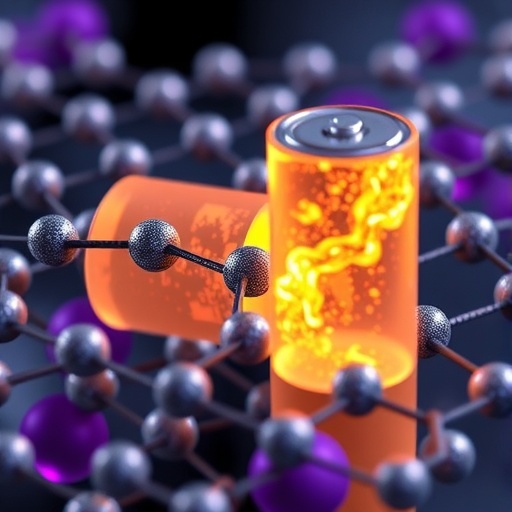
Innovative breakthroughs in energy storage are crucial for addressing the rising energy demands and environmental concerns of our modern society. Recent advancements in the field of lithium-sulfur (Li-S) batteries present exciting opportunities for the development of more efficient and reliable energy storage solutions. A new study conducted by Aslfattahi et al. explores the potential of a composite material comprising graphene nanoplates, molybdenum disulfide (MoS₂), and cobalt disulfide (CoS₂) to enhance the electrochemical stability of Li-S batteries. This pioneering research stands to transform how we utilize rechargeable batteries in various applications, from electric vehicles to portable electronics.

As the demand for efficient energy storage solutions continues to escalate, lithium-sulfur batteries have emerged as a promising alternative to conventional lithium-ion batteries. The appeal of Li-S batteries lies in their high theoretical energy density, which is significantly higher than that of their lithium-ion counterparts. However, issues such as polysulfide dissolution and the slow kinetics of charge and discharge processes have hindered their practical applications. The work presented by Aslfattahi and his team addresses these challenges head-on by proposing a new composite material that incorporates graphene nanoplates, MoS₂, and CoS₂.

The researchers employed a combination of simulation, density functional theory (DFT) calculations, and experimental investigations to explore the properties of their proposed material. Through DFT calculations, they were able to model the electronic structures and predict the interaction between the components at the atomic level. This is a critical step, as understanding these interactions can inform the design of materials that enhance electrochemical performance. The simulations provided insights that guided the synthesis of the composite material, which was subsequently characterized through various techniques.

One of the key concerns with traditional Li-S batteries is their inherent instability over extended cycling. The combination of graphene with MoS₂ and CoS₂ has shown promise in enhancing the mechanical and electrochemical stability of the cathode material. The unique structure of graphene offers a conductive framework, enabling efficient charge transfer within the battery. Meanwhile, the incorporation of MoS₂ and CoS₂ serves to trap polysulfides and mitigate their dissolution, a compelling solution to one of the largest obstacles facing Li-S technology.

The researchers meticulously conducted a series of electrochemical tests to evaluate the performance of the newly developed composite material in lithium-sulfur batteries. Through these experiments, they were able to measure capacity retention, cycle stability, and charge-discharge rates. The impressive results indicated that the graphene nanoplates@MoS₂@CoS

Share13Tweet8Share2ShareShareShare2

Related Posts

Adolescents’ Media Perceptions Influence Preventive Health Behaviors — Technology and Engineering

Adolescents’ Media Perceptions Influence Preventive Health Behaviors

May 9, 2026
Boosted NIR Luminescence via Dark Fe3+ Energy — Technology and Engineering

Boosted NIR Luminescence via Dark Fe3+ Energy

May 9, 2026

Terahertz Wireless Breakthrough: Beyond Kilometer-Scale Speeds

May 9, 2026

Non-Cognitive Skills Link Genes and Academic Success

May 9, 2026

POPULAR NEWS

  • Research Indicates Potential Connection Between Prenatal Medication Exposure and Elevated Autism Risk

    840 shares
    Share 336 Tweet 210
  • New Study Reveals Plants Can Detect the Sound of Rain

    727 shares
    Share 290 Tweet 181
  • Salmonella Haem Blocks Macrophages, Boosts Infection

    61 shares
    Share 24 Tweet 15
  • Breastmilk Balances E. coli and Beneficial Bacteria in Infant Gut Microbiomes

    57 shares
    Share 23 Tweet 14

About

We bring you the latest biotechnology news from best research centers and universities around the world. Check our website.

Follow us

Recent News

New Post-Hoc Analysis Explores Daily Oral Orforglipron Use in Adults Over 65 with Obesity, Regardless of Diabetes Status

Evaluating Digoxin Use in Patients with Symptomatic Rheumatic Heart Disease

Evaluating the Effectiveness and Safety of Digitalis Glycosides in Treating Heart Failure

Subscribe to Blog via Email

Enter your email address to subscribe to this blog and receive notifications of new posts by email.

Join 82 other subscribers
  • Contact Us

Bioengineer.org © Copyright 2023 All Rights Reserved.

Welcome Back!

Login to your account below

Forgotten Password?

Retrieve your password

Please enter your username or email address to reset your password.

Log In
No Result
View All Result
  • Homepages
    • Home Page 1
    • Home Page 2
  • News
  • National
  • Business
  • Health
  • Lifestyle
  • Science

Bioengineer.org © Copyright 2023 All Rights Reserved.
