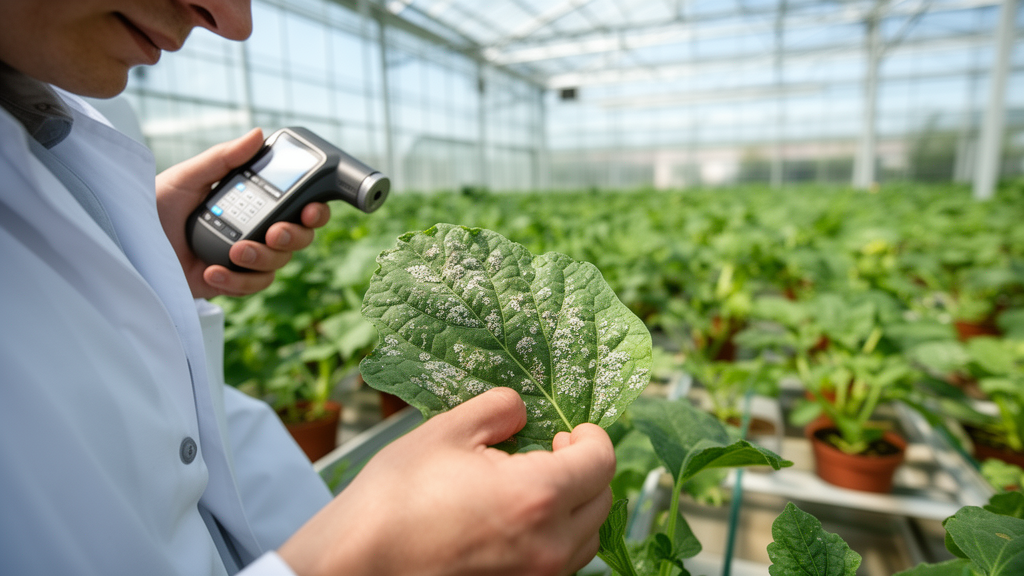
In a research paper published in Discover Artificial Intelligence, computer vision investigators Parmanand Patel and Deep Kothadiya introduced an explainable deep ensemble learning architecture designed to improve the accuracy and transparency of automated plant disease detection. Precision agriculture increasingly relies on automated computer vision to identify crop infections, yet standard convolutional neural networks struggle to capture both minute, fine-grained lesion textures and broad contextual leaf features. To resolve this challenge, the authors formulated a dual-branch ensemble network combining deep hierarchical representations extracted by ResNet V2 with multi-scale spatial representations from InceptionNet V1. These complementary feature streams are unified prior to classification through an adaptive attention-based feature-level fusion mechanism. When evaluated alongside a novel visual explanation method called the Deep Gradient eXplainer, or DGX, the architecture achieved a classification accuracy of 99.31 percent on the benchmark PlantVillage dataset and 99.07 percent on the PlantDoc dataset, coupling high diagnostic precision with biologically verifiable visual transparency.
The underlying motivation stems from the essential role of the agricultural sector, which remains critical for food security and international economic growth. Macroeconomic statistics reviewed in the study indicate that the global Gross Value Added of agriculture recently rose from 17.6 percent to 20.2 percent worldwide. However, agricultural productivity faces continual threats from plant diseases and insect infections that degrade food nutritional quality, depress overall harvest volumes, and impose severe financial losses. Plant pathologies fall broadly into two primary divisions: abiotic disorders caused by inanimate environmental stresses or poor soil management that cannot spread between plants, and biotic infections caused by transmissible living organisms such as fungi, bacteria, viruses, or nematodes. Accurately diagnosing symptoms and executing timely pathogen controls remains especially difficult for growers managing pulse crops like chickpeas, field peas, and fava beans, oilseeds like canola and lupine, and essential cereal grains including wheat, oats, triticale, and barley.
Although computer vision methods have advanced rapidly, existing convolutional frameworks face substantial hurdles that restrict their practical agricultural deployment. Standard single-backbone convolutional architectures struggle to simultaneously preserve fine lesion textures and global contextual leaf structures, creating acute diagnostic vulnerabilities when distinguishing visually similar disease classes such as mosaic virus and curl virus. Moreover, models trained on controlled laboratory datasets often suffer from limited generalization when exposed to outdoor backgrounds, fluctuating sunlight, and environmental noise. Compounding these performance barriers is the pervasive black-box nature of deep neural networks, which limits operational transparency and user trust. While explainable artificial intelligence tools like Class Activation Mapping are commonly applied, conventional Grad-CAM relies on global average pooling that collapses spatial gradient maps into a single scalar per channel. This spatial averaging dilutes localized signals, under-highlighting small disease spots and under-representing disjoint lesions across a leaf, while Grad-CAM++ encounters numerical instability when denominators approach zero.
To establish a more robust feature extraction foundation, the authors designed an ensemble architecture combining two established neural network backbones. The primary hierarchical branch employs ResNet V2 to learn deep multi-layer representations while directly overcoming vanishing gradient problems through skip connections. Rather than attempting to learn unreferenced mapping functions directly, residual learning reformulates the underlying mapping as a residual function added to the identity input mapping. Within this framework, the authors adopted a pre-activation structural design where batch normalization and rectified linear unit non-linear activation functions precede each convolutional operation. This structural arrangement preserves low-level visual information while progressively constructing higher-level abstractions, enhancing convergence stability across deep neural layers. The resulting skip connections permit backpropagation gradients to flow directly through identity channels, preventing the gradient attenuation or explosion that frequently impedes deep networks. Consequently, the residual branch provides a stable mechanism for extracting fine-grained discriminative representations essential for identifying foliar disease markers.
To complement the hierarchical depth of the residual network, the authors incorporated an InceptionNet V1 branch dedicated to multi-scale spatial feature extraction. To effectively capture this broad spectrum of visual patterns, the Inception architecture routes input data through multiple parallel convolutional filters of varying receptive fields, specifically combining one by one, three by three, and five by five sub-convolutions alongside a parallel pooling operation. The resulting feature maps are unified using channel-wise concatenation to construct a comprehensive multi-scale feature representation vector. This multi-branch spatial configuration enables the network to simultaneously extract fine textural lesions and expansive contextual leaf structures without imposing excessive computational overhead. By generating diverse spatial representations across varying dimensions, the Inception network supplies complementary visual evidence that significantly reinforces the discriminative capability of the overarching ensemble framework.
A critical technical innovation of the authors’ architecture is its feature-level ensemble fusion mechanism, which integrates heterogeneous representations prior to classification. Instead of executing late decision-level voting, flattened feature vectors from the ResNet V2 and InceptionNet V1 backbones are projected into a shared 256-dimensional space using two independent, non-shared dense transformation layers. Projecting both vectors into an identical dimensionality accommodates the statistically distinct feature distributions learned by the two separate extractors. The aligned feature vectors are subsequently concatenated and evaluated through a learnable transformation matrix with a non-linear sigmoid activation function, calculating a single scalar attention coefficient denoted as alpha. The final fused representation is computed through element-wise weighting, multiplying the projected residual vector by alpha and the projected Inception vector by one minus alpha. This adaptive attention gate dynamically emphasizes the most informative feature representations for each individual input image while maintaining an efficient, mathematically transparent scalar trust value between the two backbone networks.
Following feature integration, final class probabilities are generated through a dedicated multilayer perceptron classifier positioned directly after the fusion layer. The classifier utilizes stacked perceptron layers with dense inter-node connectivity, culminating in a SoftMax activation layer that outputs normalized confidence values across candidate disease classes. Model parameters were optimized during training using categorical cross-entropy loss to evaluate the discrepancy between predicted probability distributions and true categorical labels. All experimental simulations were carried out on a standardized local computing system comprising an Nvidia RTX 3060 graphics processing unit, 32 gigabytes of random-access memory, and a one-terabyte solid-state drive. Input leaf images were standardized into three-channel red, green, and blue representations resized to uniform dimensions of 224 by 224 pixels at an image resolution of 96 dots per inch.
The research team validated their diagnostic framework across two distinct agricultural image collections: the benchmark PlantVillage dataset, containing over 50,000 images, and the PlantDoc dataset, which includes more than 9,000 images representing 27 individual plant disease classes. To guarantee rigorous experimental integrity, both datasets were partitioned using a stratified 70:15:15 train-validation-test split at the image level. This partitioning strategy ensured proportional representation across all pathological categories while strictly preventing any individual image from appearing in multiple subsets. Data augmentation transformations were applied exclusively to the training partitions to eliminate potential information leakage into validation and testing evaluations. The applied augmentations introduced controlled variations, including random rotations within plus or minus 70 degrees, horizontal and vertical shifts within a 10 percent margin, color jitter transformations across a 0.1 range, and vertical flips. Empirical comparisons demonstrated that models trained with augmented data exhibited superior loss trajectories, higher validation accuracy, and stronger generalization over ten training epochs compared to unaugmented baselines.
To resolve deep learning opacity and deliver trustworthy visual evidence, the authors introduced the Deep Gradient eXplainer, or DGX. Unlike standard Grad-CAM implementations formulated for single-branch networks, DGX explicitly accounts for the learned trust between heterogeneous branches by computing gradients directly with respect to the fused feature map. It modulates channel importance weights using the identical learned scalar attention coefficient alpha established during forward feature fusion. This structural coupling ensures that the importance assigned to each feature map faithfully mirrors both the forward-pass architectural trust and the backward gradient sensitivity for the target class. The generated activation maps are processed through a rectified linear unit to isolate positive discriminative features while suppressing irrelevant background regions. After incorporating a numerical stability constant gamma of 10 to the power of negative eight to prevent division by zero, the resulting heatmaps are upsampled to the original image dimensions using bilinear interpolation, producing precise visual overlays that highlight symptom-specific infected leaf tissue.
Quantitative explainability experiments evaluated DGX against prominent visual explanation methods, including vanilla Grad-CAM, EigenCAM, ScoreCAM, and spatial occlusion techniques. Heatmap quality was measured across four statistical criteria: mean activation intensity, concentration of activation mass within the top 20 percent most salient pixels, spatial dispersion entropy, and spatial standard deviation. While conventional CAM variants frequently produced diffuse activations or became trapped along leaf boundaries and image contours, DGX achieved significantly higher concentration and lower entropy, confirming that its visual attributions localized tightly around genuine pathological lesions. Faithfulness was verified using Average Drop, Increase in Confidence, and Remove and Debias testing with noisy linear imputation, confirming that highlighted pixels drove network predictions. Crucially, the authors noted that controlled benchmarks represent upper-bound estimates, emphasizing that field deployment with canopy clutter, overlapping foliage, and early asymptomatic detection requires future drone and smartphone validation.
Subject of Research: Explainable deep learning framework for plant disease detection using multi-scale feature fusion
Article Title: Deep gradient explainable framework with ensemble adaptive multi-scale feature fusion for plant disease detection
Article References: Patel, P., & Kothadiya, D. (2026). Deep gradient explainable framework with ensemble adaptive multi-scale feature fusion for plant disease detection. Discover Artificial Intelligence, 6(1), Article 1721. https://doi.org/10.1007/s44163-026-02628-8
Image Credits: AI Generated
DOI: 10.1007/s44163-026-02628-8
Keywords: Plant Disease Detection, Explainable AI, Deep Learning, Feature Fusion, Convolutional Neural Networks, Precision Agriculture, ResNet, InceptionNet, Deep, gradient, explainable, framework
News Source: Alan Morgan. (November 13, 2026). Explainable AI Ensemble Fuses Multi-Scale Features for Accurate Crop Disease Detection. Scienmag.