Crimean-Congo hemorrhagic fever virus (CCHFV) is drawing renewed scientific attention through a study examining how the pathogen spreads through the bodies of experimentally infected sheep and how that process can inform diagnosis. Published in npj Viruses, the work by B. Gutjahr, L.M. Michaely, C. Bost and colleagues explores viral dissemination in a livestock host, connecting the biology of infection with the practical challenge of identifying cases before they become severe or contribute to further transmission. The research is especially relevant because CCHFV is both a major human health concern and a pathogen maintained in complex cycles involving ticks and vertebrate animals.
CCHFV belongs to the family Nairoviridae and carries its genetic information as a segmented, negative-sense RNA genome. The virus is primarily associated with Hyalomma ticks, which can acquire it while feeding on infected animals and later transmit it to other hosts. Humans may become infected through tick bites or contact with the blood and tissues of infected animals, including during slaughtering, veterinary procedures, or animal handling. Although many infections are mild or clinically unapparent, severe disease can develop rapidly, producing fever, vascular injury, bleeding, organ dysfunction, and, in some cases, death. This broad clinical spectrum makes early laboratory confirmation essential, yet it also complicates recognition in the field.
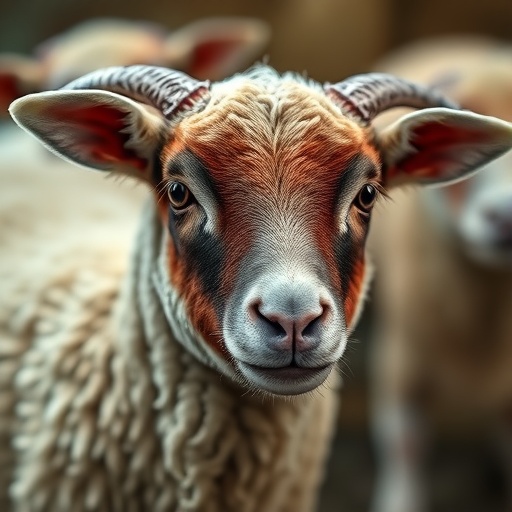
The sheep model examined by Gutjahr, Michaely, Bost and their collaborators addresses a central question in viral pathogenesis: where does CCHFV go after entering the body, and how does the timing of viral presence in different tissues affect the ability to detect it? Viral dissemination is not simply a matter of measuring whether an animal is infected. It involves tracking the movement of virus or viral genetic material through blood, organs, and potentially tissues that may be relevant to transmission or diagnosis. Such mapping can reveal which biological compartments become infected first, how long the virus remains detectable, and whether different samples provide different windows for reliable testing.
For diagnostic science, these details are crucial. Molecular assays such as reverse-transcription polymerase chain reaction detect viral RNA, usually by converting the RNA into complementary DNA and amplifying selected genomic sequences. The method can be highly sensitive, but its performance depends on the quality and timing of the sample. Viral RNA may be abundant in blood during one phase of infection and more readily detected in organs or other tissues at another. A negative result from one specimen therefore does not always exclude infection, particularly when sampling occurs early, late, or after viral levels have changed. By examining infection in sheep under controlled conditions, the study can help define which specimens are most informative and when they should be collected.
The work also speaks to the difference between detecting a virus and understanding its biological activity. Viral RNA can persist after infectious virus has declined, while infectious particles may be present at levels that are difficult to measure directly. Conversely, a low concentration of RNA in blood may still indicate an active infection or a risk of transmission through contaminated material. Experimental infection studies can compare molecular detection with tissue distribution and pathological observations, helping researchers interpret test results in the context of disease progression. That distinction is particularly important for CCHFV, where laboratory safety requirements are stringent and opportunities to study naturally infected animals are limited.
Sheep are a valuable model in this area because they are relevant to the ecology of CCHFV and may encounter infected ticks in regions where the virus circulates. Livestock can become infected without displaying obvious signs, yet they may develop transient viraemia—the presence of virus in the bloodstream—that enables ticks to acquire the pathogen during feeding. Understanding this period is important not only for animal health but also for estimating the risk posed to farmers, veterinarians, slaughterhouse workers, and others who handle animals or animal products. A controlled sheep study can isolate variables that are difficult to separate during field investigations, including the timing of infection, the amount of virus administered, and the relationship between clinical signs and laboratory findings.
The diagnostic implications extend beyond animal surveillance. Human CCHFV cases are often identified using a combination of clinical history, exposure information, molecular testing, and, later in the infection, serology. Antibody-based tests detect the host immune response rather than the virus itself and may become informative only after antibodies have developed. Molecular testing is therefore particularly important during the acute phase, when rapid decisions about patient isolation, contact tracing, and clinical management are required. Insights from animal tissue distribution may support more rational sampling strategies and help laboratories understand why test sensitivity can vary over the course of infection. They may also aid the evaluation of new assays designed to detect conserved regions of the viral genome.
The study has significance for a One Health approach, which treats human, animal, and environmental health as connected rather than separate domains. CCHFV transmission is shaped by climate, tick abundance, livestock movement, land use, occupational exposure, and access to diagnostic services. As tick habitats expand or shift, surveillance systems may need to monitor both animals and people across wider geographical areas. Research that clarifies how infection unfolds in a relevant livestock host can contribute to preparedness by improving protocols for sample collection, biosafety, veterinary monitoring, and outbreak investigation. It may also provide a framework for comparing viral strains or host responses in future experiments, although such comparisons require careful attention to differences in virus, host, and experimental design.
The findings presented in npj Viruses are therefore positioned at the intersection of pathogenesis and public-health readiness. By focusing on viral dissemination in experimentally infected sheep, Gutjahr and colleagues address the biological processes that determine what can be detected, where it can be detected, and when testing is most likely to succeed. The research does not eliminate the challenges posed by CCHFV’s high-consequence nature, but it strengthens the evidence base needed to confront them. Better knowledge of tissue distribution and diagnostic timing can support earlier recognition of infection, more effective surveillance of livestock and exposed workers, and a clearer understanding of how a tick-borne virus moves between animals and humans.
Subject of Research: Viral dissemination and diagnostic insights from experimental infection of sheep with Crimean-Congo hemorrhagic fever virus
Article Title: Viral dissemination and diagnostic insights from experimental infection of sheep with Crimean-Congo hemorrhagic fever virus
Article References: Gutjahr, B., Michaely, L.M., Bost, C. et al. Viral dissemination and diagnostic insights from experimental infection of sheep with Crimean-Congo hemorrhagic fever virus. npj Viruses 4, 39 (2026). https://doi.org/10.1038/s44298-026-00228-y
Image Credits: AI Generated
DOI: https://doi.org/10.1038/s44298-026-00228-y
Keywords: Crimean-Congo hemorrhagic fever virus, CCHFV, viral dissemination, sheep, experimental infection, diagnostic testing, zoonotic disease, tick-borne virus, One Health, veterinary virology
Tags: CCHFVCCHFV genetic structureCrimean-Congo hemorrhagic fever virusearly detection of hemorrhagic feverexperimental sheep infection studieshemorrhagic fever clinical featureslivestock infection diagnosisNairoviridae familytick-borne virus transmissiontick-human transmission pathwaysvector-borne viral spreadviral dissemination in sheepzoonotic disease transmission