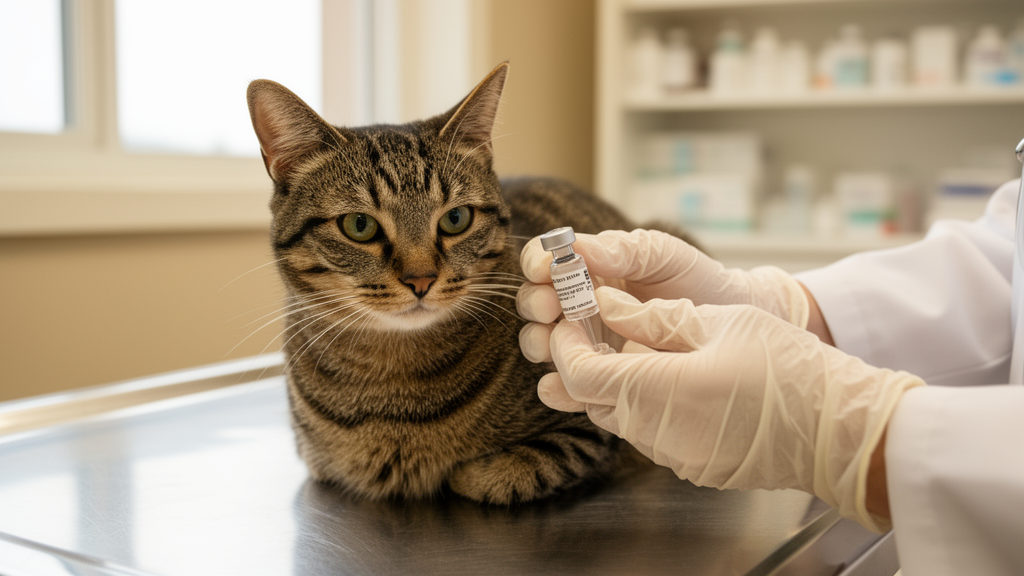
Feline calicivirus (FCV) is one of the most common viral pathogens of domestic cats, causing upper respiratory tract disease and oral lesions ranging from ulcers to gingivostomatitis. Because the virus evolves rapidly, the classic strains used in commercial vaccines can lose their ability to neutralize contemporary field isolates. A new study from China reports the identification of an endemic strain, FCV WH24, that elicited broader cross-neutralizing antibodies than a commercial vaccine and protected experimentally immunized cats against challenge with both major FCV genotypes.
The research, published as an original article in the journal Animal Diseases, began with large-scale surveillance. The team collected clinical samples from cats in cities across eight Chinese provinces between 2020 and 2024 and successfully isolated and purified 56 FCV strains. Sample positivity rates differed by region, with Jiangsu (39.9%) and Jiangxi (39.7%) showing the highest infection prevalence. Hubei Province yielded the most isolates (n = 20), followed by Henan, Jiangsu (seven each) and Anhui (six), while Sichuan and Guangdong yielded three and two strains respectively.
Phylogenetic analysis of VP1 amino acid sequences, the principal molecular marker for FCV typing, showed that the 56 isolates clustered into two distinct genotypes. GI was predominant, accounting for 69.6% of isolates, whereas GII accounted for 30.4%. GI isolates circulated widely and dominated the FCV populations in Hubei (17 of 20 isolates, 85.0%) and Jiangsu (6 of 7, 85.7%), while GII showed localized dominance in Anhui province, where it represented 83.3% (5 of 6) of regional strains. Co-circulation of both genotypes was frequently observed, particularly in Chongqing, Jiangxi and Hubei. When the isolates were analyzed together with NCBI reference strains and the commercial vaccine strains FCV-F9 and FCV-255, the two genotypes subdivided further into 14 groups.
Kittens in both challenge groups developed significant weight loss, fever and typical clinical signs including ocular and nasal discharge, oral ulcers and pododermatitis. Infectious virus was continuously detected in ocular, nasal and pharyngeal swabs throughout the 14-day observation period, and intermittently in anal swabs. Histopathological examination revealed inflammatory cell infiltration and alveolar damage in respiratory tissues, along with mucosal injury of the larynx and trachea, while control animals showed no significant pathological changes. These experiments established challenge models with 100% disease incidence for both genotypes.
The candidate vaccine strain was then selected through an immunogenicity screen. In the immunogenicity screen, 168 rabbits were divided into 56 groups of three, with each group immunized experimentally with a different FCV isolate at weeks 0, 2 and 4. Neutralizing antibody titers against each immunizing parental strain were measured in serum, and the WH24 strain, originally isolated in Wuhan, produced the highest titer. Sera from WH24-immunized rabbits also showed detectable cross-neutralizing activity against all representative strains tested, supporting its broad-spectrum potential.
Protective efficacy was then evaluated in an experimental kitten challenge study. Three weeks after the booster, the kitten groups were challenged intranasally with either FCV CZ7 (GI) or FCV HF2 (GII). Following the GI CZ7 challenge, control cats developed severe clinical signs including fever, weight loss, ocular and nasal discharge, conjunctivitis and oral ulcers, whereas WH24-vaccinated cats showed only mild or no symptoms. Clinical scores were significantly reduced in both vaccinated groups, with no significant difference between them. All groups shed virus after challenge, but the WH24 group showed the lowest viral shedding levels in respiratory swabs, and histopathology revealed severe respiratory lesions in controls with no obvious lesions in vaccinated groups.
The heterologous GII HF2 challenge produced a sharper contrast between the vaccines. Control cats developed severe disease, cats receiving the commercial vaccine showed moderate clinical signs, and WH24-immunized cats displayed only mild symptoms without oral ulceration. Clinical scores in the WH24 group were significantly lower than in the commercial vaccine group. Both vaccinated groups showed reduced viral shedding in respiratory swabs compared with controls, with WH24-vaccinated cats exhibiting the lowest titers, and anal shedding was transient in vaccinated animals but persistent in controls. Histopathological analysis showed severe respiratory lesions in control cats, only mild changes in the commercial vaccine group, and no obvious lesions in the WH24 group.
A key quantitative output of the study was the determination of a neutralizing antibody protection threshold. Cats with different serum antibody titers were challenged with FCV, and protective efficacy correlated positively with neutralizing antibody levels: animals with titers of 26 or higher, corresponding to a serum dilution of 1:64, remained clinically healthy after challenge, while those below the threshold developed typical clinical signs. Using this threshold, the researchers compared cross-neutralizing activity against 14 representative strains, one selected from each of the 14 phylogenetic groups. WH24-immunized cats produced protective neutralizing antibodies against 12 of the 14 strains, a coverage of 85.7%, whereas sera from the commercial vaccine group reached the threshold for only 6 strains, or 42.9%.
Sequence analysis offered a possible molecular explanation. Entropy profiling of VP1 sequences from the 56 isolates and vaccine strain 255 showed that the highest variability concentrated in the E region, the immunodominant domain carrying most neutralizing epitopes and involved in binding the feline receptor junctional adhesion molecule 1. A consensus sequence of the E region was generated from the field isolates, and WH24 shared 82.29% amino acid identity with this consensus, compared with only 69.31% for strain 255. The authors argue that this closer antigenic match to contemporary circulating strains likely reduces the risk of immune escape and underlies the broader cross-neutralization observed.
The authors position WH24, a locally prevalent Chinese strain, as a promising candidate for a domestically developed broad-spectrum FCV vaccine, noting that older vaccine strains such as F9 and 255 have documented reductions in cross-neutralizing capacity against recent field isolates. They also caution that further validation is needed across different cat breeds and larger populations, and that combinations with existing vaccines or other broad-spectrum strains should be explored. Because FCV can be cultured efficiently in cells, unlike many other caliciviruses such as norovirus and rabbit hemorrhagic disease virus, the authors suggest the FCV platform may also serve as a reference model for vaccine development against other members of the Caliciviridae family.
Subject of Research: A broad-spectrum feline calicivirus vaccine candidate strain screened from isolates circulating in China
Article Title: A feline calicivirus strain confers broad immunity
Article References: Liu, Z., Shen, Z., Fang, L., Wu, B., Hu, X., Gao, J., Shi, J., Zhang, Y., Li, M., & Peng, G. (2026). A feline calicivirus strain confers broad immunity. Animal Diseases, 6(1), Article 52. https://doi.org/10.1186/s44149-026-00268-0
Image Credits: AI Generated
DOI: 10.1186/s44149-026-00268-0
Keywords: feline calicivirus, FCV, vaccine candidate, cross-neutralization, VP1, GI genotype, GII genotype, cats, China, neutralizing antibodies, inactivated vaccine, animal models
News Source: Kristina Jarvis. (October 29, 2026). Experimental Feline Calicivirus Vaccine Strain WH24 Shows Broad Protection in Cats. Scienmag.