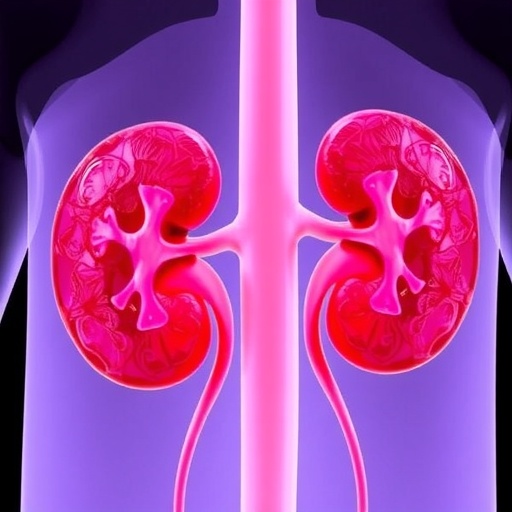
In a groundbreaking study published in Experimental & Molecular Medicine on March 4, 2026, researchers have unveiled a critical molecular mechanism underlying the progression of kidney fibrosis, a debilitating condition that often leads to chronic kidney disease and eventual organ failure. The study, led by Lim, H.J., Han, Y.K., and Noh, M.R., sheds new light on the delicate cellular processes involving the exocyst complex, specifically focusing on the Exoc5 component, which has now been identified as a pivotal player in controlling fibrotic pathways within renal tissues.
Kidney fibrosis represents the scarring and thickening of kidney tissue, primarily caused by the excessive accumulation of extracellular matrix components, which disrupt normal organ architecture and function. This condition is a final common pathway for various chronic kidney diseases, and current therapeutic options remain limited, often focusing on slowing disease progression rather than reversing the damage. Thus, identifying molecular targets that can alter the fibrotic process is crucial, and this latest research centers on the exocyst complex, a multiprotein complex essential for vesicle trafficking and membrane remodeling.
The exocyst complex coordinates the tethering of secretory vesicles to specific sites on the plasma membrane, a process fundamental to cellular homeostasis, polarity, and communication. Among its eight subunits, Exoc5 stands out for its regulatory role in maintaining exocyst assembly and function. Prior studies have implicated exocyst components in diverse cellular contexts, but their precise role in kidney fibrosis has remained elusive—until now.
By employing genetically modified mouse models deficient in Exoc5 specifically in kidney tissues, the investigators demonstrated that loss of this subunit dramatically exacerbates fibrosis progression. These mice displayed pronounced fibrotic lesions, increased deposition of collagen, and elevated markers of inflammation, compared to their normal counterparts. This finding points directly to Exoc5 as a critical suppressor of pathological fibrotic remodeling.
On a molecular level, the study highlights how Exoc5 deficiency impairs the trafficking of key signaling receptors and matrix metalloproteinases (MMPs), which normally regulate extracellular matrix turnover. Without proper localization and function of these molecules, cellular degradation of fibrotic material is compromised. This defect fuels a vicious cycle where excessive matrix accumulates, further damaging organ architecture and perpetuating inflammatory responses.
Interestingly, the research team employed advanced imaging techniques and bioinformatics analyses to reveal that Exoc5 participates in modulating transforming growth factor-beta (TGF-β) signaling cascades, long recognized as central drivers of fibrosis. In Exoc5-deficient cells, hyperactivation of TGF-β signaling was observed, manifesting in increased expression of fibrogenic genes such as alpha-smooth muscle actin and fibronectin.
Moreover, the article details how Exoc5 influences cellular senescence and apoptosis pathways in kidney epithelial cells. Exoc5 loss was correlated with elevated markers of senescence, which may stall tissue regeneration and exacerbate fibrotic scarring. Simultaneously, impaired vesicular trafficking resulted in defects in autophagy, a cellular recycling process that normally mitigates stress responses linked to fibrotic insult.
The researchers also investigated primary cultured kidney fibroblasts derived from Exoc5-deficient mice, documenting striking changes in cell morphology and migratory behavior. These fibroblasts exhibited a hyperactivated phenotype with increased contractility and secretion of pro-fibrotic cytokines, intensifying the fibrotic niche. This points to Exoc5’s role extending beyond epithelial cells to include stromal cell populations crucial for matrix deposition.
Given these multi-dimensional effects of Exoc5 deficiency, the authors propose that enhancing Exoc5 function or mimicking its activity might open the door to novel therapeutic interventions aimed at halting or reversing fibrosis. Current anti-fibrotic drugs lack specificity and often produce only modest benefits. Targeting the exocyst complex, particularly Exoc5, could represent a breakthrough by restoring cellular trafficking balance and mitigating aberrant fibrogenic signaling.
In an era where chronic kidney disease poses a significant healthcare burden worldwide, these findings have profound implications. Beyond kidney fibrosis, exocyst dysregulation might also contribute to fibroproliferative disorders in other organs, suggesting broader relevance for the entire biomedical community. This study serves as a compelling call for deeper investigation into vesicle trafficking machinery as a therapeutic frontier.
Importantly, the study utilized a combination of in vivo models, ex vivo kidney slices, and in vitro cell culture approaches, providing robust validation of their conclusions. Complementary transcriptomic analyses further illuminated the gene networks perturbed by Exoc5 deficiency, linking metabolic dysregulation to fibrotic outcomes.
Future directions prompted by this work include the development of pharmacological agents capable of enhancing exocyst stability or function, potentially through small molecule activators or gene therapy approaches. Additionally, exploring patient-derived kidney samples for Exoc5 expression patterns may establish clinical correlations and justify personalized treatment strategies.
This seminal work not only offers a detailed mechanistic account of kidney fibrosis exacerbation but also highlights the intricate interplay between intracellular trafficking pathways and extracellular matrix homeostasis. As kidney diseases continue to rise globally due to aging populations and metabolic disorders, such molecular insights are urgently needed.
In conclusion, the identification of Exoc5 as a gatekeeper against kidney fibrosis progression transforms our understanding of fibrotic disease biology. It invites a paradigm shift towards targeting intracellular vesicle trafficking systems to combat chronic and progressive tissue scarring. This discovery opens promising avenues for research and clinical innovation with the potential to significantly improve patient outcomes in kidney disease and beyond.
Subject of Research: The role of the exocyst complex component Exoc5 in the progression of kidney fibrosis.
Article Title: Deficiency of exocyst complex component Exoc5 exacerbates the progression of kidney fibrosis.
Article References:
Lim, H.J., Han, Y.K., Noh, M.R. et al. Deficiency of exocyst complex component Exoc5 exacerbates the progression of kidney fibrosis. Exp Mol Med (2026). https://doi.org/10.1038/s12276-026-01649-8
Image Credits: AI Generated
DOI: 10.1038/s12276-026-01649-8
Tags: cellular processes in chronic kidney diseaseExoc5 and extracellular matrix accumulationExoc5 deficiency in kidney fibrosisexocyst complex subunits in kidney functionexperimental molecular medicine kidney researchfibrotic pathways in chronic kidney diseasekidney tissue scarring molecular basismembrane remodeling in renal tissuemolecular mechanisms of kidney fibrosis progressionnew therapeutic targets for kidney fibrosisrole of exocyst complex in renal fibrosisvesicle trafficking in kidney cells