

• HOME
  • NEWS
  • EXPLORE
    • CAREER
      • Companies
      • Jobs
    • EVENTS
    • iGEM
      • News
      • Team
    • PHOTOS
    • VIDEO
    • WIKI
  • BLOG
  • COMMUNITY
    • FACEBOOK
    • INSTAGRAM
    • TWITTER
Thursday, January 1, 2026
BIOENGINEER.ORG
No Result
View All Result
  • Login
  • HOME
  • NEWS
  • EXPLORE
    • CAREER
      • Companies
      • Jobs
        • Lecturer
        • PhD Studentship
        • Postdoc
        • Research Assistant
    • EVENTS
    • iGEM
      • News
      • Team
    • PHOTOS
    • VIDEO
    • WIKI
  • BLOG
  • COMMUNITY
    • FACEBOOK
    • INSTAGRAM
    • TWITTER
  • HOME
  • NEWS
  • EXPLORE
    • CAREER
      • Companies
      • Jobs
        • Lecturer
        • PhD Studentship
        • Postdoc
        • Research Assistant
    • EVENTS
    • iGEM
      • News
      • Team
    • PHOTOS
    • VIDEO
    • WIKI
  • BLOG
  • COMMUNITY
    • FACEBOOK
    • INSTAGRAM
    • TWITTER
No Result
View All Result
Bioengineer.org
No Result
View All Result
Home NEWS Science News Health

Exercise reduces caregiver’s burden in dementia care

Bioengineer by Bioengineer
March 30, 2020
in Health
Reading Time: 2 mins read
0
IMAGE
Share on FacebookShare on TwitterShare on LinkedinShare on RedditShare on Telegram

New exercise programme does not only help patients
IMAGE

Credit: LVR, Matthias Jung

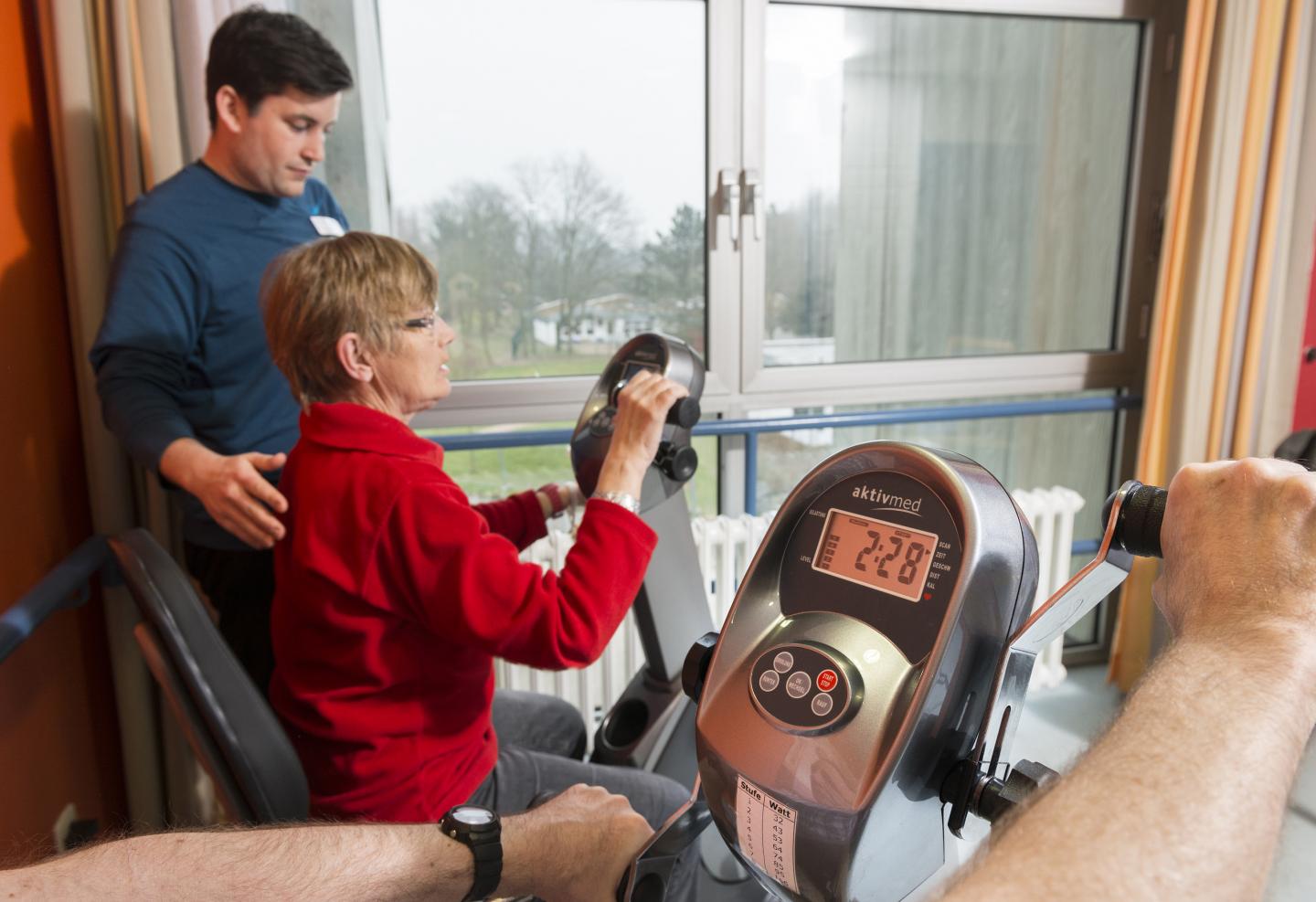
The research group “geriatric psychiatry in motion” of the German Sport University Cologne and the LVR-Hospital Cologne develop and evaluate exercise programmes for geriatric mental health care. Latest results from a study in acute dementia care indicate a special exercise programme is not only effective for the patients themselves, but also reduces the professional caregiver’s burden caused by neuropsychiatric symptoms.

Short-bout exercise sessions of 20 minutes several times per day are key aspects of this ‘exercise-carrousel’ – a new exercise programme specially tailored for patients suffering from dementia, which has been developed and evaluated at the LVR-Hospital in Cologne. Throughout the day, the exercises are applied in small groups of patients – twice in the morning, twice in the afternoon. “With these recurrent activity and rest periods, we are not only trying to increase physical activity, but also aiming at stabilising their day-night rhythm” highlights Dr. Tim Fleiner, head of the research group. The novel exercise approach is feasible in the clinical setting – more than half of the patients are physically active for over 150 minutes per week, thus even meeting the recommendation for healthy older adults despite suffering from dementia.

With the same level of psychotropic medication, the patients show clinically relevant improvements in neuropsychiatric symptoms compared to a control group – in particular agitated behavior and lability improved.

As a special side effect, recently published findings show important improvements in the patient’s environment: participating in the exercise-carrousel reduces the perceived burden of the patient’s caregivers. “Reducing the burden of the patient’s caregivers and their relatives is a key aspect in dementia care. That we can achieve an improvement for the patient and his/her environment through a special exercise programme is novel and important for the health care of older people” states PD Dr. Peter Haussermann, head physician of the Department of Geriatric Psychiatry at the LVR-Hospital Cologne.

An early online version of this paper detailing the findings has been published and is scheduled for publication in the March issue of the Journal of Alzheimer’s Disease:
Fleiner, T., Dauth, H., Zijlstra, W., & Haussermann, P. (2020). A Structured Physical Exercise Program Reduces Professional Caregiver’s Burden Caused by Neuropsychiatric Symptoms in Acute Dementia Care: Randomized Controlled Trial Results. Journal of Alzheimer’s Disease: JAD.

Contact: Dr. Tim Fleiner, Institute of Movement and Sport Gerontology
[email protected] – +49 221 4982 6144

###

Media Contact
Sabine Maas
[email protected]

Original Source

https://www.dshs-koeln.de/english/news/news-details/meldung/exercise-reduces-caregivers-burden-in-dementia-care/

Tags: AgingAlzheimerGerontologyHealth Care Systems/ServicesMedicine/Healthneurobiology
Share12Tweet8Share2ShareShareShare2

Related Posts

Metabolic Classification of Gliomas Revealed by Multi-Omics

January 1, 2026

Gender Gaps in Macular Thickness and Cognitive Function

January 1, 2026

Enhancing Cancer Treatment with Cureety Techcare Telemonitoring

January 1, 2026

Bioengineered Viruses Enable RNA Editing to Treat Sepsis

December 31, 2025
Please login to join discussion

POPULAR NEWS

  • blank

    PTSD, Depression, Anxiety in Childhood Cancer Survivors, Parents

    105 shares
    Share 42 Tweet 26
  • NSF funds machine-learning research at UNO and UNL to study energy requirements of walking in older adults

    71 shares
    Share 28 Tweet 18
  • Exploring Audiology Accessibility in Johannesburg, South Africa

    52 shares
    Share 21 Tweet 13
  • SARS-CoV-2 Subvariants Affect Outcomes in Elderly Hip Fractures

    44 shares
    Share 18 Tweet 11

About

We bring you the latest biotechnology news from best research centers and universities around the world. Check our website.

Follow us

Recent News

Full-Parameter Modulated 3D Vectorial Vortex Arrays

Metabolic Classification of Gliomas Revealed by Multi-Omics

Gender Gaps in Macular Thickness and Cognitive Function

Subscribe to Blog via Email

Enter your email address to subscribe to this blog and receive notifications of new posts by email.

Join 71 other subscribers
  • Contact Us

Bioengineer.org © Copyright 2023 All Rights Reserved.

Welcome Back!

Login to your account below

Forgotten Password?

Retrieve your password

Please enter your username or email address to reset your password.

Log In
No Result
View All Result
  • Homepages
    • Home Page 1
    • Home Page 2
  • News
  • National
  • Business
  • Health
  • Lifestyle
  • Science

Bioengineer.org © Copyright 2023 All Rights Reserved.


