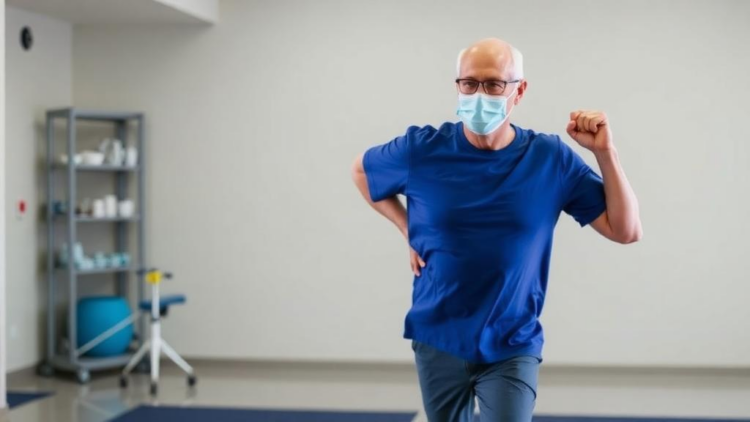
For the roughly eleven million people worldwide who receive a surgical indication for cancer each year, the weeks between diagnosis and the operating table have long been treated as anxious waiting time. A new systematic review and meta-analysis published in the Journal of Cancer Survivorship argues that this window is anything but idle. Pooling data from 27 randomized controlled trials involving 2,005 patients, an international team of researchers led by Natália Casagrande and Pedro Lopez found that structured exercise delivered before oncologic surgery significantly improves cardiorespiratory fitness, physical function, fatigue and quality of life, and — perhaps most importantly — buffers patients against the steep physiological decline that typically follows major surgery.
The concept behind the approach, known as prehabilitation, is deceptively simple. Surgery imposes an enormous metabolic and inflammatory burden on the body, and patients who enter the operating room with a larger physiological reserve — stronger hearts, lungs and muscles — are better equipped to absorb that stress and recover afterward. Rather than waiting until rehabilitation after surgery, when tissue damage, pain and fatigue make exercise far harder, prehabilitation front-loads the training into the preoperative period, when patients are often still physically capable of meaningful work. The idea has gained traction over the past decade, but evidence has remained fragmented across cancer types, outcome measures and study designs, and the specific contribution of exercise itself has often been obscured in multimodal programs that bundle it with nutrition and psychological support.
To isolate the exercise effect, the researchers restricted their analysis to unimodal exercise trials — programs of aerobic training, resistance training, or a combination of the two — compared against usual care or non-exercise control conditions. They excluded patients receiving neoadjuvant chemotherapy or radiotherapy, whose treatment-related toxicities would confound the results, and they registered the protocol prospectively. Searches across seven databases, supplemented by citation tracking that accounted for roughly 28 percent of the final included studies, yielded 28 articles representing 27 trials. The population skewed toward lung cancer, which accounted for 48.1 percent of studies, followed by gastrointestinal and genitourinary cancers, with a median patient age of 64 years.
The interventions themselves varied widely, reflecting the clinical reality that the time available before surgery can range from a single week to two months. Aerobic programs included treadmill walking, cycle ergometry, interval training and even high-intensity interval training, with intensities prescribed from moderate levels up to 115 percent of maximal cardiopulmonary exercise testing workload in some HIIT protocols. Resistance programs targeted major muscle groups with two to four sets per exercise at moderate to high intensity, while combined programs integrated both modalities. Most interventions — 74.1 percent — were supervised, and durations ranged from approximately one to eight weeks.
When the team applied a three-level mixed-effects meta-analysis, a statistical approach that accounts for multiple dependent effect sizes within the same study, the results were consistent in direction across the key physiological outcomes. Cardiorespiratory fitness, measured through cardiopulmonary exercise testing and related parameters, improved with a standardized mean difference of 0.31, driven almost entirely by preoperative gains. Physical function, assessed through validated performance tests such as the six-minute walk and timed up-and-go, showed the largest and most robust benefit at an SMD of 0.36, with the effect significant both before surgery and — critically — after it. Statistical heterogeneity was low for both outcomes, at 22.3 percent and 11.2 percent respectively, suggesting the benefits were remarkably consistent across different tests, cancer sites and exercise prescriptions.
The postoperative findings may be the most clinically consequential. Physical function typically deteriorates after major cancer surgery, and that decline is independently associated with poorer survival across the cancer care continuum. In this analysis, the functional gains achieved before surgery were not merely lost at the incision; they persisted, with postoperative physical function significantly better in the exercise groups than in controls. For the other outcomes, the pattern was one of preservation rather than improvement: cardiorespiratory fitness, muscle strength, fatigue and quality of life were maintained at or near baseline levels after surgery in exercising patients, effectively attenuating the expected perioperative decline. In perioperative medicine, holding ground is itself a victory.
Fatigue emerged as another notable beneficiary. While the overall effect across all time points did not reach significance, preoperative fatigue was significantly reduced, with aerobic exercise showing larger effects than combined training. This matters because cancer-related fatigue is among the most prevalent and burdensome symptoms in oncology, affecting daily functioning and treatment tolerance, and because fatigue and disability before surgery are associated with roughly a 50 percent higher risk of postoperative complications, including respiratory, cardiovascular and renal events. The authors suggest plausible mechanisms ranging from improved cardiorespiratory fitness and inflammatory regulation to enhanced self-efficacy.
Not every outcome responded equally. Muscle strength showed no significant overall improvement, though the analysis was limited to eight studies and the certainty of evidence was rated very low. Psychological distress was preserved rather than reduced, a finding that contrasts with some earlier meta-analyses and may reflect the shorter intervention durations, the standardized mean difference approach, or the possibility that meaningful mental health benefits require longer programs of six to eight weeks, higher baseline distress, or the addition of formal psychological support. Quality of life improved modestly overall, but the certainty of evidence was very low and small-study effects were detected, warranting caution. The authors themselves note that quality of life in patients awaiting major surgery is shaped by a web of physical, psychological, social and treatment-related factors that brief exercise programs alone are unlikely to transform.
The review is not without limitations, which the authors confront directly. The predominance of lung cancer trials, many involving thoracic procedures with high physiological demands, may limit generalizability. Surgical modality was inconsistently reported, obscuring a key driver of perioperative stress. The exclusion of patients on neoadjuvant therapy, while necessary to isolate the exercise-surgery interaction, leaves open the question for the growing population receiving systemic treatment before surgery. And most outcomes carried low or very low certainty of evidence under the GRADE framework, reflecting risk of bias, imprecision and small numbers of studies for several analyses.
Even so, the overall message is clear and increasingly actionable. Exercise-based prehabilitation appears safe and feasible across oncologic populations, improves the outcomes that matter most for tolerating surgery, and helps patients leave the hospital closer to — not further from — the functional condition they arrived in. The authors argue for a shift in perioperative cancer care toward interventions that prepare patients not just to survive the operation but to recover faster, mobilize earlier, and start adjuvant therapies like chemotherapy or immunotherapy on schedule. Exercise, they suggest, should be a cornerstone of that preparation, ideally embedded within individualized, periodized and multimodal care pathways that pair training with nutritional and psychological support tailored to each patient’s needs and timetable.
Subject of Research: Prehabilitative exercise before oncologic surgery
Article Title: Benefits of prehabilitative exercise on physiological, functional and patient-reported outcomes in patients undergoing oncologic surgery: A systematic review and meta-analysis
Article References: Casagrande, N., Singh, F., Rech, A., Radaelli, R., Paniz, B. M., Silvestro, G. T., Eberhardt, G. N., Brollo, J., Kneubil, M. C., Júnior, C. P., de Almeida, P. W. M., Magalhães, M. C. F., Bettariga, F., & Lopez, P. (2026). Benefits of prehabilitative exercise on physiological, functional and patient-reported outcomes in patients undergoing oncologic surgery: A systematic review and meta-analysis. Journal of Cancer Survivorship. https://doi.org/10.1007/s11764-026-02107-0
Image Credits: AI Generated
DOI: 10.1007/s11764-026-02107-0
Keywords: prehabilitation, cancer surgery, exercise, cardiorespiratory fitness, physical function, fatigue, quality of life, meta-analysis, perioperative care, oncology, randomized controlled trials, cancer survivorship
Cite Scienmag News
APA
MLA
Chicago
Nathaniel Bowman. (October 1, 2026). Exercise Before Cancer Surgery Boosts Fitness, Function and Recovery, Major Review Finds. Scienmag. https://scienmag.com/exercise-before-cancer-surgery-boosts-fitness-function-and-recovery-major-review-finds/
Nathaniel Bowman. “Exercise Before Cancer Surgery Boosts Fitness, Function and Recovery, Major Review Finds.” Scienmag, 1 October 2026, https://scienmag.com/exercise-before-cancer-surgery-boosts-fitness-function-and-recovery-major-review-finds/. Accessed 1 October 2026.
Nathaniel Bowman. “Exercise Before Cancer Surgery Boosts Fitness, Function and Recovery, Major Review Finds.” Scienmag. October 1, 2026. https://scienmag.com/exercise-before-cancer-surgery-boosts-fitness-function-and-recovery-major-review-finds/
Copy citation
Download RIS
Tags: benefits of structured exercise training before oncologic proceduresboosting cardiorespiratory fitness pre-surgeryCancer surgerycancer surgery patient recoverycancer survivorshipCardiorespiratory fitnessenhancing quality of life with pre-surgery exerciseExerciseexercise and physiological reserve in cancer patientsfatigueimpact of exercise on surgical outcomesimproving physical function before cancer surgerymeta-analysisoncologyperioperative carephysical functionPrehabilitationprehabilitation for cancer patientspreoperative exercise benefitsQuality of Liferandomized controlled trialsreducing post-surgical fatigue and complicationsrole of exercise in cancer treatment preparationsystematic review of preoperative exercise interventions