• HOME
  • NEWS
  • EXPLORE
    • CAREER
      • Companies
      • Jobs
    • EVENTS
    • iGEM
      • News
      • Team
    • PHOTOS
    • VIDEO
    • WIKI
  • BLOG
  • COMMUNITY
    • FACEBOOK
    • INSTAGRAM
    • TWITTER
Sunday, August 23, 2026
BIOENGINEER.ORG
No Result
View All Result
  • Login
  • HOME
  • NEWS
  • EXPLORE
    • CAREER
      • Companies
      • Jobs
        • Lecturer
        • PhD Studentship
        • Postdoc
        • Research Assistant
    • EVENTS
    • iGEM
      • News
      • Team
    • PHOTOS
    • VIDEO
    • WIKI
  • BLOG
  • COMMUNITY
    • FACEBOOK
    • INSTAGRAM
    • TWITTER
  • HOME
  • NEWS
  • EXPLORE
    • CAREER
      • Companies
      • Jobs
        • Lecturer
        • PhD Studentship
        • Postdoc
        • Research Assistant
    • EVENTS
    • iGEM
      • News
      • Team
    • PHOTOS
    • VIDEO
    • WIKI
  • BLOG
  • COMMUNITY
    • FACEBOOK
    • INSTAGRAM
    • TWITTER
No Result
View All Result
Bioengineer.org
No Result
View All Result
Home NEWS Science News Biology

Every rose has its thorns … or does it?

by
August 1, 2024
in Biology
Reading Time: 3 mins read
0
NY Botanical Garden Rose
Share on FacebookShare on TwitterShare on LinkedinShare on RedditShare on Telegram

According to Greek mythology, red roses first appeared when Aphrodite pricked her foot on a thorn, spilling blood on a white rose. Since then, roses’ thorns have captured the imaginations of countless poets and forlorn lovers.
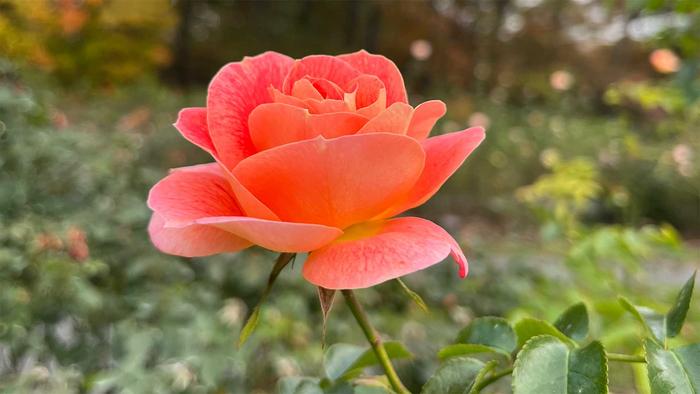
NY Botanical Garden Rose

Credit: Jack Satterlee/Cold Spring Harbor Laboratory

According to Greek mythology, red roses first appeared when Aphrodite pricked her foot on a thorn, spilling blood on a white rose. Since then, roses’ thorns have captured the imaginations of countless poets and forlorn lovers.

But they aren’t the only plants with these dangerous protrusions, technically called prickles. Prickles have evolved independently in species across the plant kingdom. Their main function: warding off herbivores. They’re even present in certain eggplant and rice crops. Yet, for years, it’s been unclear how the trait pops up so frequently in such unrelated species.

Now, in a breakthrough discovery, Cold Spring Harbor Laboratory (CSHL) has found that the same ancient gene family is responsible for prickles across many plants, despite millions of years of evolutionary separation.

CSHL postdoc James Satterlee was inspired to investigate prickles upon touring a field where his advisor, Professor & HHMI Investigator Zachary Lippman, grows hundreds of nightshades. Think tomatoes, potatoes, and eggplants.

“I noticed many had very prominent prickles. So, I asked, ‘What do we know about that? What’s going on with this adaptation?’ It turns out we knew almost nothing,” recalls Satterlee. 

With scientists in Spain, Satterlee began analyzing eggplants, which led him to a gene family called LONELY GUY (LOG). LOG genes are normally responsible for making a hormone that causes cell division and expansion. Satterlee discovered that certain LOG mutations also eliminate prickles in eggplants. Lippman and Satterlee wondered: Could LOG-related genes be responsible for prickle gains and losses across multiple plants over millions of years?

The team started combing through prior studies and contacting collaborators around the globe. Satterlee and Lippman worked with the New York Botanical Garden to examine specimens with and without prickles. Collaborators at Cornell University used genome editing to eliminate prickles in desert raisins, a foraged berry native to Australia. Another colleague in France suppressed prickles in roses. In total, the team came to associate prickles with LOG-related genes in about 20 species.

Lippman says while this discovery could be used to engineer plants without prickles, it also has big implications for understanding convergent evolution in all life. That is, how completely different species independently develop similar traits. 

“You’re really asking about life in general—evolution of traits. How do they emerge? How are they modified? What are the underlying mechanisms? What can we learn about things we take for granted?” he explains. 

The answer could someday make lesser-known species like desert raisins a new fruit in supermarkets. At the very least, it should make life easier for horticulturalists plucking roses’ pesky thorns.


Journal

Science

DOI

10.1126/science.ado1663

Article Title

Convergent evolution of plant prickles by repeated gene co-option over deep time

Article Publication Date

2-Aug-2024
Share12Tweet8Share2ShareShareShare2

Related Posts

Delayed antiviral response in alveolar type 2 cells heightens influenza susceptibility

Delayed antiviral response in alveolar type 2 cells heightens influenza susceptibility

August 22, 2026
Genetic evidence links sleep disruption to hemorrhoidal disease, revealing a hidden connection

Genetic evidence links sleep disruption to hemorrhoidal disease, revealing a hidden connection

August 22, 2026

LASIK Versus Contact Lenses for Correcting Myopia

August 22, 2026

New Advances in Minimally Invasive Laryngeal Surgery

August 22, 2026

POPULAR NEWS

  • Blocking glucosylceramide production kills cancer cells via lysosomal dysfunction, not ceramide buildup

    29 shares
    Share 12 Tweet 7
  • ZCCHC4 boosts replication-dependent histone mRNA translation by interacting with eIF3

    29 shares
    Share 12 Tweet 7
  • KAIST Surface Defects Boost Droplet Formation, Removal, and Heat Transfer by 5.5-Fold

    29 shares
    Share 12 Tweet 7
  • Dual-oxygen pancreatic cancer organoids mirror basal-classical diversity, spatial transcriptomics confirms

    29 shares
    Share 12 Tweet 7

About

We bring you the latest biotechnology news from best research centers and universities around the world. Check our website.

Follow us

Recent News

Blocking glucosylceramide production kills cancer cells via lysosomal dysfunction, not ceramide buildup

ZCCHC4 boosts replication-dependent histone mRNA translation by interacting with eIF3

KAIST Surface Defects Boost Droplet Formation, Removal, and Heat Transfer by 5.5-Fold

Subscribe to Blog via Email

Success! An email was just sent to confirm your subscription. Please find the email now and click 'Confirm' to start subscribing.

Join 85 other subscribers
  • Contact Us

Bioengineer.org © Copyright 2023 All Rights Reserved.

Welcome Back!

Login to your account below

Forgotten Password?

Retrieve your password

Please enter your username or email address to reset your password.

Log In
No Result
View All Result
  • Homepages
    • Home Page 1
    • Home Page 2
  • News
  • National
  • Business
  • Health
  • Lifestyle
  • Science

Bioengineer.org © Copyright 2023 All Rights Reserved.