• HOME
  • NEWS
  • EXPLORE
    • CAREER
      • Companies
      • Jobs
    • EVENTS
    • iGEM
      • News
      • Team
    • PHOTOS
    • VIDEO
    • WIKI
  • BLOG
  • COMMUNITY
    • FACEBOOK
    • INSTAGRAM
    • TWITTER
Thursday, August 13, 2026
BIOENGINEER.ORG
No Result
View All Result
  • Login
  • HOME
  • NEWS
  • EXPLORE
    • CAREER
      • Companies
      • Jobs
        • Lecturer
        • PhD Studentship
        • Postdoc
        • Research Assistant
    • EVENTS
    • iGEM
      • News
      • Team
    • PHOTOS
    • VIDEO
    • WIKI
  • BLOG
  • COMMUNITY
    • FACEBOOK
    • INSTAGRAM
    • TWITTER
  • HOME
  • NEWS
  • EXPLORE
    • CAREER
      • Companies
      • Jobs
        • Lecturer
        • PhD Studentship
        • Postdoc
        • Research Assistant
    • EVENTS
    • iGEM
      • News
      • Team
    • PHOTOS
    • VIDEO
    • WIKI
  • BLOG
  • COMMUNITY
    • FACEBOOK
    • INSTAGRAM
    • TWITTER
No Result
View All Result
Bioengineer.org
No Result
View All Result
Home NEWS Science News Chemistry

Erythropoietin treatments may increase hip fracture risk in patients with kidney failure

Bioengineer by Bioengineer
May 5, 2021
in Chemistry
Reading Time: 1 min read
0
IMAGE
Share on FacebookShare on TwitterShare on LinkedinShare on RedditShare on Telegram

IMAGE

Credit: Dr. Noguchi

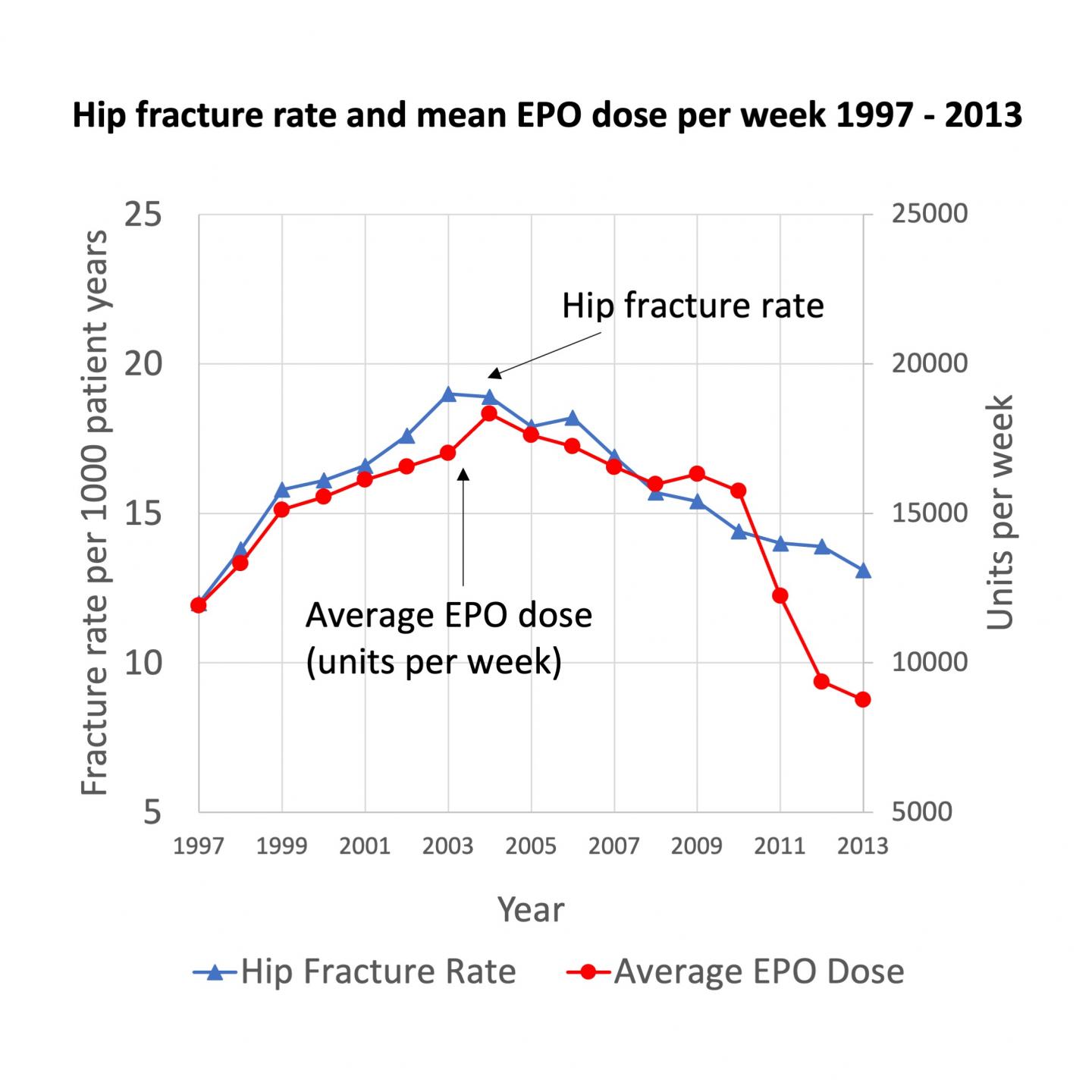
Erythropoietin (EPO) is a medication used to stimulate the production of new red blood cells, which is impaired in individuals with kidney failure. Unfortunately, however, the treatment may increase the risk of hip fractures.

In an analysis published in the Journal of Bone and Mineral Research that examined 1997-2013 records from two large U.S. databases, investigators found that EPO doses administered to patients with kidney failure on hemodialysis fluctuated widely over time, and hip fracture rates closely tracked the average dose of EPO doses used in patients.

“Patients with renal failure can benefit from EPO treatment; however, as with all medications, a full understanding of potential drug-associated risks favors the likelihood that a positive risk-benefit balance can be achieved with EPO treatment,” senior author Constance Tom Noguchi, PhD, of the National Institute of Diabetes and Digestive and Kidney Diseases.

###

Media Contact
Wiley Newsroom
[email protected]

Related Journal Article

http://dx.doi.org/10.1002/jbmr.4297

Tags: Critical Care/Emergency MedicineHealth Care Systems/ServicesInternal MedicineMedicine/HealthPainPharmaceutical SciencePublic Health
Share12Tweet8Share2ShareShareShare2

Related Posts

Compact BIC Laser Produces Highly Pure Linearly Polarized Emission

Compact BIC Laser Produces Highly Pure Linearly Polarized Emission

August 13, 2026
Three Water Molecules Reveal the Minimal Switch Enabling Ultrafast Proton Transport

Three Water Molecules Reveal the Minimal Switch Enabling Ultrafast Proton Transport

August 13, 2026

Recyclable Energy Storage Device Designed for Sustainability

August 13, 2026

Eco-friendly processing lowers costs of novel material for water decontamination

August 13, 2026
Please login to join discussion

POPULAR NEWS

  • Aged granulosa cell-derived iPSCs show impaired germ-cell differentiation; ERK/MAPK inhibition partly rescues

    29 shares
    Share 12 Tweet 7
  • Genomics Reveal Endangered Fish Populations Most Vulnerable to Climate Change

    29 shares
    Share 12 Tweet 7
  • Brain Protein Defect Disrupts Fat Cravings, Dietary Intake, and Body Weight

    29 shares
    Share 12 Tweet 7
  • Compact BIC Laser Produces Highly Pure Linearly Polarized Emission

    29 shares
    Share 12 Tweet 7

About

We bring you the latest biotechnology news from best research centers and universities around the world. Check our website.

Follow us

Recent News

Aged granulosa cell-derived iPSCs show impaired germ-cell differentiation; ERK/MAPK inhibition partly rescues

Genomics Reveal Endangered Fish Populations Most Vulnerable to Climate Change

Brain Protein Defect Disrupts Fat Cravings, Dietary Intake, and Body Weight

Subscribe to Blog via Email

Enter your email address to subscribe to this blog and receive notifications of new posts by email.

Join 86 other subscribers
  • Contact Us

Bioengineer.org © Copyright 2023 All Rights Reserved.

Welcome Back!

Login to your account below

Forgotten Password?

Retrieve your password

Please enter your username or email address to reset your password.

Log In
No Result
View All Result
  • Homepages
    • Home Page 1
    • Home Page 2
  • News
  • National
  • Business
  • Health
  • Lifestyle
  • Science

Bioengineer.org © Copyright 2023 All Rights Reserved.