Researchers from QMUL and GEOMAR are studying the adaptive potential of fish
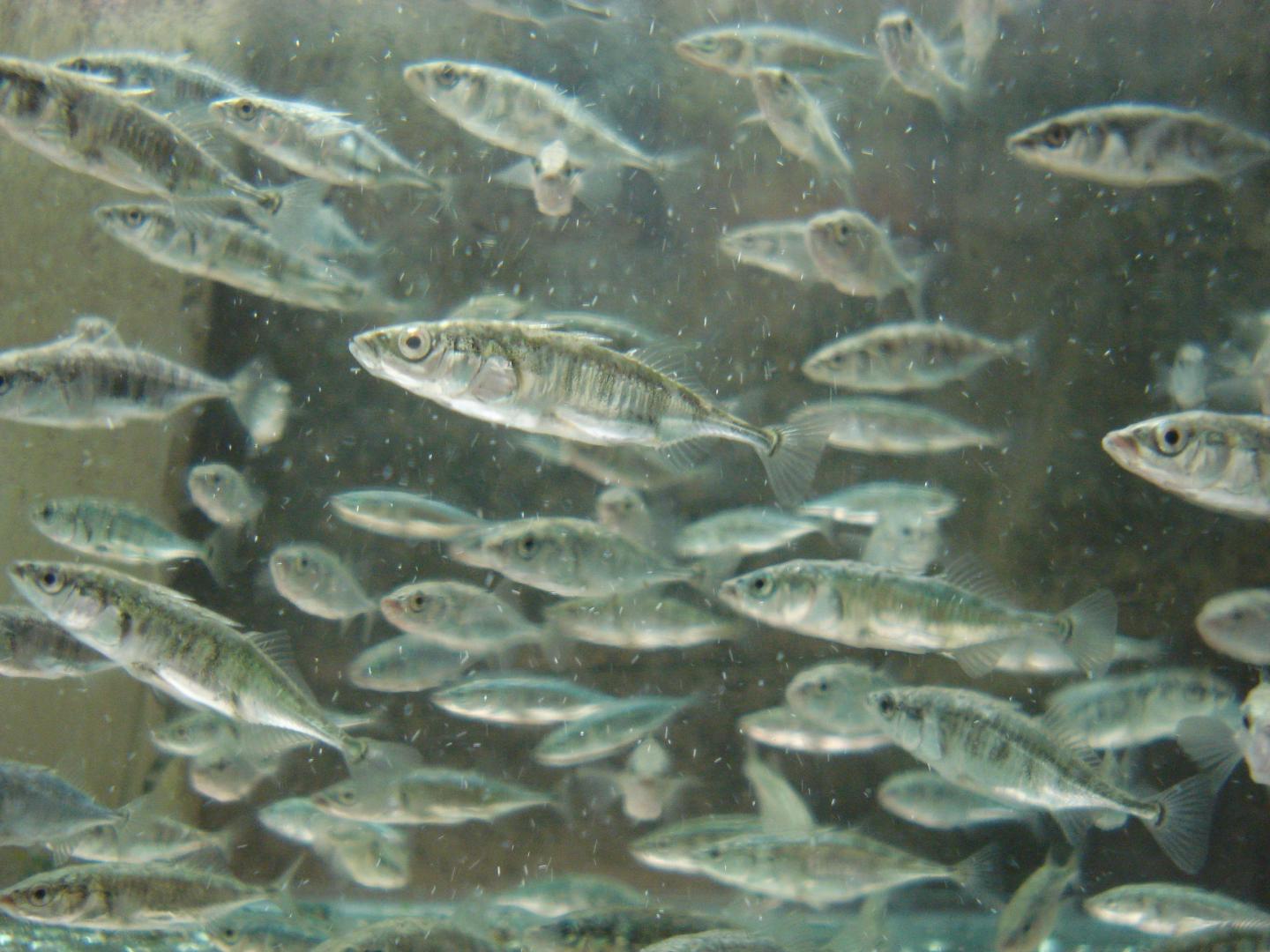
Credit: M. Heckwolf, GEOMAR
The current pace of climate change exceeds historical events by 1-2 orders of magnitude, which will make it hard for organisms and ecosystems to adapt. For a long time, it has been assumed that adaptation was only possible by changes in the genetic makeup – the DNA base sequence. Recently, another information level of the DNA, namely epigenetics, has come into focus.
Using a fish species from the Baltic Sea, the three-spined stickleback, an international team investigated whether and how epigenetics contributes to adaptation. “Our experiment shows that epigenetic modifications affect adaptation, but also that the changes from one generation to the next are smaller than previously assumed,” says biologist Dr. Melanie Heckwolf from GEOMAR Helmholtz Centre for Ocean Research Kiel. She is one author of the study, which has now been published in Science Advances.
But what distinguishes changes in DNA from changes in epigenetics? “Individuals with certain heritable traits encoded in the DNA can cope with the prevailing environment better than others. On average, those individuals can cope better with their environment, hence survive longer and produce more offspring. In the long run, their characteristics encoded in the DNA will prevail. This process refers to natural selection,” explains Dr. Britta Meyer from GEOMAR. However, selection requires time, and time is scarce in the face of rapid climate change.
In contrast, epigenetic processes chemically influence the structure of the DNA. They activate or deactivate areas of the genome that are responsible for certain traits or responses to environmental conditions. On the one hand, “stable” epigenetic markers, through natural selection, contribute to adaptation in a similar way as the DNA itself. On the other hand, “inducible” markers are those that can change during the life of an individual. In theory, if this happens in the gametes of the parents, their offspring are given an advantage to cope with their environment. Many scientists therefore expect that inducible markers will react particularly quickly and thus ensure the survival of organisms in the face of rapid changes.
The research groups of Prof. Dr. Thorsten Reusch (GEOMAR, Germany) and Dr. Christophe Eizaguirre (Queen Mary University of London, UK) have investigated whether and how these stable and inducible markers contribute to adaptation. They use the Baltic three-spined stickleback fish because it is currently adapted to different salinity conditions ranging from saltwater to freshwater. Further, the Baltic Sea is a natural laboratory for climate change research because the effects of climate change are already evident there.
“In order to understand how fish respond to the consequences of climate change, we collected stickleback populations from different regions of the North and Baltic Seas with different salinity levels,” explains Dr. Meyer. The team found that the different populations differed in their genetic and epigenetic makeups and also had different tolerances to changes in salinity. In an experiment involving two generations of sticklebacks, the team was also able to show that inducible markers improve the response of the second generation to environmental change, albeit to a lesser extent than initially assumed.
Overall, the study shows that organisms will eventually reach their limits to respond to climate change, even with epigenetic modes of adaptation. “We have to be careful not to overinterpret this exciting but poorly understood field of research in epigenetics as a silver bullet against climate change for all species,” says Melanie Heckwolf. “Climate change is one of the greatest challenges for species and ecosystems, and the natural mechanisms available to species to respond may not be sufficient if climate change remains so strong and rapid.”
###
Media Contact
Melanie Heckwolf
[email protected]
49-431-600-4577
Related Journal Article
http://dx.