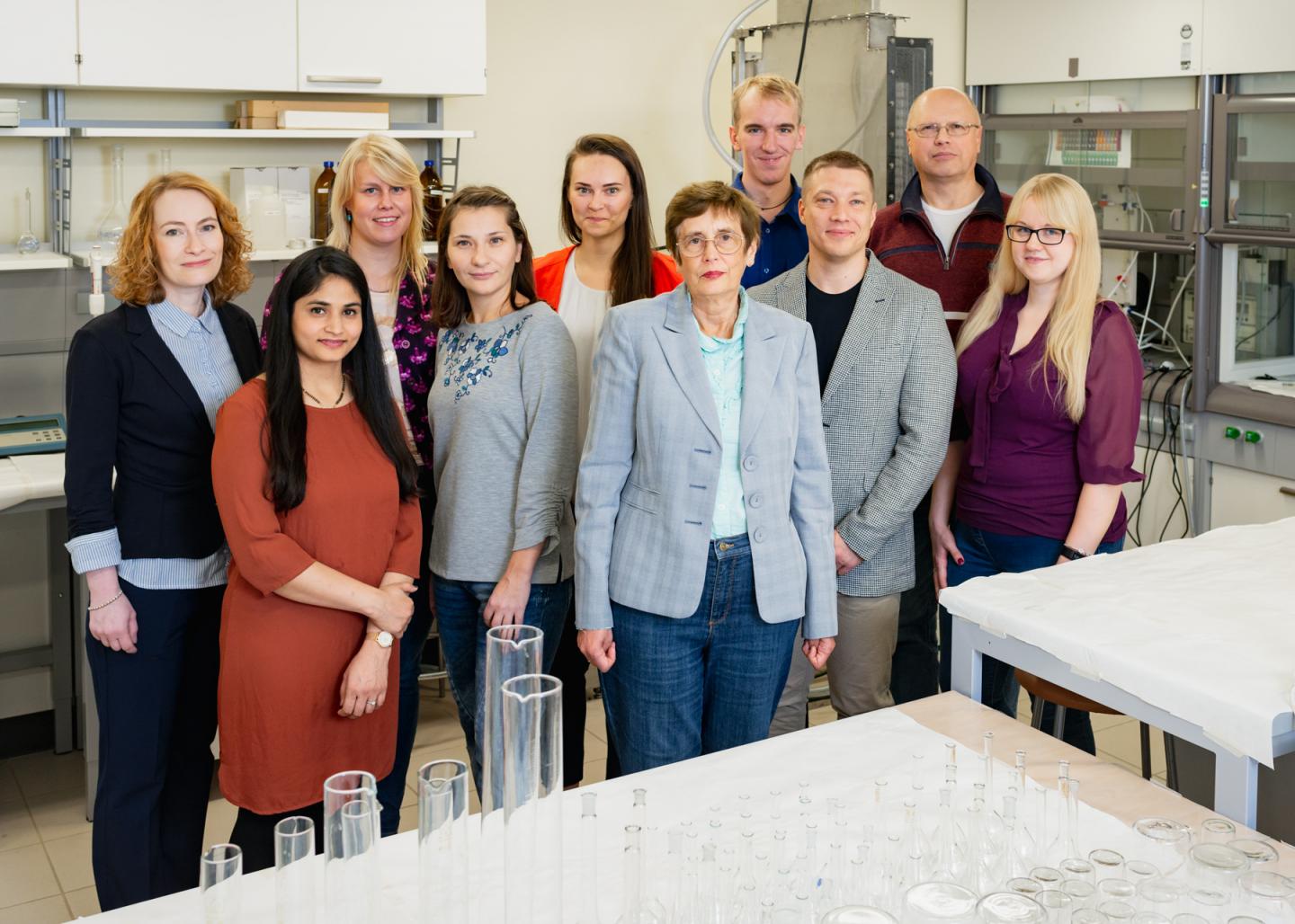
Credit: TalTech
Clean drinking water is considered to be one of the earth’s most precious and threatened resources. Recent studies show that increasing concentrations of pharmaceuticals can be found in surface waters, which can end up in drinking water. TalTech environmental scientists are looking for ways to treat drinking water from hazardous pharmaceutical residues.
TalTech research group of the Laboratory of Environmental Technology led by Senior Researcher Niina Dulova published an article in the journal Environmental Research titled “Individual and simultaneous degradation of sulfamethoxazole and trimethoprim by ozone, ozone/hydrogen peroxide and ozone/persulfate processes: A comparative study”.
Niina Dulova says, “Removal of hazardous micropollutants of different origins from water is still one of the unresolved problems in today’s environmental technology. Our study investigated application of new efficient water treatment methods for elimination of two micropollutants: sulfamethoxazole and trimethoprim. These antibiotics are widely used to treat lung and kidney diseases both in veterinary and human medicine.”
The application of advanced oxidation processes that take advantage of the high oxidizing capacity of radicals is considered to be the most effective tool for removal of micropollutants from water. These technologies are applied to remove poorly biodegradable substances from water almost completely through mineralization. Advanced oxidation processes can be classified in different ways, but they are mostly divided into categories according to the source of free radicals. Conventionally the oxidants used to form free radicals include hydrogen peroxide (H2O2) and ozone (O3), but in recent years other alternative oxidants, such as persulfate (PS), have been used increasingly.
“In our study we focused on the O3, combined O3/H2O2 and O3/PS processes. The latter, O3/PS technology, is an evolving promising solution in the field of radical-based oxidation processes. The efficiency of the O3/PS process in the decomposition of antibiotic residues (sulfamethoxazole, trimethoprim and a combination of sulfamethoxazole and trimethoprim) in water has not been studied previously and our findings are promising,” Niina Dulova says.
The current EU Water Framework Directive does not address the issues of these antibiotic residues in water. Therefore, our wastewater treatment plants do not consider it necessary to tackle the problem. However, the situation will change over the next five years as the European Union is on the way towards establishing stricter water framework directives. This would also change the requirements for our water treatment plants. The best solution in this case would be the introduction of a new water treatment technology, i.e. a free radical based process,” Dulova says.
Currently ozone is mainly used in water treatment plants for water disinfection, which, however, is not sufficient to remove hazardous pharmaceutical residues. Only using ozone also for oxidation would remove antibiotic residues from water.
Niina Dulova says, “If you ask why water containing antibiotic residues is hazardous to people, the answer is be very concrete: when exposed to water contaminated with such antibiotic residues, bacteria develop resistance to these antibiotics. This, in turn, makes it increasingly difficult to treat people exposed to these bacteria with antibiotics in the future.”
###
Source: Environmental Research, “Individual and simultaneous degradation of sulfamethoxazole and trimethoprim by ozone, ozone/hydrogen peroxide and ozone/persulfate processes: A comparative study” 10.2020 https:/
Additional information: Senior Researcher at TalTech Laboratory of Environmental Technology Niina Dulova, [email protected]
Kersti Vähi, TalTech Research Communications Officer
Media Contact
Niina Dulova
[email protected]
Related Journal Article
http://dx.