Colonization and environmental contamination by vancomycin-resistant enterococci varied substantially by local facility and enterococcal species across three Veterans Affairs Community Living Centers in the United States Great Lakes Region. A secondary analysis of longitudinal prospective data revealed that facility of stay influenced enterococcal colonization, while bacterial species was associated with methicillin-resistant Staphylococcus aureus co-occurrence.
The investigation focused on post-acute care, identifying it as an important but little studied healthcare setting. Researchers sought to characterize the species distribution of vancomycin-resistant Enterococcus faecalis and Enterococcus faecium and assess their specific associations with methicillin-resistant Staphylococcus aureus in both patient and environmental samples.
The study protocol involved multisite longitudinal screening of 197 patients and their immediate environments across three Veterans Affairs Community Living Centers. Collected samples underwent species-level identification to differentiate MRSA, Enterococcus faecium, and Enterococcus faecalis isolates.
To evaluate potential risk factors and measures of association, the researchers applied univariable and multivariable logistic regression. These analytical models were conducted separately at the isolate, visit, and patient levels for both patient colonization and environmental contamination.
From 122 patients and their rooms, the authors identified a total of 689 vancomycin-resistant enterococcal isolates to the species level. The ratio of Enterococcus faecium to Enterococcus faecalis colonization and contamination differed significantly across the three medical facilities, registering at 6.0, 11.7, and 0.85 (p < 0.001).
Statistical analysis identified the specific facility of stay as a significant independent risk factor for Enterococcus faecium colonization and contamination, operating alongside documented antibiotic use.
Rates of co-colonization and co-contamination with methicillin-resistant Staphylococcus aureus were higher than expected and differed significantly by enterococcal species. Co-occurrence with MRSA reached 35.5 percent in patients and 33.3 percent on room surfaces for Enterococcus faecalis, compared with 9.3 percent in patients and 13.9 percent on room surfaces for Enterococcus faecium (p = 0.0003 for patient colonization and p = 0.0041 for environmental contamination).
Multivariable evaluation determined that Enterococcus faecalis species was a significant independent risk factor for MRSA co-colonization, in addition to vancomycin use. The authors concluded that epidemiological scenarios for vancomycin-resistant enterococci must be assessed facility by facility, adding that frequent co-occurrence between vancomycin-resistant Enterococcus faecalis and MRSA raises concerns regarding potential increases in MRSA vancomycin minimum inhibitory concentrations.
Subject of Research: Vancomycin-resistant enterococci and MRSA co-colonization in post-acute care facilities
Article Title: Colonization and contamination by vancomycin-resistant Enterococcus faecium and faecalis in community living centers in the US Great Lakes Region: impact of local facility and methicillin-resistant Staphylococcus aureus
Article References: Hua, H., Naif, A., Clement, T., Gibson, K. E., Kouatli, L., Mody, L., & Cassone, M. (2026). Colonization and contamination by vancomycin-resistant Enterococcus faecium and faecalis in community living centers in the US Great Lakes Region: impact of local facility and methicillin-resistant Staphylococcus aureus. Antimicrobial Resistance & Infection Control. https://doi.org/10.1186/s13756-026-01811-x
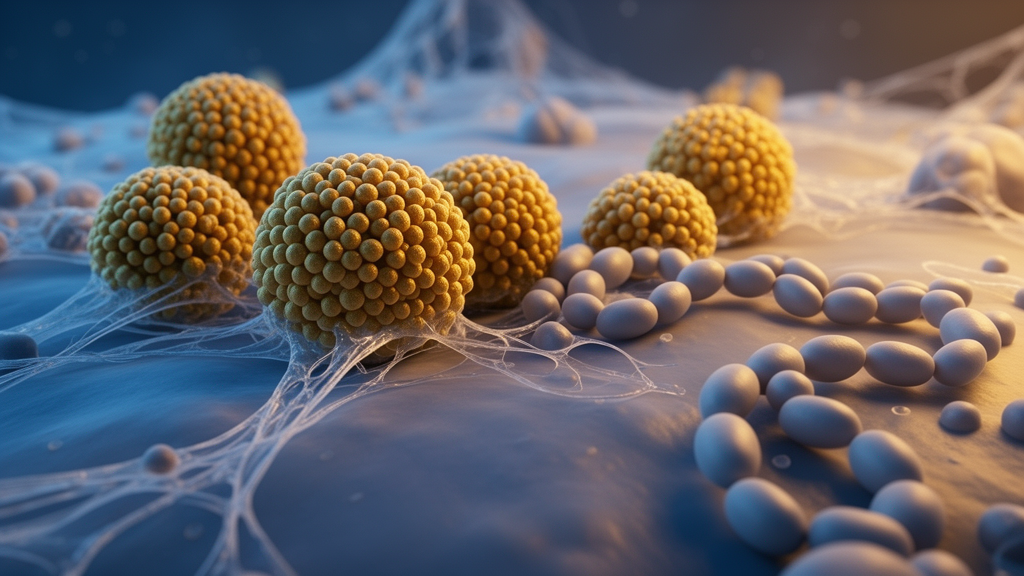
Image Credits: AI Generated
DOI: 10.1186/s13756-026-01811-x
Keywords: vancomycin-resistant enterococci, Enterococcus faecalis, Enterococcus faecium, methicillin-resistant Staphylococcus aureus, community living centers, post-acute care, bacterial colonization, antimicrobial resistance, Colonization, contamination, vancomycin-resistant, Enterococcus
News Source: Ophelia Keating. (November 10, 2026). Enterococcus faecalis Linked to Higher MRSA Co-Colonization in Post-Acute Care. Scienmag.