• HOME
  • NEWS
  • EXPLORE
    • CAREER
      • Companies
      • Jobs
    • EVENTS
    • iGEM
      • News
      • Team
    • PHOTOS
    • VIDEO
    • WIKI
  • BLOG
  • COMMUNITY
    • FACEBOOK
    • INSTAGRAM
    • TWITTER
Monday, July 13, 2026
BIOENGINEER.ORG
No Result
View All Result
  • Login
  • HOME
  • NEWS
  • EXPLORE
    • CAREER
      • Companies
      • Jobs
        • Lecturer
        • PhD Studentship
        • Postdoc
        • Research Assistant
    • EVENTS
    • iGEM
      • News
      • Team
    • PHOTOS
    • VIDEO
    • WIKI
  • BLOG
  • COMMUNITY
    • FACEBOOK
    • INSTAGRAM
    • TWITTER
  • HOME
  • NEWS
  • EXPLORE
    • CAREER
      • Companies
      • Jobs
        • Lecturer
        • PhD Studentship
        • Postdoc
        • Research Assistant
    • EVENTS
    • iGEM
      • News
      • Team
    • PHOTOS
    • VIDEO
    • WIKI
  • BLOG
  • COMMUNITY
    • FACEBOOK
    • INSTAGRAM
    • TWITTER
No Result
View All Result
Bioengineer.org
No Result
View All Result
Home NEWS Science News Biology

Ensuring broccoli sprouts retain their cancer-fighting compounds

Bioengineer by Bioengineer
September 20, 2017
in Biology
Reading Time: 2 mins read
0
Share on FacebookShare on TwitterShare on LinkedinShare on RedditShare on Telegram

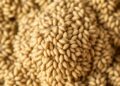
Raw broccoli sprouts, a rich source of potential cancer-fighting compounds, have become a popular health food in recent years. But conventional heat treatment used to kill bacteria on produce can reduce levels of the broccoli sprouts' helpful phytochemicals. Now researchers report in ACS' Journal of Agricultural and Food Chemistry that high pressure processing could wipe out harmful bacteria while maintaining high concentrations of its health-promoting ingredients.

Research has found that broccoli sprouts contain anywhere from 10 to 100 times more glucosinolates than their mature counterparts. Glucosinolates are the main compounds in broccoli and its sprouts that are transformed into isothiocyanates when chopped or chewed. Studies suggest that isothiocyanates have anti-cancer and anti-inflammatory activity. To help prevent bacterial contamination, the sprouts can be heated, but high temperatures can affect the conversion of glucosinolates to isothiocyanates. So Volker Böhm and colleagues wanted to explore an alternative method for getting rid of broccoli sprouts' microbial contamination.

The researchers treated sprouts with high pressure, a method that is sometimes used to ensure the safety of seeds, fruits and vegetables while preserving heat-sensitive nutrients. Results showed that processing broccoli sprouts at 400 to 600 megapascals increased the amount of glucosinolates that turned into isothiocyanates. Up to 85 percent of glucosinolates were converted under high pressure processing, boosting the plants' potential health-promoting compounds. The rate of conversion for mild heat treatment at 60 degrees Celsius was 69 percent. Isothiocyanate levels in boiled samples were undetectable or not quantifiable. Thus, the researchers say high pressure could be a preferred method over heating for processing broccoli sprouts.

###

The authors acknowledge funding from the Ohio State University Center for Advanced Functional Foods Research and Entrepreneurship.

The paper's abstract will be available on Sept. 20 at 8 a.m. Eastern time here: http://pubs.acs.org/doi/abs/10.1021/acs.jafc.7b01380

The American Chemical Society is a not-for-profit organization chartered by the U.S. Congress. ACS is the world's largest scientific society and a global leader in providing access to chemistry-related research through its multiple databases, peer-reviewed journals and scientific conferences. ACS does not conduct research, but publishes and publicizes peer-reviewed scientific studies. Its main offices are in Washington, D.C., and Columbus, Ohio.

To automatically receive news releases from the American Chemical Society, contact [email protected].

Follow us: Twitter | Facebook

Media Contact

Katie Cottingham
[email protected]
301-775-8455
@ACSpressroom

http://www.acs.org

Share12Tweet8Share2ShareShareShare2

Related Posts

Early RNA Life May Have Repaired Genomes, Shedding Light on Origins

Early RNA Life May Have Repaired Genomes, Shedding Light on Origins

July 13, 2026
Chonnam University uncovers isoform-specific HIF signaling in muscles

Chonnam University uncovers isoform-specific HIF signaling in muscles

July 13, 2026

Han directs new $15M NIH center for organ-on-chip technology

July 11, 2026

Bacteriophages Enable Next-Gen Smart Pathogen Detection Sensors

July 10, 2026
Please login to join discussion

POPULAR NEWS

  • Detection of EDCs in Breast Milk and Infant Urine Up to Six Months Highlights Early Exposure Risks

    77 shares
    Share 31 Tweet 19
  • New Drug Candidate Developed at McMaster Shows Potential for Treating Brain Cancer

    58 shares
    Share 23 Tweet 15
  • KTU Researchers Explore Ultrasound’s Role in Enhancing Blood Flow Beyond Diagnostics

    53 shares
    Share 21 Tweet 13
  • Experimental Therapy Simultaneously Destroys Prostate Tumor Cells and Reactivates Antitumor Immunity

    46 shares
    Share 18 Tweet 12

About

We bring you the latest biotechnology news from best research centers and universities around the world. Check our website.

Follow us

Recent News

Boosting the Brain’s Natural Repair Mechanism for Stroke Recovery

Single-cell profiling of histone marks and transcription factors via DeChIC-seq

Advances and Challenges in Genomic Newborn Screening Research

Subscribe to Blog via Email

Enter your email address to subscribe to this blog and receive notifications of new posts by email.

Join 85 other subscribers
  • Contact Us

Bioengineer.org © Copyright 2023 All Rights Reserved.

Welcome Back!

Login to your account below

Forgotten Password?

Retrieve your password

Please enter your username or email address to reset your password.

Log In
No Result
View All Result
  • Homepages
    • Home Page 1
    • Home Page 2
  • News
  • National
  • Business
  • Health
  • Lifestyle
  • Science

Bioengineer.org © Copyright 2023 All Rights Reserved.