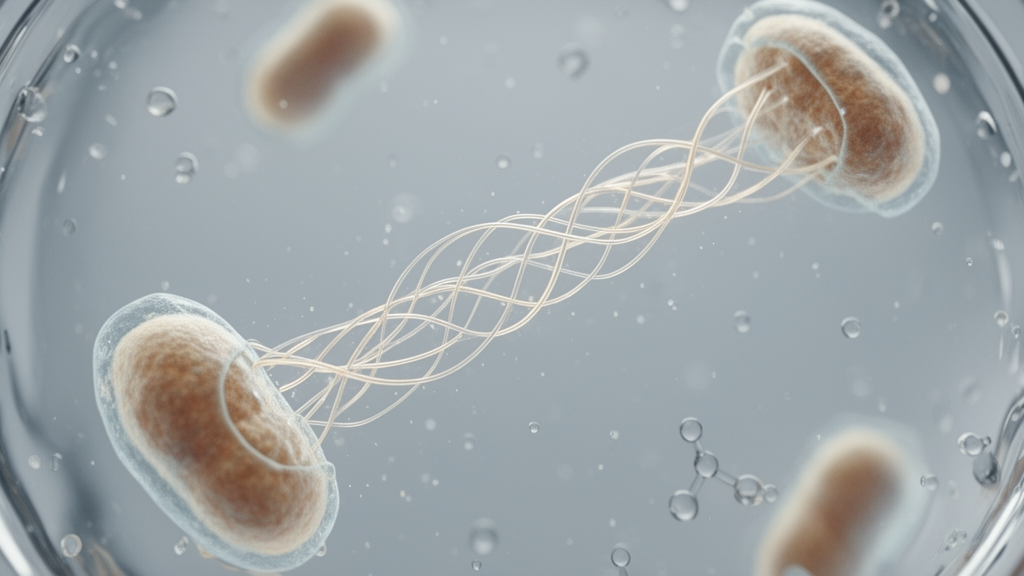
Bioengineers have demonstrated the secretory expression of truncated human type III collagen peptides featuring post-translational proline hydroxylation in the food-grade yeast Kluyveromyces marxianus, reaching estimated titers up to 3.25 grams per liter in a five-liter bioreactor. However, microbial synthesis of functional collagens faces substantial biochemical challenges. Fibrillar collagens require enzymatic hydroxylation of proline residues within recurring Gly-X-Y amino acid triplets to achieve structural stability. The new study establishes Kluyveromyces marxianus as a promising eukaryotic platform capable of secreting modified collagen fragments into culture media.
Collagen is the most abundant structural protein in mammals, accounting for roughly one-third of total human protein. Twenty-eight collagen variants have been characterized, with type III collagen playing indispensable roles in dermal repair, fibrillogenesis, and cardiovascular development. Quantitative tissue profiles show that collagen distribution shifts markedly across human development. In newborns, skin collagen concentrations reach approximately 543 micrograms per gram, comprising 265 micrograms per gram of type I and 278 micrograms per gram of type III collagen. As human skin ages, type III collagen abundance declines, elevating the relative type I to type III ratio. Prior recombinant strategies encountered persistent bottlenecks balancing productivity with enzymatic hydroxylation. Co-expression of viral hydroxylases in Escherichia coli achieved human type III collagen production at only 90 milligrams per liter. Meanwhile, Komagataella phaffii yielded 4.68 grams per liter of type III collagen, but completely lacked proline hydroxylation, highlighting the ongoing technical difficulty of simultaneous high productivity and modification.
Initial attempts to secrete full-length human type III collagen, an expansive protein of approximately 130 kilodaltons, yielded no detectable target in culture supernatants. The researchers therefore adopted a targeted truncation strategy, designing two peptide fragments from the human type III collagen alpha-1 chain. Designated C3S1 and C3S2, the sequences span residues Gly661 to Pro783 and Gly154 to Pro321, respectively. Both regions were selected through systematic evaluation of molecular weight, hydrophilic amino acid ratios, and high densities of collagen-related sequence motifs, specifically GFO, GPO, GRD, and GER, which mediate extracellular receptor binding and cellular regulation.
To introduce proline hydroxylation, the research group constructed a dual-plasmid expression system within Kluyveromyces marxianus host strain T1, which possessed URA3 and ATG1 gene deletions. The team tested two prolyl-4-hydroxylase genes: a viral enzyme from Acanthamoeba polyphaga mimivirus and a human enzyme heterodimer joined by a self-cleaving P2A peptide sequence. Both constructs contained C-terminal polyhistidine tags and were placed under the constitutive ADH1 promoter on centromeric plasmids. Western blot analysis revealed marked differences between the two enzymes across 24, 48, and 72 hours of cultivation. While the human enzyme was detected only at 72 hours, the viral enzyme exhibited robust, continuous accumulation across all measured intervals. Consequently, the viral hydroxylase was selected for subsequent co-expression strains. Codon-optimized genes encoding C3S1 and C3S2 were placed downstream of the Kluyveromyces marxianus inulinase promoter and signal peptide, enabling directed extracellular secretion into the growth medium during shake-flask and bioreactor cultivation.
Bioreactor scale-up was evaluated in a five-liter vessel using a defined mineral medium containing glucose, ammonium sulfate, vitamins, and trace elements. Fermentation was maintained at 30 degrees Celsius, with automated ammonium hydroxide titration maintaining stable pH and agitation coupled to dissolved oxygen control. Feeding solution was initiated at 5 milliliters per hour when agitation reached 400 revolutions per minute, increasing incrementally to 30 milliliters per hour at 850 revolutions per minute to maintain dissolved oxygen between 5 and 10 percent. Over 72 hours of fermentation, cultures accumulated substantial biomass, reaching dry cell weights of 144 grams per liter for the C3S1 strain and 157 grams per liter for C3S2. Densitometric analysis of supernatant bands on polyacrylamide gels, quantified against a beta-lactoglobulin standard curve, revealed estimated maximum titers of 3.19 grams per liter for C3S1 at 72 hours and 3.25 grams per liter for C3S2 at 60 hours.
Downstream purification was performed using ion-exchange chromatography columns tailored to the physicochemical properties of each peptide. Clarified culture supernatants were diluted fourfold in sodium acetate buffer at pH 4.0 and filtered through 0.45-micrometer membranes. C3S1 was purified using a mixed-mode Smac MMC column, while C3S2 was separated on a strong cation-exchange Smac SP column, with bound proteins eluted using buffer containing 500 millimolar sodium chloride. High-performance liquid chromatography demonstrated that C3S1 achieved a final purity of 88 percent with an estimated recovery of 55 percent, whereas C3S2 reached 97 percent purity with a 52 percent recovery. Electrophoretic profiling indicated apparent molecular masses of approximately 14 kilodaltons for C3S1 and 22 kilodaltons for C3S2. Total protein concentrations across chromatography fractions were quantified using bicinchoninic acid protein assays. The distinct chromatographic behavior reflected the differing isoelectric points and structural properties designed into the two truncated collagen alpha-chain variants.
Despite high expression yields, both peptides underwent proteolytic degradation during cultivation, with C3S2 displaying particularly noticeable cleavage fragments. N-terminal Edman degradation sequencing of degraded bands revealed that proteolytic cleavage occurred between lysine and glycine residues, yielding initial amino acid sequences of G-A-A-G-P-P for C3S1 and G-H-R-G-F-D for C3S2. Because C-terminal cleavage at basic lysine residues is characteristic of serine proteases released during late fermentation, the authors employed CRISPR-Cas9 to delete four protease genes: PRB1, NMA111, PEP4, and YPS1. Shake-flask fermentations demonstrated that deleting PRB1, which encodes vacuolar protease B, substantially reduced C3S2 degradation bands at 120 hours. Deleting NMA111 also lessened late-stage degradation, whereas deleting PEP4 or YPS1 showed minimal protective effect. Strains harboring double deletions of PRB1 and NMA111 maintained higher peptide band intensity than PRB1 and PEP4 knockouts, without disrupting typical sigmoidal cell growth kinetics in five-liter fermenters under controlled fed-batch high-cell-density growth conditions.
Site-specific proline hydroxylation was verified through liquid chromatography-tandem mass spectrometry following tryptic digestion. Mass spectrometry achieved 100 percent sequence coverage for C3S1 and 96.43 percent for C3S2, identifying mass shifts of 15.995 daltons corresponding to hydroxyproline. In C3S1, which contains 30 proline residues, all 18 positions corresponding to native human type III collagen hydroxylation sites were detected as hydroxylated. Site-specific ratios reached 62.23 percent at proline 2, while 15 residues showed levels below 1 percent, resulting in an unweighted arithmetic mean efficiency of 4.86 percent across modified sites. In C3S2, which contains 41 prolines, 22 of the 25 known native sites displayed hydroxylation, representing an 88 percent coverage of native sites. Hydroxylation efficiency peaked at 42.42 percent at proline 114, with 12 residues below 1 percent and an unweighted mean efficiency of 3.52 percent. Hydroxylation was explicitly identified within functional GPO and GFO triplets in both recombinant peptides.
The secondary structural characteristics of purified C3S1 and C3S2 were examined using circular dichroism spectroscopy across wavelengths from 190 to 250 nanometers. Both recombinant peptides displayed a pronounced negative spectral minimum at approximately 198 nanometers, reflecting the polyproline II-type helical propensity characteristic of collagen-derived polypeptide backbones. However, neither peptide exhibited the positive dichroic peak typically observed between 221 and 225 nanometers, which serves as the established spectroscopic signature of an assembled triple-helical collagen conformation. Consequently, while the co-expressed viral hydroxylase successfully modified proline residues, circular dichroism did not indicate stable triple-helix formation under the tested solution conditions.
In vitro cellular responses were evaluated in immortalized human HaCaT keratinocytes. Cell Counting Kit-8 assays demonstrated that C3S2 significantly stimulated viable-cell-associated metabolic activity at concentrations between 0.01 and 0.30 milligrams per milliliter, peaking at roughly 160 percent of control values at 0.05 milligrams per milliliter. C3S1 caused a slight, nonsignificant metabolic increase at 0.05 milligrams per milliliter and reduced activity at 0.30 milligrams per milliliter, while commercially available Komagataella phaffii-derived collagen produced no significant metabolic change. In scratch wound assays, C3S2 yielded a peak mean scratch closure of 93.01 percent at 0.10 milligrams per milliliter after 40 hours; however, repeated-measures analysis revealed no statistically significant effect of peptide concentration or concentration-time interaction. Several limitations warrant emphasis: the scratch assay did not inhibit proliferation to isolate cell migration, five-liter bioreactor runs lacked independent biological replicates, and direct gene complementation was not conducted to establish Prb1 causality conclusively under these experimental laboratory conditions.
Subject of Research: Recombinant secretory production and proline hydroxylation of human type III collagen peptides in Kluyveromyces marxianus
Article Title: Secretory expression of truncated hydroxylated human type III collagen peptides in Kluyveromyces marxianus
Article References: Yin, A., Chen, Z., Yu, Y., Zhou, J., & Lu, H. (2026). Secretory expression of truncated hydroxylated human type III collagen peptides in Kluyveromyces marxianus. Bioresources and Bioprocessing, 13(1), Article 170. https://doi.org/10.1186/s40643-026-01166-6
Image Credits: AI Generated
DOI: 10.1186/s40643-026-01166-6
Keywords: Kluyveromyces marxianus, type III collagen, recombinant collagen, proline hydroxylation, prolyl-4-hydroxylase, fed-batch fermentation, bioreactor, protease deletion, PRB1, NMA111, CRISPR-Cas9, extracellular matrix, HaCaT cells, CCK-8 assay, ion-exchange chromatography, circular dichroism, liquid chromatography-tandem mass spectrometry, biomaterials
News Source: Gregory Coleman. (November 24, 2026). Engineered Yeast Yields Secreted Hydroxylated Human Type III Collagen Peptides. Scienmag.