

• HOME
  • NEWS
  • EXPLORE
    • CAREER
      • Companies
      • Jobs
    • EVENTS
    • iGEM
      • News
      • Team
    • PHOTOS
    • VIDEO
    • WIKI
  • BLOG
  • COMMUNITY
    • FACEBOOK
    • INSTAGRAM
    • TWITTER
Monday, February 2, 2026
BIOENGINEER.ORG
No Result
View All Result
  • Login
  • HOME
  • NEWS
  • EXPLORE
    • CAREER
      • Companies
      • Jobs
        • Lecturer
        • PhD Studentship
        • Postdoc
        • Research Assistant
    • EVENTS
    • iGEM
      • News
      • Team
    • PHOTOS
    • VIDEO
    • WIKI
  • BLOG
  • COMMUNITY
    • FACEBOOK
    • INSTAGRAM
    • TWITTER
  • HOME
  • NEWS
  • EXPLORE
    • CAREER
      • Companies
      • Jobs
        • Lecturer
        • PhD Studentship
        • Postdoc
        • Research Assistant
    • EVENTS
    • iGEM
      • News
      • Team
    • PHOTOS
    • VIDEO
    • WIKI
  • BLOG
  • COMMUNITY
    • FACEBOOK
    • INSTAGRAM
    • TWITTER
No Result
View All Result
Bioengineer.org
No Result
View All Result
Home NEWS Science News Health

Engineered light to improve health, food, suggests Sandia researcher in Nature

Bioengineer by Bioengineer
January 16, 2019
in Health
Reading Time: 2 mins read
0
IMAGE
Share on FacebookShare on TwitterShare on LinkedinShare on RedditShare on Telegram

IMAGE

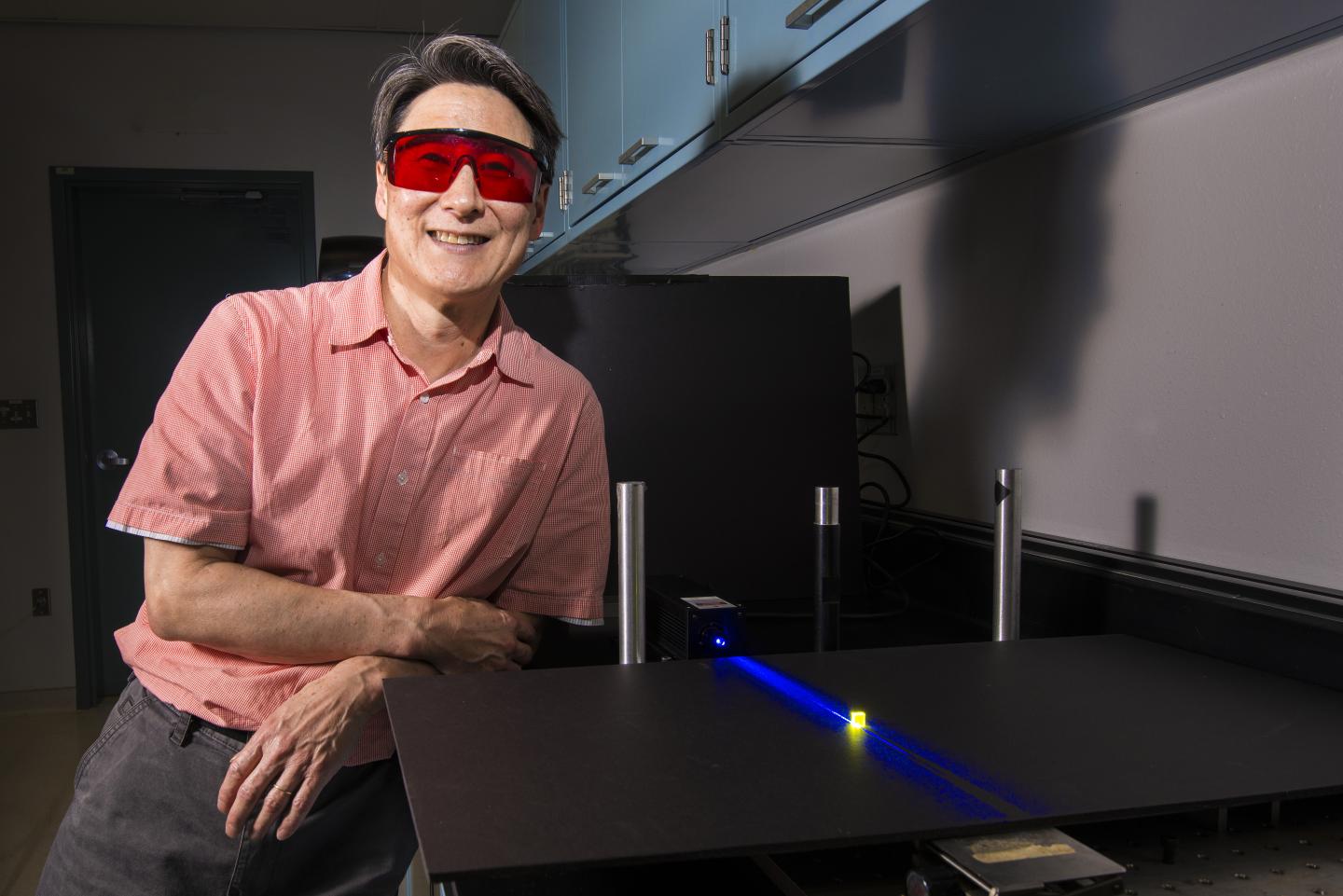
Credit: Courtesy Sandia National Laboratories, photographer Randy Montoya


ALBUQUERQUE, N.M. — People who believe light-emitting diodes, or LEDS, are just an efficient upgrade to the ordinary electric light bulb are stuck in their thinking, suggest Sandia National Laboratories researcher Jeff Tsao and colleagues from other institutions in a Nature “Perspectives” article published in late November.

“LED lighting is only in its infancy,” the authors write. “We now stand at the threshold of what might be called engineered light.”

Light intentionally controlled in time, space and spectral content can reward not just human optics with better lighting but also can help regulate human health and productivity by eliciting various hormonal responses.

Moreover, with plants, the authors write, tailored LED wavelengths and intensities can efficiently stimulate their growth, alter their shapes and increase their nutritional value, opening a new world of scientific and technological possibilities for indoor farming.

“That’s not to ignore the integration of LEDs with the internet of things,” Tsao said, “which is already happening with LED integration with electronics, sensors and communications.” The so-called internet of things refers to electronic circuits that can communicate with each other while embedded in a variety of everyday devices.

In short, the inevitable broadening of LED usage could add value to society far greater than the energy saved in lighting homes and buildings, the authors write.

###

The research was supported by the Department of Energy’s Solid State Lighting Program.

Sandia National Laboratories is a multimission laboratory operated by National Technology and Engineering Solutions of Sandia LLC, a wholly owned subsidiary of Honeywell International Inc., for the U.S. Department of Energy’s National Nuclear Security Administration. Sandia Labs has major research and development responsibilities in nuclear deterrence, global security, defense, energy technologies and economic competitiveness, with main facilities in Albuquerque, New Mexico, and Livermore, California.

Media Contact
neal singer
[email protected]
505-845-7078

Tags: Alternative MedicineBiologyBiomedical/Environmental/Chemical EngineeringBiotechnologyCircadian RhythmEcology/EnvironmentEndocrinologyNutrition/NutrientsSleep/Sleep Disorders
Share12Tweet8Share2ShareShareShare2

Related Posts

Evaluating 3D vs Conventional Simulators for Cricothyrotomy

February 2, 2026

Aloe Vera Gel Mitigates Acetaminophen Liver Damage

February 2, 2026

Key Factors Boosting Nursing Students’ Well-Being

February 2, 2026

Parents’ Views on Allergy Immunotherapy for Kids

February 2, 2026
Please login to join discussion

POPULAR NEWS

  • Enhancing Spiritual Care Education in Nursing Programs

    157 shares
    Share 63 Tweet 39
  • Robotic Ureteral Reconstruction: A Novel Approach

    81 shares
    Share 32 Tweet 20
  • Digital Privacy: Health Data Control in Incarceration

    63 shares
    Share 25 Tweet 16
  • Study Reveals Lipid Accumulation in ME/CFS Cells

    57 shares
    Share 23 Tweet 14

About

We bring you the latest biotechnology news from best research centers and universities around the world. Check our website.

Follow us

Recent News

Evaluating 3D vs Conventional Simulators for Cricothyrotomy

Aloe Vera Gel Mitigates Acetaminophen Liver Damage

Key Factors Boosting Nursing Students’ Well-Being

Subscribe to Blog via Email

Enter your email address to subscribe to this blog and receive notifications of new posts by email.

Join 73 other subscribers
  • Contact Us

Bioengineer.org © Copyright 2023 All Rights Reserved.

Welcome Back!

Login to your account below

Forgotten Password?

Retrieve your password

Please enter your username or email address to reset your password.

Log In
No Result
View All Result
  • Homepages
    • Home Page 1
    • Home Page 2
  • News
  • National
  • Business
  • Health
  • Lifestyle
  • Science

Bioengineer.org © Copyright 2023 All Rights Reserved.

