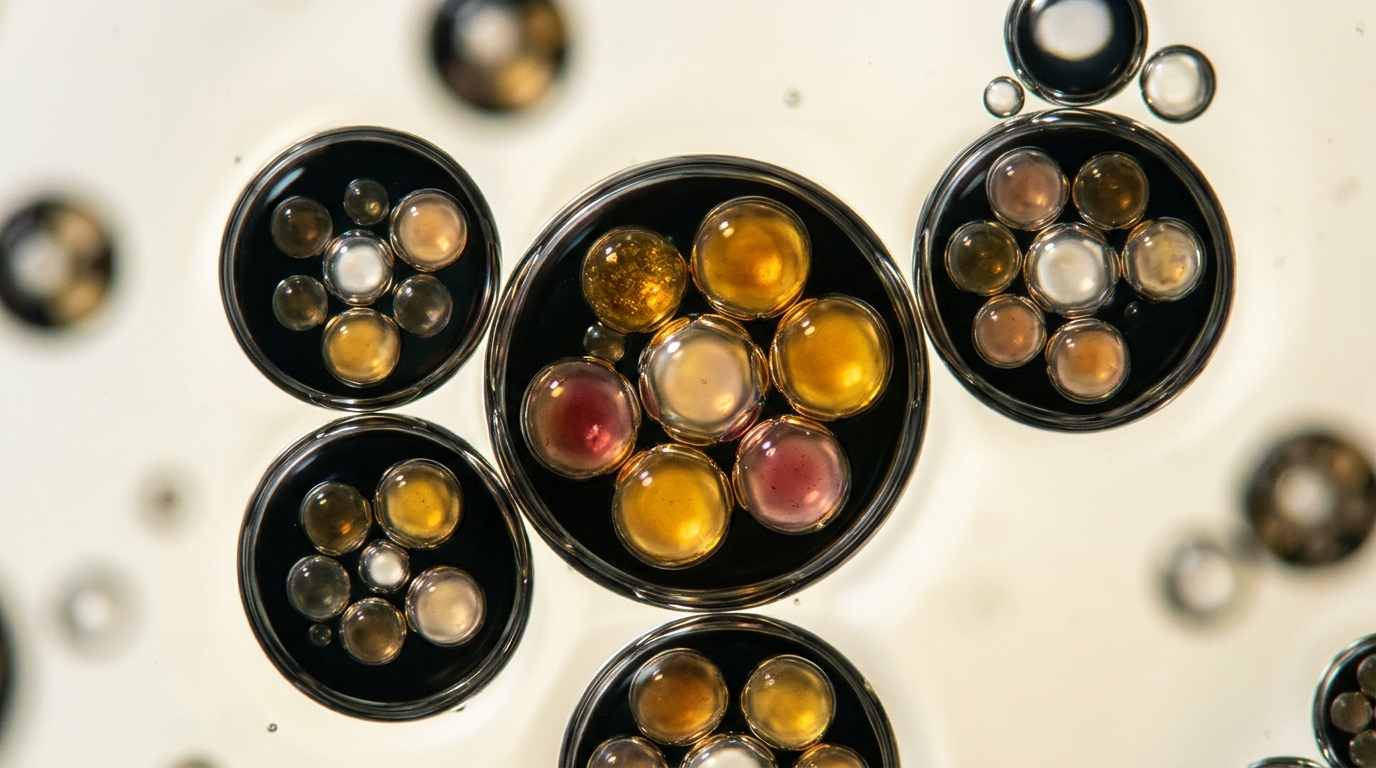
A comprehensive scientific review published in Agricultural Products Processing and Storage highlights the emerging potential and physicochemical hurdles of using biomacromolecule-functionalized water-in-oil-in-water double emulsions to simultaneously encapsulate arbutin and coumaric acid. Authored by Jietao Wu, Liqun Rui, Qinghong Wu, Chenhui Zhou, Ping Ying, and Hao Huang, the study systematically evaluates how structurally divergent plant-derived phenolics can be co-delivered. The authors emphasize that while both secondary metabolites exhibit complementary biological activities—including antioxidant, antibacterial, anti-inflammatory, and antimelanogenic properties—their opposing solubility profiles and physiological vulnerabilities have prevented their combined formulation in conventional vehicles. Specifically, hydrophilic arbutin readily degrades in acidic conditions and under ultraviolet exposure, whereas hydrophobic coumaric acid suffers from poor aqueous solubility that impedes formulation. By establishing a dual-compartment architecture where arbutin is retained within the internal aqueous phase and coumaric acid resides in the intermediate oil phase, multiple emulsions offer a viable platform to leverage potential synergistic effects for functional foods, cosmetics, and nutraceutical applications.
Arbutin, chemically classified as a beta-glucoside of hydroquinone with the molecular formula C12H16O7 and a molar mass of 272.253 g/mol, is naturally synthesized across diverse plant families, notably Ericaceae species such as Vaccinium and Arctostaphylos, Rosaceae including Pyrus, Lamiaceae such as Origanum, and Myrtaceae like Myrtus. Within botanical tissues, the compound occurs in free, etherified, or esterified forms, though it can also be produced through enzyme engineering and microbial metabolic engineering. Structurally comprising a glucose moiety connected to hydroquinone via a beta-glycosidic linkage, pure arbutin forms a white crystalline powder exhibiting a melting point of 199.5 degrees Celsius and a boiling point of 561.6 degrees Celsius. Thermodynamically, its polyhydroxylated glycoside structure imparts pronounced hydrophilicity, yielding an aqueous solubility of approximately 10 grams per 100 milliliters at 20 degrees Celsius. While readily dissolving in ethanol and exhibiting slight solubility in ether, arbutin remains insoluble in nonpolar organic solvents such as benzene, chloroform, and carbon disulfide.
Despite its therapeutic promise, arbutin exhibits severe physicochemical instability across processing and biological environments that restricts its commercial utility. In aqueous solutions, arbutin partially hydrolyzes to release free hydroquinone, which oxidizes into benzoquinone, while strong acidic conditions accelerate glycosidic cleavage, restricting its stability to a pH range between 4 and 8. The molecule also demonstrates pronounced photosensitivity under direct ultraviolet irradiation, thermal vulnerability during high-temperature processing, and rapid degradation in the presence of peroxidase enzymes. Pharmacologically, arbutin has historically been utilized via natural plant preparations to manage urinary tract infections, cystitis, and kidney stones, and functions as an effective diuretic. In modern biomedical investigations, its broad bioactivity encompasses anti-melanogenesis, antibacterial, antioxidant, anti-inflammatory, and anti-tumor effects. However, transdermal delivery remains deeply compromised because its high polarity and polyhydroxylated structure impede passive diffusion across the stratum corneum, while gastrointestinal instability diminishes bioaccessibility during oral digestion, necessitating robust protective encapsulation strategies.
Mechanistically, arbutin functions as a competitive inhibitor of tyrosinase, the copper-containing enzyme responsible for catalyzing the conversion of tyrosine to L-dopa, oxidation to dopaquinone, and subsequent melanin formation. Because its spatial structure and electrostatic properties mimic endogenous L-tyrosine, arbutin binds the enzyme active site without causing mutagenic or carcinogenic toxicity, although it exhibits lower inhibitory efficiency than coumaric acid and requires higher working concentrations. Its antibacterial activity is distinctive: upon oral ingestion and intestinal absorption, arbutin undergoes hepatic cleavage by beta-glucosidase into hydroquinone, which accumulates in the urinary tract to exert bacteriostatic action against uropathogens including Escherichia coli, Pseudomonas aeruginosa, Proteus mirabilis, and Staphylococcus aureus. Furthermore, arbutin provides antioxidant cytoprotection by scavenging free radicals and activating the intracellular Nrf2-ARE pathway, shielding red blood cells, fibroblasts, osteocytes, and retinal ganglion cells from oxidative injury. In inflammatory contexts, it suppresses nitric oxide synthase, cyclooxygenase-2, and pro-inflammatory signaling (TNF-alpha, IL-1beta, and IL-6) while attenuating gastric mucosal ulceration in rodents.
In contrast to arbutin, coumaric acid represents a hydrophobic hydroxycinnamic acid derivative characterized by the molecular formula C9H8O3 and a molar mass of 164.160 g/mol. Naturally occurring in ortho, meta, and para isomeric configurations, the para isomer—4-hydroxycinnamic acid—is the most prevalent in nature and serves as a fundamental intermediate in the plant shikimic acid pathway from phenylalanine and tyrosine precursors. Coumaric acid acts as a biosynthetical building block for complex polyphenols, flavonoids, caffeic acid, ferulic acid, chlorogenic acid, sinapic acid, and structural lignin across common dietary sources, including fruits, vegetables, cereal grains, and edible fungi. Isolated as a pale yellow-green crystalline powder with a melting point of 211.5 degrees Celsius, coumaric acid possesses very limited water solubility, reaching only 0.45 grams per liter at 25 degrees Celsius. While structurally stable at room temperature, it experiences accelerated degradation under elevated heat, ultraviolet irradiation, oxygen exposure, enzymatic stress, and extreme acidic environments, causing aggregation, precipitation, and substantial loss of biological potency.
Coumaric acid exhibits an extensive spectrum of biological activities that frequently outperform arbutin in comparative potency, though it faces delivery hurdles due to hydrophobicity. Like arbutin, coumaric acid acts as a competitive inhibitor of tyrosinase by blocking the catalytic pocket, effectively suppressing ultraviolet-induced erythema and hyperpigmentation in human melanocytes and clinical forearm trials. Against bacterial pathogens, coumaric acid exhibits direct bactericidal effects through a dual mode of action: disrupting bacterial cell membranes and binding directly to genomic DNA, thereby suppressing Gram-positive and Gram-negative strains as well as toxigenic fungi like Fusarium species. Its antioxidant efficiency in scavenging DPPH, ABTS, and hydroxyl radicals matches or exceeds related cinnamic derivatives in cellular models. Anti-inflammatory pathways involve the inhibition of NF-kappaB activation, reducing TNF-alpha, IL-1beta, and IL-6 levels in sepsis and arthritis models. Coumaric acid also exerts anti-tumor effects by depleting reactive oxygen species, downregulating AKT and ERK pathways, and regulates glucose metabolism via alpha-glucosidase and aldose reductase inhibition.
To counteract these physicochemical shortcomings, researchers have explored a variety of single-compound encapsulation platforms for both phenolics. For arbutin, water-in-oil and multiple emulsions improve skin permeability and high-temperature stability, while liposomal vesicles fabricated via ultrasonication enhance cutaneous permeation and resistance to light and acid, despite low loading capacity and long-term aggregation tendencies. Solid delivery matrices, such as chitosan microcapsules, cross-linked amphiphilic modified guar gum, and gold nanoparticle composites, bolster arbutin stability against thermal and enzymatic stress, although costs and potential cytotoxicity restrict certain applications. Hydroxypropyl methylcellulose and polyvinylpyrrolidone microneedles further facilitate painless transdermal delivery across the stratum corneum. Conversely, coumaric acid has been formulated in oil-in-water emulsions, ionic liquid systems, chitosan-coated liposomes, mannosylated liposomes targeting synovial macrophages, and cyclodextrin or amylose microcapsules. In addition, polymeric membranes constructed from polyvinylpyrrolidone and biopolymers have been successfully deployed in active food packaging and biomedical dressings, providing sustained release and antimicrobial protection.
While individual encapsulation systems mitigate specific compound vulnerabilities, the simultaneous delivery of both phenolics demands an advanced structural architecture capable of resolving their divergent polarities. Water-in-oil-in-water double emulsions emerge as an ideal candidate platform, operating through a hierarchical morphology in which microscopic aqueous droplets containing hydrophilic arbutin are dispersed within an intermediate oil phase carrying hydrophobic coumaric acid, which is subsequently dispersed within a continuous outer aqueous phase. This compartmentalized architecture prevents direct physical interactions between incompatible payloads while isolating arbutin from destructive acidic environments and protecting coumaric acid from oxidative degradation. Beyond chemical safeguarding, W/O/W platforms can be fabricated entirely from edible, food-grade ingredients such as vegetable oils, proteins, and polysaccharides, ensuring regulatory compliance and clean-label compatibility. Economically, their preparation relies on accessible materials and scalable processing equipment, delivering superior loading capacities per unit mass relative to conventional nano-carriers. Furthermore, their continuous outer phase provides controlled, sustained release while effectively masking unpalatable sensory attributes in functional food formulations.
The primary bottleneck confronting multiple emulsions is their thermodynamic instability, which causes rapid droplet coalescence, phase separation, and payload leakage unless stabilized by robust interfacial barriers. While synthetic small-molecule surfactants reduce interfacial tension, they raise toxicity concerns and fail to prevent long-term droplet aggregation; consequently, food-grade biomacromolecules have become preferred stabilizing agents. Natural proteins—such as gelatin, whey protein, soy beta-conglycinin, pea protein isolate, and hydrophobic zein—adsorb at oil-water interfaces, establishing protective viscoelastic coatings that impart steric and electrostatic repulsion. Polysaccharides, including native and octenyl succinic anhydride-modified starches, cellulose nanocrystals, chitin nanocrystals, chitosan, citrus pectin, and gum arabic, reinforce emulsion networks by increasing continuous-phase viscosity and preventing droplet collisions. To achieve superior interfacial robustness, biopolymer complexes are increasingly deployed: protein-polysaccharide pairs like zein-pectin or whey protein-gum arabic generate dense interfacial networks resisting pH and ionic fluctuations, while protein-protein pairs like zein-gliadin and ovotransferrin-lysozyme balance interfacial wettability. Advanced ternary systems, such as zein-sodium caseinate-propylene glycol alginate, further maximize environmental resilience against thermal and mechanical stresses.
Despite compelling theoretical advantages and successful individual phenolic studies, the co-delivery of arbutin and coumaric acid in biomacromolecule-stabilized W/O/W emulsions remains largely unexplored at the experimental bench, with few published investigations evaluating this specific dual formulation. Current research remains heavily constrained by the thermodynamic fragility of multiple emulsions during industrial processing, long-term storage, and gastrointestinal transit, which frequently precipitates premature payload release. Furthermore, synchronized release kinetics remain exceedingly difficult to attain given the divergent in vivo metabolic pathways and release profiles of hydrophilic and hydrophobic payloads. Most existing investigations rely on in vitro models, leaving critical knowledge gaps regarding in vivo digestion, synergistic bioavailability, metabolic fate, and potential synergistic toxicity. The review authors emphasize that future research must prioritize sustainable biomacromolecules derived from agricultural by-products, employ green low-energy manufacturing protocols, and utilize molecular dynamics simulations alongside in situ interfacial analytics to map adsorption mechanisms. Establishing rigorous preclinical trials, stimuli-responsive release architectures, and hybrid Pickering-nanoparticle systems will ultimately be essential to translate these biomacromolecular co-delivery emulsions into viable commercial applications.
Subject of Research: Biomacromolecule-stabilized double emulsions for arbutin and coumaric acid co-delivery
Article Title: Biomacromolecule-functionalized co-delivery systems for arbutin and coumaric acid: recent progress and challenges
Article References: Wu, J., Rui, L., Wu, Q., Zhou, C., Ying, P., & Huang, H. (2026). Biomacromolecule-functionalized co-delivery systems for arbutin and coumaric acid: recent progress and challenges. Agricultural Products Processing and Storage, 2(1), Article 28. https://doi.org/10.1007/s44462-026-00063-7
Image Credits: AI Generated
DOI: 10.1007/s44462-026-00063-7
Keywords: arbutin, coumaric acid, double emulsions, biomacromolecules, co-delivery systems, phenolic compounds, food science, antioxidants, Biomacromolecule-functionalized, co-delivery, systems, coumaric
News Source: Alan Morgan. (November 6, 2026). Engineered Double Emulsions Overcome Hurdles in Co-Delivering Dual Plant Phenolics. Scienmag.