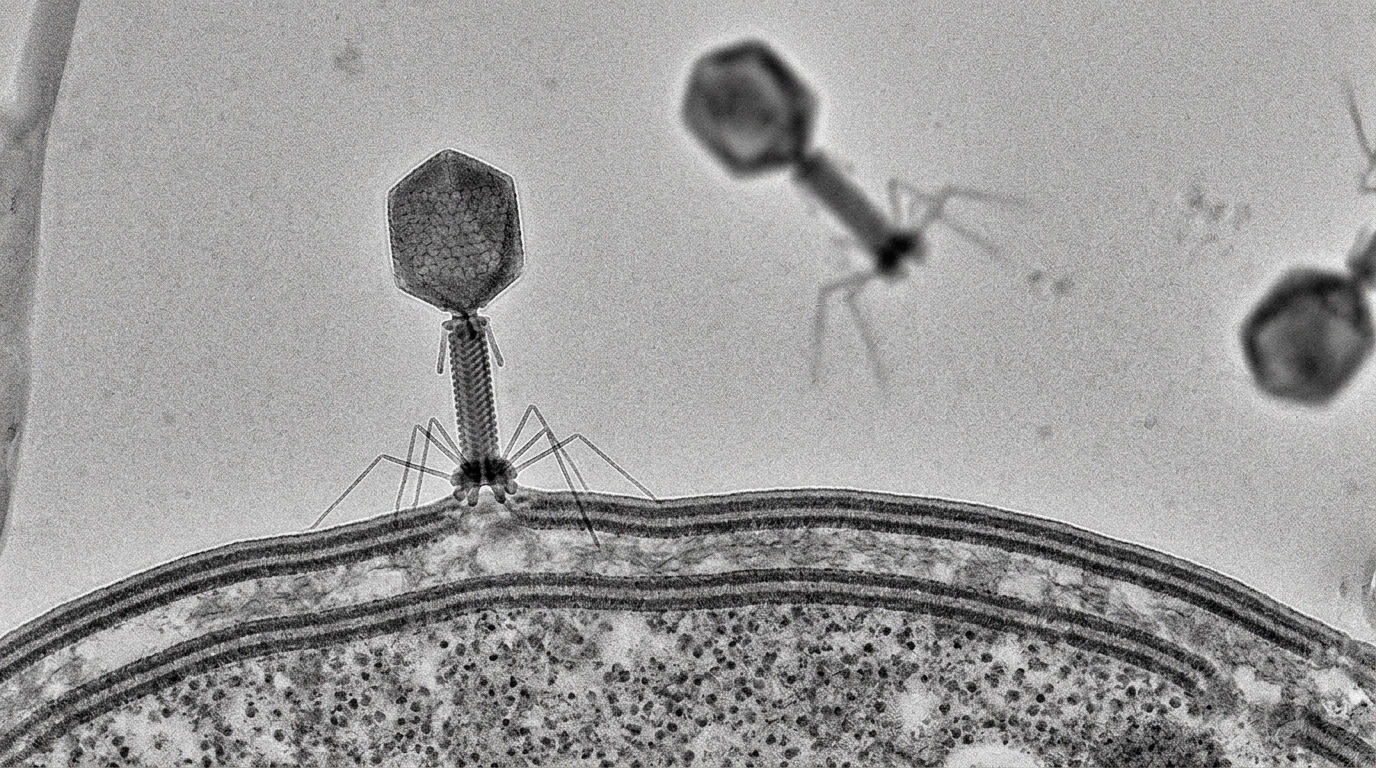
Bacterial infections remain a leading cause of global mortality, directly accounting for 1.7 million deaths and contributing indirectly to 4.95 million deaths annually through antimicrobial resistance. Five critical bacterial pathogens—Staphylococcus aureus, Escherichia coli, Streptococcus pneumoniae, Klebsiella pneumoniae, and Pseudomonas aeruginosa—account for half of this mortality burden. As standard antibiotics encounter expanding resistance mechanisms, researchers are exploring innovative therapeutic alternatives. Bacteriophages, the natural viral predators of bacteria first described over a century ago, are undergoing a major conceptual evolution. Rather than serving strictly as conventional biological antibacterial agents, phages are being transformed into programmable nanocarriers for targeted precision medicine. By integrating genetic engineering, synthetic biology, and nanotechnology, scientists are repurposing viral architectures into modular drug delivery vehicles. These engineered platforms aim to overcome the narrow activity, uncertain pharmacokinetics, and rapid host resistance of wild phages, establishing functional nanocarriers capable of localized cargo transport against severe multidrug-resistant infections. These developments signify a paradigm shift from simple microbiological infection control to advanced synthetic nanomedicine.
The historical trajectory of bacteriophage therapy illustrates both early clinical promise and persistent pharmacological obstacles. Following Frederick Twort’s initial description in 1915 and Félix d’Hérelle’s naming in 1917, phages were investigated extensively for clinical infection control. The Eliava Institute in Georgia accumulated decades of experience treating dysentery and wound infections. However, the rise of broad-spectrum antibiotics and Cold War divisions marginalized phage research in mainstream Western medicine. Renewed interest emerged at the turn of the twenty-first century, driven by escalating antimicrobial resistance and documented clinical successes, such as treating multidrug-resistant Acinetobacter baumannii with phage cocktails. Yet, unmodified natural phages present substantial clinical bottlenecks. Their extreme host specificity demands lengthy pre-treatment screening, while in vivo pharmacokinetics remain poorly characterized. Furthermore, bacteria rapidly evolve resistance through receptor mutation, extracellular polysaccharides, or CRISPR-Cas systems, while repeated systemic administration induces neutralizing antibodies that hasten viral clearance and reduce therapeutic efficacy. Consequently, clinical translation requires overcoming these physiological and evolutionary constraints.
To map the expansion of this interdisciplinary field, the review examined research trends across virology, nanotechnology, and materials science using the Web of Science Core Collection from 2010 to 2025. After filtering out non-original publications and purely ecological isolations, the authors analyzed a clean dataset of 4,356 original research articles using Python and R-bibliometrix. Annual publication volume expanded from roughly 450 studies in 2010 to more than 1,200 in 2025, alongside an exponential rise in citations after 2020. This acceleration coincided with the clinical validation of lipid nanoparticle vaccines and advances in synthetic biology tools enabling sophisticated capsid engineering. Bibliometric mapping revealed a clustered network centered on phage display and phage therapy, with terms like nanoparticles, nanobodies, and delivery serving as key functional bridges to cancer therapy. Temporal and citation burst analyses highlighted a transition from foundational screening between 2020 and 2021 toward translational delivery applications, with delivery emerging as a major research burst from 2024 onward.
Surface engineering provides the primary mechanism for directing bacteriophages to designated cellular targets. Although phages can passively accumulate in solid tumors via the enhanced permeability and retention effect or target bacteria through natural structures like fd phage binding Escherichia coli F pili, passive transport exhibits low specificity and rapid clearance by the reticuloendothelial system. Active targeting overcomes these constraints by displaying engineered ligands on viral capsids. Phage display technology, introduced in 1985 and awarded the Nobel Prize in 2018, established capsids as programmable interfaces where tumor-homing peptides like RGD and NGR can be genetically fused. In recent studies, biopanning identified peptides binding programmed death-ligand 1, which were displayed on phage capsids to block PD-1/PD-L1 recognition and stimulate targeted antitumor immunotherapy. Chemical conjugation provides a complementary strategy, employing bio-orthogonal click chemistry to attach non-peptide moieties under mild conditions. For instance, spontaneous amino-alkyne reactions have assembled aggregation-induced emission luminogens onto bifunctional M13 phages, creating sensitive nanoprobes for target detection. This approach expands phage applications beyond genetic boundaries to diverse synthetic functional materials.
Beyond static ligand display, environment-responsive engineering provides spatiotemporal control by activating phage delivery in response to specific pathological signals. Lesion microenvironments in solid tumors or bacterial infection sites frequently exhibit distinct biochemical signatures, including local acidity, elevated reactive oxygen species, and overexpressed enzymes. Bioengineers exploit these conditions by pairing phages with responsive nanomaterials. An exemplary system, designated phage@Pd, conjugates ultra-small palladium nanozymes onto Escherichia coli-specific phages. While the phage component maintains selective binding to target bacterial cells, the attached palladium nanozymes exhibit pH-dependent, peroxidase-like catalytic activity. In acidic and hydrogen peroxide-rich infection environments, these nanozymes generate toxic hydroxyl radicals that accelerate bacterial eradication, whereas they remain catalytically inert under physiological conditions in healthy tissues. Other responsive formulations incorporate phages into dynamically degradable polymeric hydrogels or utilize stimulus-sensitive chemical linkers for cargo release. Nonetheless, developing these multi-component systems presents significant fabrication complexity, demanding rigorous control over batch uniformity, structural stability in biological fluids, and long-term biocompatibility.
Modular genome engineering has concurrently transformed bacteriophages into vectors for targeted gene transfer and sequence-specific genome editing. By excising non-essential lysis genes, researchers can repurpose viral capsids into safe transduction packages that retain genome injection machinery while providing internal capacity for therapeutic transgenes. This modification also prevents horizontal transfer of bacterial virulence or antibiotic resistance determinants, such as carbapenemase genes or cholera toxin cassettes, which natural phages occasionally mobilize. Demonstrating in situ base editing, Brödel and colleagues engineered lambda phage particles carrying adenine base editors targeted to the bla gene in intestinal Escherichia coli. A single oral dose of 4 × 10¹⁰ particles in mice achieved a median editing efficiency of 93 percent at eight hours. In a complementary antimicrobial strategy, Gencay and coworkers developed SNIPR001, a four-phage cocktail encoding a type I-E CRISPR-Cas3 system. Administered orally across two days to gut-colonized mice, high-dose SNIPR001 reduced fecal E. coli burden by approximately 4 log₁₀ CFU per gram relative to vehicle controls at 24 hours. These studies confirm the feasibility of deploying engineered phages as precision tools for targeted in vivo microbiome editing.
The application of phage-based platforms extends across biofilm eradication, vaccine engineering, and veterinary and agricultural biotechnology. Biofilms represent a major barrier in chronic infections because extracellular matrix polymers limit drug diffusion; engineered phages expressing depolymerases or quorum-quenching enzymes can dismantle these protective networks to enhance antimicrobial penetration. For immunization, bacteriophages serve as intrinsic vaccine adjuvants and delivery scaffolds, presenting repetitive surface antigens alongside immunostimulatory viral proteins and nucleic acids. Well-characterized phage platforms include double-stranded DNA phages like lambda and T4, single-stranded M13, and virus-like particles derived from RNA phages like MS2, Qbeta, and AP205. In veterinary research, T4 phages displaying VP2 protein protected chickens against infectious bursal disease virus, completely preventing mortality compared with 30 to 40 percent mortality in controls. In agriculture, foliar spray of phage LPRS20 suppressed Ralstonia solanacearum in tobacco seedlings without foliar damage, though solar ultraviolet radiation degrades phage activity by 90 percent within two hours.
Pharmacokinetic performance and in vivo stability vary significantly across administration routes, dictating formulation strategies for engineered phages. Oral administration exposes viral particles to gastric acidity and intestinal proteases, requiring protective matrices such as chitosan microbeads or hydrogels to preserve infectivity. Intravenous injection circumvents the digestive tract but confronts serum proteins, complement clearance, and neutralizing antibodies that accelerate clearance upon repeated administration. Surface functionalization with polyethylene glycol has been utilized to prolong circulation and mitigate immune clearance; in murine burn wounds infected with Pseudomonas aeruginosa, PEGylated phage ointment yielded a mean wound contraction of 9.0 percent at day ten, compared to negative contraction in controls. For localized delivery, topical and ocular formulations enhance retention while minimizing systemic exposure. In a murine keratitis model, RGD-modified chitosan nanohelmets deposited onto phages retained detectable ocular fluorescence for 12 hours. However, investigators caution that imaging persistence does not reflect viral biological half-life and emphasize that heavy surface modifications risk impairing natural receptor binding and infectivity.
Preclinical oncological models demonstrate the cargo-carrying capacity of engineered phages while underscoring current translational boundaries. In one study, Yang and colleagues displayed tumor-homing and platinum-binding peptides on filamentous fd phages to assemble platinum nanozymes and conjugate indocyanine green at 5.6 weight percent. In breast cancer-bearing mice, intravenous administration followed by near-infrared laser irradiation achieved complete remission in 40 percent of animals, corresponding to two of five mice over 16 days, though small cohorts limit conclusions regarding durable tumor control. In clinical translation, evidence remains preliminary and restricted to early-phase trials. The phase II ELIMINATE trial evaluated LBP-EC01, a CRISPR-Cas3-engineered six-phage cocktail administered with antibiotics for urinary Escherichia coli infections; sixteen evaluable patients showed rapid reductions in bacterial levels without serious adverse events, though the open-label design precluded confirmed therapeutic superiority. Furthermore, SNIPR001 completed a phase I safety study in healthy volunteers. Because human clinical data remain unavailable for multifunctional platforms like tumor-targeting phage nanofibers or biomineralized hydrogels, the field remains clinically emerging.
Translating engineered bacteriophages into clinical products requires resolving manufacturing bottlenecks and regulatory gaps through integration with artificial intelligence. Large-scale phage manufacturing lacks harmonized global quality standards under chemistry, manufacturing, and controls frameworks, facing challenges in maintaining genetic stability, removing endotoxins, and establishing standardized potency assays. Machine learning architectures are addressing these obstacles by replacing empirical screening with data-driven design. Graph neural networks and attention models predict phage-bacteria binding by analyzing viral tail fiber sequences alongside bacterial surface receptor structures. In metagenomic screening, the Deeplysin framework uses a stacking ensemble comprising extreme gradient boosting, convolutional neural networks, recurrent neural networks, gradient boosting decision trees, and logistic regression to identify candidate lysins. Machine learning algorithms also enable real-time monitoring of bacterial population dynamics to detect emerging resistance mutations. However, computational predictions cannot substitute for biological testing, and realizing the therapeutic potential of phage nanocarriers will require uniting data-driven modeling with empirical pharmacokinetic and safety validation.
Subject of Research: Engineered bacteriophages as programmable nanocarriers for targeted drug delivery
Article Title: Phage-based drug delivery systems: innovations, challenges, and future directions in targeted therapy
Article References: Ye, D., Zeng, W., Gao, Q., Zheng, J., & Dong, W. (2026). Phage-based drug delivery systems: innovations, challenges, and future directions in targeted therapy. Frontiers in Microbiology, 17, Article 1984955. https://doi.org/10.3389/fmicb.2026.1984955
Image Credits: AI Generated
DOI: 10.3389/fmicb.2026.1984955
Keywords: bacteriophages, drug delivery systems, nanomedicine, synthetic biology, targeted therapy, phage display, antimicrobial resistance, capsid engineering, CRISPR-Cas3, base editing, biofilm eradication, nanozymes, click chemistry, artificial intelligence, graph neural networks, Deeplysin, SNIPR001, LBP-EC01
News Source: Drew Townsend. (November 27, 2026). Engineered Bacteriophages Transition From Natural Bacterial Predators Into Programmable Precision Nanocarriers. Scienmag.