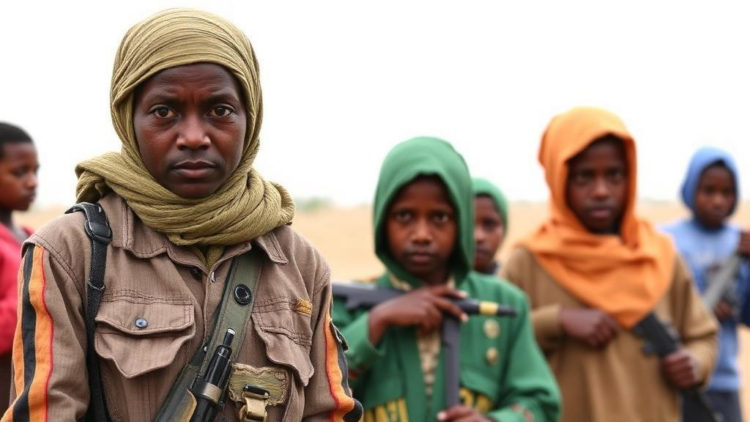
The world set itself an audacious deadline. When United Nations member states adopted the Sustainable Development Goals in 2015, they pledged to end hunger in all its forms by 2030, codifying that promise as Sustainable Development Goal 2. A decade later, that promise is slipping away, and a new commentary published in Nature Food by peace researchers Halvard Buhaug and Paola Vesco of the Peace Research Institute Oslo argues that the reason is staring policymakers in the face. Armed conflict, they contend, has become the single most stubborn obstacle to global food security, and no combination of agricultural technology, humanitarian logistics or climate adaptation will deliver Zero Hunger while wars continue to rage. Their message is blunt: zero hunger is not achievable without peace.
The argument arrives at a moment when the trajectory of global hunger has reversed in ways that would have seemed unthinkable during the optimistic early years of the SDG era. After decades of steady progress against undernourishment through the 1990s and 2000s, the number of people facing food insecurity has climbed sharply since the mid-2010s. The latest edition of The State of Food Security and Nutrition in the World, the flagship annual assessment produced jointly by the Food and Agriculture Organization, the International Fund for Agricultural Development, UNICEF, the World Food Programme and the World Health Organization, documents the scale of the setback. Behind the aggregate statistics lies a stark geographic pattern: the countries furthest from the hunger targets are overwhelmingly those experiencing armed conflict, and the populations most acutely affected are those displaced by violence or trapped in contested territory.
Buhaug and Vesco, who are supported by the European Research Council, frame the problem as one of causal architecture rather than simple correlation. Conflict undermines food security through multiple, mutually reinforcing channels. Fighting destroys crops, livestock and irrigation infrastructure; it severs market access and transport corridors that connect farmers to consumers; it drives up food prices in local economies where households already spend most of their income on staples. Combatants may deliberately starve civilian populations as a tactic of war, besieging cities and blockading aid. Meanwhile, governments under fiscal strain divert resources from agricultural extension and social protection toward military expenditure. The result is a cascade of disruption that no humanitarian intervention can fully offset while the violence continues.
The reverse direction of causality matters just as much. Food insecurity is not merely a consequence of war; it is also a recruitment mechanism and an accelerant. Competition over land, water and pasture has long been recognized as a driver of communal violence, and sharp food price spikes have been linked to social unrest across different regions and income levels. Households that lose their livelihoods to drought or market collapse may find armed groups offering payment, status or simply food. This feedback loop, in which hunger breeds conflict and conflict breeds hunger, is what makes the SDG 2 target so difficult to reach through food policy alone. Breaking the loop requires interventions on both sides simultaneously, which is precisely why the peace research community has become an increasingly vocal participant in food security debates.
The quantitative evidence base supporting these claims has grown remarkably in recent years, and the Nature Food commentary draws on a body of work that its own authors helped to build. A study published in World Development in 2025 by Vesco and colleagues examined the food security consequences of conflict exposure in detail, contributing to a literature that now spans household surveys, satellite observations and conflict event data. The Uppsala Conflict Data Program, whose annual report by Davies, Pettersson and Öberg appeared in the Journal of Peace Research in 2026, provides the systematic documentation of armed conflict patterns that underpins much of this research. Together, these datasets allow researchers to move beyond anecdote and establish, with statistical confidence, how the timing and intensity of violence translate into measurable deterioration in nutrition outcomes.
Remote sensing technology has been central to this advance. Satellite platforms now allow researchers to monitor cropland health, vegetation indices and agricultural activity in regions that are too dangerous for fieldwork, and studies published in the International Journal of Applied Earth Observation and Geoinformation and in National Science Review have demonstrated how these tools can detect the agricultural footprint of violence. A companion analysis by Li, Qi, Sun, Liu and Wang, published in Nature Food in 2026, applies such approaches to quantify how conflict disrupts food production systems. The technical sophistication of these methods matters for policy as well as science: when humanitarian agencies can verify crop failures and displacement patterns from orbit, they can target assistance more precisely, and when researchers can attribute production losses to violence rather than weather, the case for conflict prevention as food policy becomes harder to dismiss.
Climate change adds a further layer of complexity, and one that the commentary is careful not to oversimplify. A growing body of research, including work by Gilmore and colleagues in Climatic Change and an assessment by Anderson and colleagues in Nature Food, examines how climatic shocks interact with political fragility to shape food security outcomes. The emerging picture is one of compound risk rather than single-cause explanation. Droughts and heat extremes stress agricultural systems everywhere, but their consequences are catastrophically amplified where governance is weak and conflict is ongoing, because affected populations lack the insurance mechanisms, state support and mobility options that buffer shocks elsewhere. Buhaug, Hermansen, Vesco and Vestby, writing in the Proceedings of the National Academy of Sciences in 2026, contribute to the effort to disentangle these interacting pressures, and their findings underscore that climate adaptation strategies designed without reference to conflict dynamics are likely to fail precisely where they are needed most.
What, then, would it take to get SDG 2 back on track by 2030? The commentary’s answer is deliberately structural. Humanitarian food assistance remains essential and saves lives in the short term, but it treats symptoms while the disease advances. The authors point toward the fundamental importance of preventing the outbreak of new armed conflicts and ending those that already rage, through diplomacy, peacekeeping and sustained political investment. They also emphasize the need to protect agricultural livelihoods during conflict, so that rural economies retain some capacity to recover when hostilities cease, and to design climate and development programs that are conflict-sensitive rather than blind to the political terrain in which they operate. In conflict-affected settings, the distinction between development policy and peace policy dissolves.
The implications extend beyond the 2030 deadline, which most observers now regard as out of reach for the hunger goal. If the international community carries the Zero Hunger commitment into a post-2030 framework, the Buhaug and Vesco analysis suggests that any successor target must be built on an honest accounting of conflict as a first-order driver of food insecurity, not an external disturbance to be noted in passing. That accounting has institutional consequences. Food security agencies, development banks and climate funds would need to integrate conflict analysis into their planning, while peacebuilding organizations would need to recognize food system resilience as part of their mandate. The silos that separate the security, humanitarian and agricultural communities are, on this reading, part of the problem.
The commentary closes on a note that is sobering but not fatalistic. The historical record shows that conflicts do end, that post-war societies can rebuild agricultural systems with remarkable speed when peace holds, and that the tools for monitoring, predicting and responding to food crises have never been more powerful. What has been missing is the political will to treat peace itself as the foundation of food security, rather than an aspiration to be pursued separately after the harvests are saved. As the 2030 horizon approaches, the arithmetic of hunger increasingly points to a single conclusion: the most effective agricultural intervention available to the world today may be the prevention and resolution of armed conflict.
Subject of Research: The impact of armed conflict on global food security and the UN Sustainable Development Goal 2 to end hunger
Article Title: Zero hunger is not achievable without peace
Article References: Buhaug, H., & Vesco, P. (2026). Zero hunger is not achievable without peace. Nature Food. https://doi.org/10.1038/s43016-026-01439-5
Image Credits: AI Generated
DOI: 10.1038/s43016-026-01439-5
Keywords: food security, armed conflict, SDG 2, zero hunger, Nature Food, peace research, humanitarian aid, climate change, satellite monitoring, hunger, conflict prevention, sustainable development
Cite Scienmag News
APA MLA Chicago
Denise Maddox. (September 30, 2026). Ending Armed Conflict Is the Missing Ingredient in the Fight Against Global Hunger. Scienmag. https://scienmag.com/ending-armed-conflict-is-the-missing-ingredient-in-the-fight-against-global-hunger/
Denise Maddox. “Ending Armed Conflict Is the Missing Ingredient in the Fight Against Global Hunger.” Scienmag, 30 September 2026, https://scienmag.com/ending-armed-conflict-is-the-missing-ingredient-in-the-fight-against-global-hunger/. Accessed 30 September 2026.
Denise Maddox. “Ending Armed Conflict Is the Missing Ingredient in the Fight Against Global Hunger.” Scienmag. September 30, 2026. https://scienmag.com/ending-armed-conflict-is-the-missing-ingredient-in-the-fight-against-global-hunger/
Copy citation Download RIS
Tags: armed conflictclimate changeconflict preventionFood securityhumanitarian aidhungerNature Foodpeace researchsatellite monitoringSDG 2Sustainable Developmentzero hunger