

• HOME
  • NEWS
  • EXPLORE
    • CAREER
      • Companies
      • Jobs
    • EVENTS
    • iGEM
      • News
      • Team
    • PHOTOS
    • VIDEO
    • WIKI
  • BLOG
  • COMMUNITY
    • FACEBOOK
    • INSTAGRAM
    • TWITTER
Monday, July 13, 2026
BIOENGINEER.ORG
No Result
View All Result
  • Login
  • HOME
  • NEWS
  • EXPLORE
    • CAREER
      • Companies
      • Jobs
        • Lecturer
        • PhD Studentship
        • Postdoc
        • Research Assistant
    • EVENTS
    • iGEM
      • News
      • Team
    • PHOTOS
    • VIDEO
    • WIKI
  • BLOG
  • COMMUNITY
    • FACEBOOK
    • INSTAGRAM
    • TWITTER
  • HOME
  • NEWS
  • EXPLORE
    • CAREER
      • Companies
      • Jobs
        • Lecturer
        • PhD Studentship
        • Postdoc
        • Research Assistant
    • EVENTS
    • iGEM
      • News
      • Team
    • PHOTOS
    • VIDEO
    • WIKI
  • BLOG
  • COMMUNITY
    • FACEBOOK
    • INSTAGRAM
    • TWITTER
No Result
View All Result
Bioengineer.org
No Result
View All Result
Home NEWS Science News Biology

Emerging disease further jeopardizes North American frogs

Bioengineer by Bioengineer
September 19, 2017
in Biology
Reading Time: 2 mins read
0
Share on FacebookShare on TwitterShare on LinkedinShare on RedditShare on Telegram
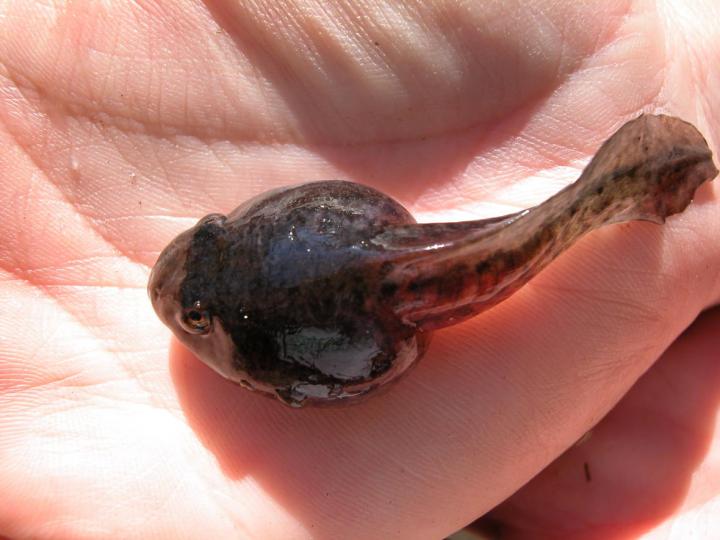
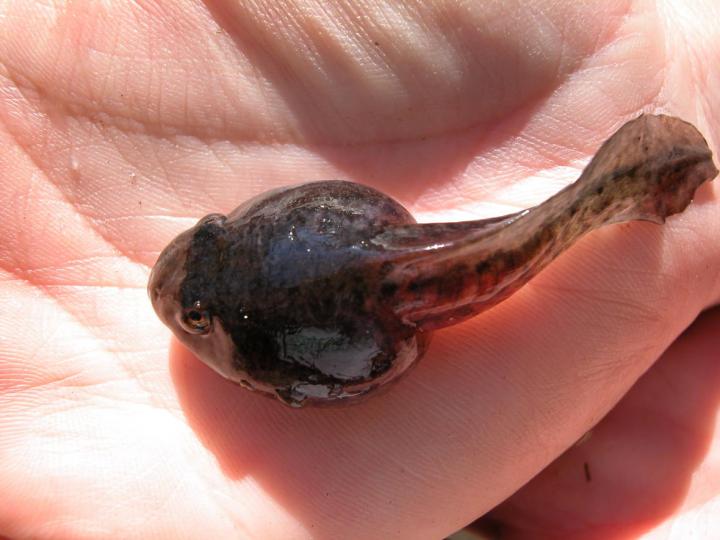
IMAGE

Credit: William Barichivich, USGS

A deadly amphibian disease called severe Perkinsea infections, or SPI, is the cause of many large-scale frog die-offs in the United States, according to a new study by the U.S. Geological Survey.

Frogs and salamanders are currently among the most threatened groups of animals on the planet. The two most common frog diseases, chytridiomycosis and ranavirus infection , are linked to frog population declines worldwide. The new study suggests that that SPI is the third most common infectious disease of frogs.

Scientists with the USGS studied 247 frog die-offs in 43 states from 1999 through 2015. The researchers found that SPI caused 21 of the mass mortalities in 10 states spanning from Alaska to Florida, all involving tadpoles. Up to 95 percent of the tadpole populations died during the SPI mortality events.

"Amphibians such as frogs are valuable because they serve as pest control by eating insects like mosquitos, and they are food for larger predators," said Marcos Isidoro Ayza, a USGS scientist, University of Wisconsin-Madison post-doctoral fellow and the lead author of the study. "They're also exceptional indicators of ecosystem health. Like the proverbial canary in a coal mine, amphibians let us know when something in our environment is going awry."

The SPI die-offs occurred in tadpoles of 11 frog species, including the critically endangered dusky gopherfrog in its only remaining breeding locations in Mississippi. Most of the SPI events occurred in states bordering the Atlantic Ocean and Gulf of Mexico. However, SPI was also detected in Alaska, Oregon and Minnesota.

"Habitat loss, habitat fragmentation and disease are among the factors that contribute to amphibian declines," said Jonathan Sleeman, director of the USGS National Wildlife Health Center. "This study indicates that SPI is an additional disease that can further threaten vulnerable frog populations."

SPI is caused by a tiny one-celled parasitic organism called a protist. The SPI-causing protist, called Perkinsea, is highly resistant to disinfection agents such as common bleach. As a result, it is difficult to prevent the spread of Perkinsea, and SPI is able to reoccur at known locations.

"SPI in frogs may be under-diagnosed because it is not a disease for which they are typically screened," Isidoro Ayza said. "Incorporating routine screening of critical habitats for infected frogs is crucial to help understand the distribution of this destructive disease."

The disease kills tadpoles by causing multi-organ failure, and there is no cure or treatment for SPI at this time. SPI is not known to affect humans or pets.

###

This study was led by the USGS National Wildlife Health Center in collaboration with the USGS Amphibian Research and Monitoring Initiative. For more information about USGS wildlife disease research, please visit the USGS National Wildlife Health Center website.

Media Contact

Marisa Lubeck
[email protected]
303-526-6694
@USGS

http://www.usgs.gov

Original Source

https://www.usgs.gov/news/emerging-disease-further-jeopardizes-north-american-frogs http://dx.doi.org/10.1038/s41598-017-10456-1

Share12Tweet8Share2ShareShareShare2

Related Posts

Early RNA Life May Have Repaired Genomes, Shedding Light on Origins

Early RNA Life May Have Repaired Genomes, Shedding Light on Origins

July 13, 2026
Chonnam University uncovers isoform-specific HIF signaling in muscles

Chonnam University uncovers isoform-specific HIF signaling in muscles

July 13, 2026

Han directs new $15M NIH center for organ-on-chip technology

July 11, 2026

Bacteriophages Enable Next-Gen Smart Pathogen Detection Sensors

July 10, 2026
Please login to join discussion

POPULAR NEWS

  • Detection of EDCs in Breast Milk and Infant Urine Up to Six Months Highlights Early Exposure Risks

    77 shares
    Share 31 Tweet 19
  • New Drug Candidate Developed at McMaster Shows Potential for Treating Brain Cancer

    58 shares
    Share 23 Tweet 15
  • KTU Researchers Explore Ultrasound’s Role in Enhancing Blood Flow Beyond Diagnostics

    53 shares
    Share 21 Tweet 13
  • Experimental Therapy Simultaneously Destroys Prostate Tumor Cells and Reactivates Antitumor Immunity

    46 shares
    Share 18 Tweet 12

About

We bring you the latest biotechnology news from best research centers and universities around the world. Check our website.

Follow us

Recent News

Blocking TMEM141 Reduces MASH and Fibrosis Through ROS-HNF4α Pathway

Early RNA Life May Have Repaired Genomes, Shedding Light on Origins

New Quantitative Standards Defined for Thirdhand Tobacco Smoke Indoors

Subscribe to Blog via Email

Enter your email address to subscribe to this blog and receive notifications of new posts by email.

Join 85 other subscribers
  • Contact Us

Bioengineer.org © Copyright 2023 All Rights Reserved.

Welcome Back!

Login to your account below

Forgotten Password?

Retrieve your password

Please enter your username or email address to reset your password.

Log In
No Result
View All Result
  • Homepages
    • Home Page 1
    • Home Page 2
  • News
  • National
  • Business
  • Health
  • Lifestyle
  • Science

Bioengineer.org © Copyright 2023 All Rights Reserved.