• HOME
  • NEWS
  • EXPLORE
    • CAREER
      • Companies
      • Jobs
    • EVENTS
    • iGEM
      • News
      • Team
    • PHOTOS
    • VIDEO
    • WIKI
  • BLOG
  • COMMUNITY
    • FACEBOOK
    • INSTAGRAM
    • TWITTER
Thursday, August 20, 2026
BIOENGINEER.ORG
No Result
View All Result
  • Login
  • HOME
  • NEWS
  • EXPLORE
    • CAREER
      • Companies
      • Jobs
        • Lecturer
        • PhD Studentship
        • Postdoc
        • Research Assistant
    • EVENTS
    • iGEM
      • News
      • Team
    • PHOTOS
    • VIDEO
    • WIKI
  • BLOG
  • COMMUNITY
    • FACEBOOK
    • INSTAGRAM
    • TWITTER
  • HOME
  • NEWS
  • EXPLORE
    • CAREER
      • Companies
      • Jobs
        • Lecturer
        • PhD Studentship
        • Postdoc
        • Research Assistant
    • EVENTS
    • iGEM
      • News
      • Team
    • PHOTOS
    • VIDEO
    • WIKI
  • BLOG
  • COMMUNITY
    • FACEBOOK
    • INSTAGRAM
    • TWITTER
No Result
View All Result
Bioengineer.org
No Result
View All Result
Home NEWS Science News Chemistry

Embedded gas sensing device promises simple, accurate volatile organic compounds detection

Bioengineer by Bioengineer
July 6, 2021
in Chemistry
Reading Time: 3 mins read
0
IMAGE
Share on FacebookShare on TwitterShare on LinkedinShare on RedditShare on Telegram

Applications range from air quality analysis to patient health screening
IMAGE

Credit: Kwiatkowski, Drozdowska, and Smulko

WASHINGTON, July 6, 2021 — Emitted as gases from certain solids or liquids, volatile organic compounds (VOCs) include a variety of chemicals. Many of these chemicals are associated with a range of adverse human health effects, from eye, nose, and throat irritation, to liver, kidney, and central nervous system damage.

The ability to detect VOCs in air samples simply, quickly, and reliably is valuable for several practical applications, from determining indoor air quality to screening patients for illnesses.

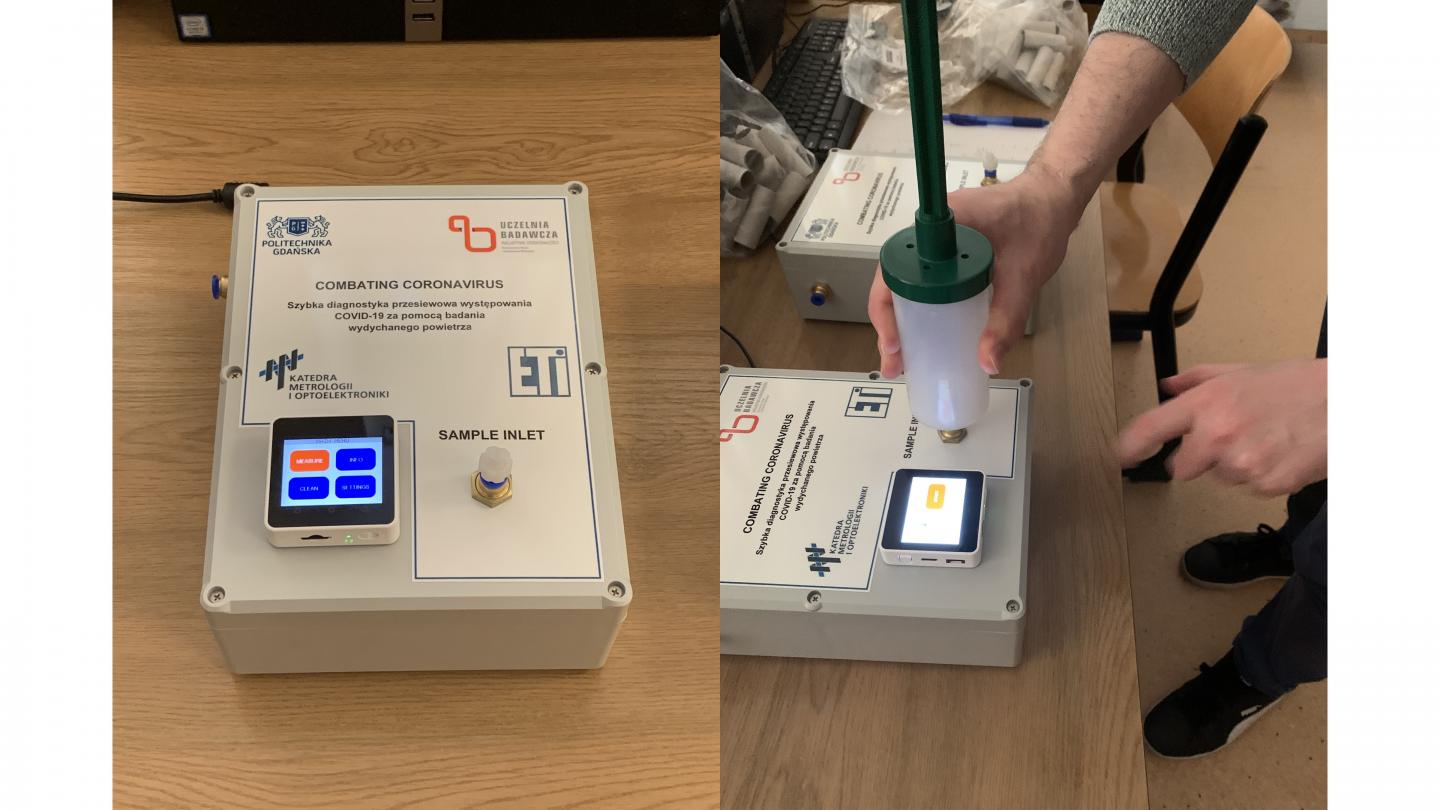
In Review of Scientific Instruments, by AIP Publishing, researchers at Gda?sk University of Technology, in Poland, describe a measurement device designed to analyze air samples containing various VOCs.

The setup “utilizes commercial and prototype resistive gas sensors of low-energy consumption to detect volatile organic compounds, such as methane, ethanol, toluene, methylene, nitrogen dioxide, formaldehyde, ammonia, among others, in air samples,” said researcher Andrzej Kwiatkowski. “The sensors change their resistance in the presence of VOCs, which exist in the environment and exhaled breath.”

After environmental conditions like humidity, temperature, and air pressure are monitored, the device inhales an air sample, either from the atmosphere or from a breath sample, enabling the sensors within its 220-milliliter aluminum gas chamber to analyze and respond to detection of VOCs in real situations.

Consisting of the gas chamber, a set of electrical valves, and an electrical micropump, the device is controlled by a touch-screen electronic module that can process and save data. Sensor responses are recorded and can be parametrized for further data processing using various detection algorithms.

In practical applications, the instrument can detect and measure the presence of VOCs within the span of 10 minutes.

“The setup is a low-cost device of simplified maintenance and service,” said Janusz Smulko, one of the co-authors. “Additional environmental sensors boost the accuracy of gas sensing by correcting effects induced by temperature and humidity changes. The device can monitor the air quality collected in a human environment, such as in an office or warehouse, to detect molds or bacteria by emitted smells.

“In medical applications, doctors can investigate the exhaled breath of patients by this noninvasive method to signal the need for a more detailed checkup.”

The researchers are currently applying it in hospital studies to determine the difference in the exhaled breath between healthy volunteers and patients infected by the COVID-19 virus.

###

The article “Embedded gas sensing set-up for air samples analysis” is authored by Andrzej Kwiatkowski, Katarzyna Drozdowska, and Janusz Marek Smulko. The article will appear in Review of Scientific Instruments on July 6, 2021 (DOI: 10.1063/5.0050445). After that date, it can be accessed at http://aip.scitation.org/doi/10.1063/5.0050445.

ABOUT THE JOURNAL

Review of Scientific Instruments publishes novel advancements in scientific instrumentation, apparatuses, techniques of experimental measurement, and related mathematical analysis. Its content includes publication on instruments covering all areas of science including physics, chemistry, materials science, and biology. See https://aip.scitation.org/journal/rsi.

Media Contact
Larry Frum
[email protected]

Related Journal Article

http://dx.doi.org/10.1063/5.0050445

Tags: BiologyChemistry/Physics/Materials SciencesMedicine/HealthTechnology/Engineering/Computer Science
Share12Tweet8Share2ShareShareShare2

Related Posts

New Study Charts a Path Toward Democratizing Molecular Innovation

New Study Charts a Path Toward Democratizing Molecular Innovation

August 20, 2026
Scientists uncover ways to curb gas formation in ether-electrolyte lithium metal batteries

Scientists uncover ways to curb gas formation in ether-electrolyte lithium metal batteries

August 20, 2026

Bowling-Pin-Shaped Nuclei Recreate Little Big Bang, Revealing the Universe’s Origins

August 20, 2026

Randomized Trial Compares Lobectomy and Total Thyroidectomy for Indeterminate-Risk Thyroid Cancer

August 20, 2026
Please login to join discussion

POPULAR NEWS

  • Younger lung cancer patients more likely to harbor targetable mutations, study finds

    29 shares
    Share 12 Tweet 7
  • Sex Differences and Atherosclerosis-Linked CT Patterns in Abdominal Fat

    29 shares
    Share 12 Tweet 7
  • Neuromorphic tactile sensors and haptic displays deliver distributed touch feedback in telepresence

    29 shares
    Share 12 Tweet 7
  • Human-Centered AI Strengthens X-Ray Analysis Through Holistic Self-Supervised Learning

    29 shares
    Share 12 Tweet 7

About

We bring you the latest biotechnology news from best research centers and universities around the world. Check our website.

Follow us

Recent News

Younger lung cancer patients more likely to harbor targetable mutations, study finds

Sex Differences and Atherosclerosis-Linked CT Patterns in Abdominal Fat

Neuromorphic tactile sensors and haptic displays deliver distributed touch feedback in telepresence

Subscribe to Blog via Email

Enter your email address to subscribe to this blog and receive notifications of new posts by email.

Join 85 other subscribers
  • Contact Us

Bioengineer.org © Copyright 2023 All Rights Reserved.

Welcome Back!

Login to your account below

Forgotten Password?

Retrieve your password

Please enter your username or email address to reset your password.

Log In
No Result
View All Result
  • Homepages
    • Home Page 1
    • Home Page 2
  • News
  • National
  • Business
  • Health
  • Lifestyle
  • Science

Bioengineer.org © Copyright 2023 All Rights Reserved.