• HOME
  • NEWS
  • EXPLORE
    • CAREER
      • Companies
      • Jobs
    • EVENTS
    • iGEM
      • News
      • Team
    • PHOTOS
    • VIDEO
    • WIKI
  • BLOG
  • COMMUNITY
    • FACEBOOK
    • INSTAGRAM
    • TWITTER
Monday, August 31, 2026
BIOENGINEER.ORG
No Result
View All Result
  • Login
  • HOME
  • NEWS
  • EXPLORE
    • CAREER
      • Companies
      • Jobs
        • Lecturer
        • PhD Studentship
        • Postdoc
        • Research Assistant
    • EVENTS
    • iGEM
      • News
      • Team
    • PHOTOS
    • VIDEO
    • WIKI
  • BLOG
  • COMMUNITY
    • FACEBOOK
    • INSTAGRAM
    • TWITTER
  • HOME
  • NEWS
  • EXPLORE
    • CAREER
      • Companies
      • Jobs
        • Lecturer
        • PhD Studentship
        • Postdoc
        • Research Assistant
    • EVENTS
    • iGEM
      • News
      • Team
    • PHOTOS
    • VIDEO
    • WIKI
  • BLOG
  • COMMUNITY
    • FACEBOOK
    • INSTAGRAM
    • TWITTER
No Result
View All Result
Bioengineer.org
No Result
View All Result
Home NEWS Science News

Elasticity key to plants and animals’ ability to sting

Bioengineer by Bioengineer
June 15, 2020
in Science News
Reading Time: 3 mins read
0
IMAGE
Share on FacebookShare on TwitterShare on LinkedinShare on RedditShare on Telegram

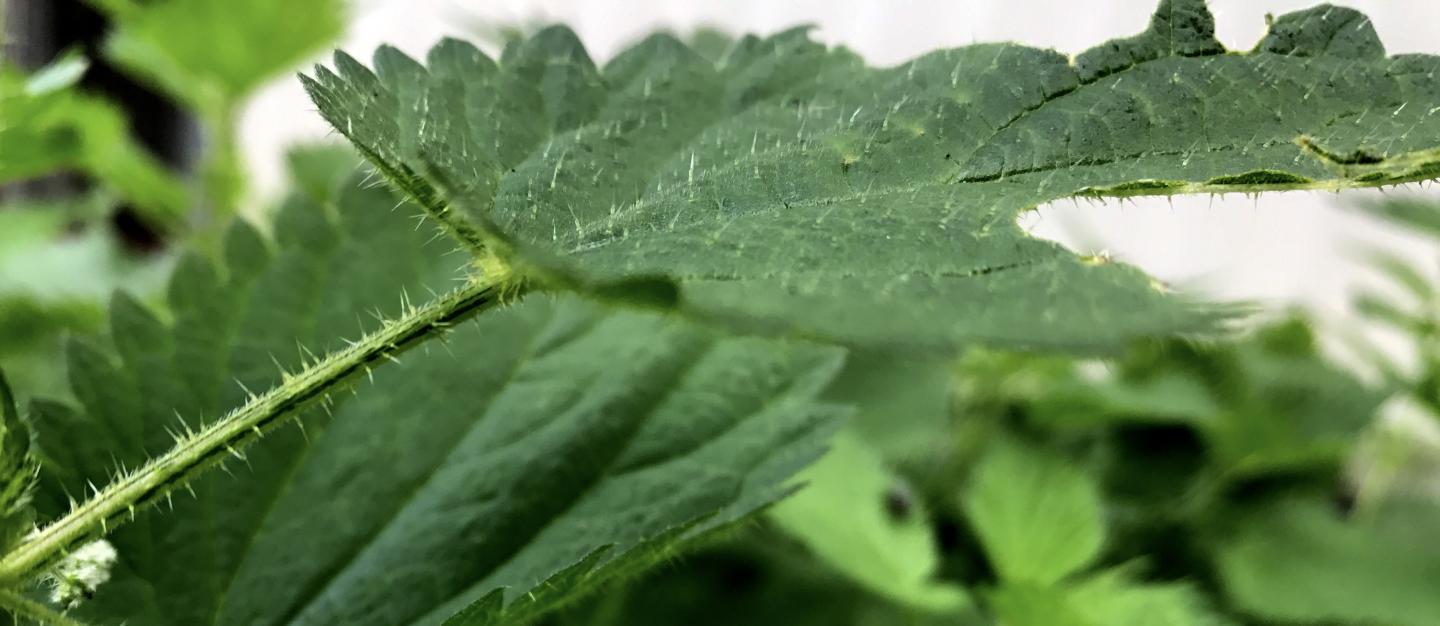
A new study explains for the very first time the principles behind the design of stings, needles, and spikes in animals and plants. The principles can be directly used in the development of new tools and medical equipment.
IMAGE

Credit: Kaare Hartvig Jensen

Kaare Hartvig Jensen and his colleagues at DTU Physics had repeated experiences where the small glass pipettes they use to extract fluid from plant cells broke upon contact with the cell wall. This annoyed the researchers and aroused their interest in similar pointed objects in nature that do not break when used. That includes thorns on plants such as cacti and nettles or the stings and spines of many insects, algae, hedgehogs, and other animals.

The idea of seeking inspiration in nature is not new to Kaare Hartvig Jensen, who belongs to a growing group of biomimetics researchers. They focus on exploring nature design to find inspiration for technical innovations related to, for example, tools and medical equipment.

Based on a wide range of experiments

To acquire more knowledge on the subject, Kaare Hartvig Jensen and his colleagues conducted model experiments and collected data from more than 200 species, examining the design of various pointed objects in animals and plants. Their field of study was broad and included pointed parts of plants or animals used for very different purposes, for example for sticking to a surface, ingesting nourishment, or defence. The analysis furthermore included needles or stings on animals and plants which are made of vastly different materials and sizes, ranging from the smallest viruses and algae spikes, measuring just 50 nanometres, to the world’s longest pointed part of an animal, the 2.5 metre narwhal tusk.

The researchers also included the design of man-made pointed objects such as nails, syringe needles, and weapons (ancient spears and lances) up to six metres long.

Design ensures strength and elasticity

The large database allowed the researchers to identify how nature’s pointy tools are designed to be both strong enough to penetrate human or animal skin, for example, and hard enough to ensure the tip does not break when coming into contact with the skin.

“Our results showed that there is a clear correlation between the length of a needle or sting and its diameter, both close to the tip and where it attaches to the plant or animal. In this way, both the necessary strength and elasticity of the tip can be ensured, whether on a nettle or a mosquito” says Kaare Hartvig Jensen.

“At the same time, it’s clear that the pointy tools of nature are on the very edge of what is physically possible. And it’s also clear that the designs are very similar, regardless of whether we’re looking at the nanoscale spikes of a virus or a swordfish’s 1.5 metre bill,” says Kaare Hartvig Jensen.

The findings from the new study have recently been published in the respected scientific journal Nature Physics.

The study also included man-made pointed objects that have already mimicked natural shapes to a large extent.

“This new knowledge of how to calculate the optimal design of a pointed object can in future be used to design, e.g., syringe needles to optimize the allocation of medication. Or in designing nails, enabling a reduction of material consumption without losing the necessary stability,” says Kaare Hartvig Jensen.

The researchers themselves have also used the results to redesign their glass pipettes so they no longer experience breakage when extracting fluid from plant cells.

###

Media Contact
Kaare Hartvig Jensen
[email protected]

Related Journal Article

http://dx.doi.org/10.1038/s41567-020-0930-9

Tags: BiologyBiomechanics/BiophysicsChemistry/Physics/Materials SciencesPlant SciencesTechnology/Engineering/Computer Science
Share12Tweet8Share2ShareShareShare2

Related Posts

β-Sitosterol from Ipomoea carnea Jacq. As a promising anti-inflammatory agent: Evidence from in silico modeling and in vitro validation

β-Sitosterol from Ipomoea carnea Jacq. As a promising anti-inflammatory agent: Evidence from in silico modeling and in vitro validation

August 31, 2026
Design, fabrication and characterization of a wearable Fiber Bragg grating sensor for cardiorespiratory monitoring using finger plethysmography

Design, fabrication and characterization of a wearable Fiber Bragg grating sensor for cardiorespiratory monitoring using finger plethysmography

August 31, 2026

KAIST opens the era of industrial-scale microbial foods, proposing growth strategies for the next-generation protein market

August 31, 2026

Virologist awarded $2 million NIH grant to investigate how virus-infected cells live and die

August 31, 2026
Please login to join discussion

POPULAR NEWS

  • β-Sitosterol from Ipomoea carnea Jacq. As a promising anti-inflammatory agent: Evidence from in silico modeling and in vitro validation

    29 shares
    Share 12 Tweet 7
  • Design, fabrication and characterization of a wearable Fiber Bragg grating sensor for cardiorespiratory monitoring using finger plethysmography

    29 shares
    Share 12 Tweet 7
  • KAIST opens the era of industrial-scale microbial foods, proposing growth strategies for the next-generation protein market

    29 shares
    Share 12 Tweet 7
  • Virologist awarded $2 million NIH grant to investigate how virus-infected cells live and die

    29 shares
    Share 12 Tweet 7

About

We bring you the latest biotechnology news from best research centers and universities around the world. Check our website.

Follow us

Recent News

β-Sitosterol from Ipomoea carnea Jacq. As a promising anti-inflammatory agent: Evidence from in silico modeling and in vitro validation

Design, fabrication and characterization of a wearable Fiber Bragg grating sensor for cardiorespiratory monitoring using finger plethysmography

KAIST opens the era of industrial-scale microbial foods, proposing growth strategies for the next-generation protein market

Subscribe to Blog via Email

Enter your email address to subscribe to this blog and receive notifications of new posts by email.

Join 85 other subscribers
  • Contact Us

Bioengineer.org © Copyright 2023 All Rights Reserved.

Welcome Back!

Login to your account below

Forgotten Password?

Retrieve your password

Please enter your username or email address to reset your password.

Log In
No Result
View All Result
  • Homepages
    • Home Page 1
    • Home Page 2
  • News
  • National
  • Business
  • Health
  • Lifestyle
  • Science

Bioengineer.org © Copyright 2023 All Rights Reserved.