In a controlled benchmarking study evaluating automated waste sorting, an EfficientNet-B0 architecture achieved a mean test classification accuracy of 91.30 percent across five random seeds on real-world landfill imagery, surpassing several established convolutional baselines while using far fewer parameters. However, when researchers integrated Local Interpretable Model-Agnostic Explanations to inspect the visual evidence driving individual predictions, the diagnostic tool demonstrated that high top-line accuracy did not consistently signify reliable semantic feature recognition. The findings emphasize that standard classification accuracy provides an incomplete measure of operational reliability in automated recycling. By combining baseline comparisons with perturbation-based explainability, the investigation established that developing sorting systems requires validating both predictive accuracy and internal reasoning pathways.
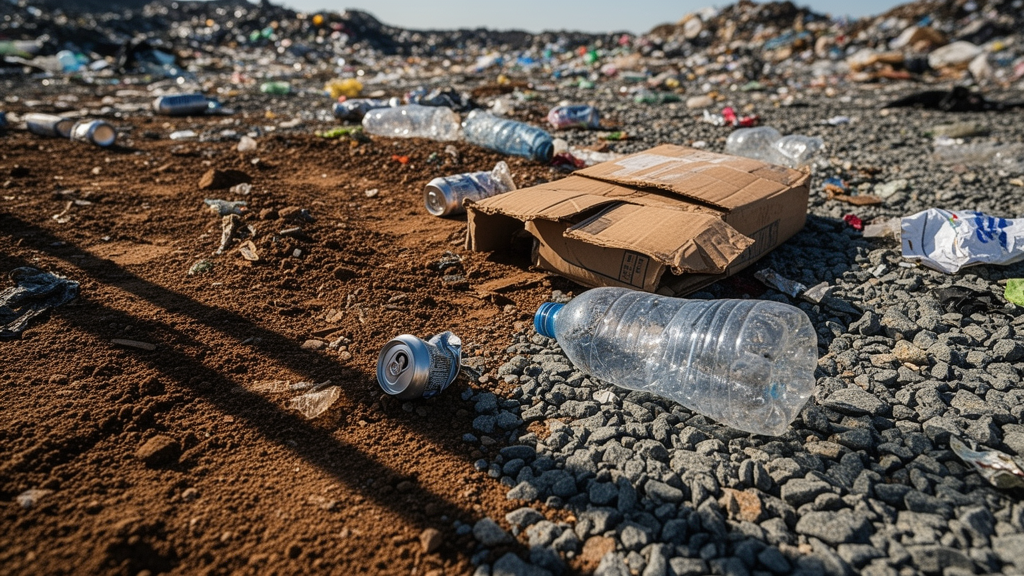
The operational background for the study centers on logistical and health challenges confronting municipal solid waste infrastructure. As urbanization accelerates waste generation, manual segregation remains standard practice in many sorting facilities, exposing sanitation workers to hazardous materials while limiting sorting speed, throughput, and operational consistency. Automated computer vision systems offer a promising mechanism to categorize complex waste streams, yet models trained on pristine product images struggle when confronted with genuine landfill refuse. To bridge this gap, the evaluation analyzed the RealWaste dataset, comprising 4,752 images collected under authentic landfill conditions at the Whyte’s Gully facility in Wollongong, Australia. Unlike curated repositories, RealWaste captures authentic challenges including uneven illumination, visual occlusion, dirt, and background clutter across nine classes: cardboard, food organics, glass, metal, miscellaneous trash, paper, plastic, textile trash, and vegetation.
A central motivation was overcoming the black-box opacity of deep neural networks in environmental vision tasks. In safety-critical sorting facilities, deploying an algorithm whose decision logic cannot be interrogated creates substantial operational vulnerability. If deployed under shifting conditions, such models fail because learned shortcuts no longer correlate with true object identities. To evaluate whether classifications derived from semantically meaningful features rather than superficial artifacts, researchers coupled EfficientNet-B0 with Local Interpretable Model-Agnostic Explanations, or LIME. This framework generates interpretable surrogate models around individual predictions, assessing whether the network focuses on discriminative object geometry or incidental visual noise.
The architectural backbone selected for the classification pipeline was EfficientNet-B0, a convolutional model designed around compound scaling. Rather than scaling depth, width, or resolution independently, compound scaling balances these dimensions concurrently using fixed scaling coefficients. The fundamental building block of EfficientNet-B0 is the mobile inverted bottleneck convolution block, incorporating depthwise separable convolutions alongside squeeze-and-excitation modules. Depthwise separable convolutions split spatial filtering into depthwise and pointwise operations, reducing parameter volume without sacrificing feature extraction. Squeeze-and-excitation modules recalibrate channel-wise feature dependencies dynamically by squeezing spatial representations through pooling before exciting informative pathways through learned gating weights. Utilizing the Swish activation function rather than standard rectified linear units, the model maintains smoother gradient propagation for small negative inputs. Pretrained on ImageNet, the classifier comprises 4,061,093 total parameters, of which 4,019,077 are trainable weights fine-tuned for the waste task.
Experimental preparation required systematic data loading, normalization, and partitioning procedures designed to preserve distribution integrity while establishing baselines. Prior to evaluating landfill imagery, EfficientNet-B0 was benchmarked on CIFAR-10 and CIFAR-100 purely to establish architectural robustness under controlled reference conditions rather than as waste evidence. For the RealWaste dataset, images originally captured at 524 by 524 pixels were downsampled to 224 by 224 pixel dimensions. Pixel intensities were normalized to floating-point values from zero to one. The dataset was partitioned into an eighty percent training partition and a twenty percent testing partition containing 954 images. To prevent sampling bias, researchers used a StratifiedShuffleSplit routine preserving proportional category distributions across splits. Optimization utilized the Adam algorithm with an initial learning rate of 0.0001, monitored by early stopping and learning rate reduction callbacks to avoid overfitting.
To benchmark performance, the authors conducted a controlled comparison evaluating EfficientNet-B0 alongside three vision architectures: ResNet50, InceptionV3, and MobileNetV2. Every model was trained under identical parameters, using ImageNet initial weights, identical splits, batch sizes of nine, and a fifteen-epoch limit. In single-run evaluations on RealWaste, EfficientNet-B0 attained a test accuracy of 93.08 percent with precision, recall, and F1-scores of 0.93. This single-run accuracy exceeded InceptionV3 by 3.46 percentage points, ResNet50 by 4.51 points, and MobileNetV2 by 5.45 points, while using merely 18.6 percent of InceptionV3’s parameter count of 21.82 million. To account for initialization variance, the team repeated training across five random seeds per architecture. Across this five-seed distribution, EfficientNet-B0 achieved a mean test accuracy of 91.30 percent with a standard deviation of 1.11 percent, compared to 90.04 percent for ResNet50, 89.33 percent for InceptionV3, and 86.02 percent for MobileNetV2.
Recognizing that raw accuracy differences can stem from sampling noise, researchers applied statistical significance testing to paired predictions on the 954-image RealWaste test set at seed 777. McNemar’s test evaluated paired correct and incorrect predictions between EfficientNet-B0 and each competitor to determine whether discordant outcomes exhibited significant asymmetry. Concurrently, paired bootstrap resampling generated empirical distributions and 95 percent confidence intervals for accuracy differences. Results demonstrated that EfficientNet-B0’s advantage was statistically significant exclusively against MobileNetV2, where the 95 percent bootstrap confidence interval excluded zero. When compared against ResNet50 and InceptionV3, the paired confidence intervals crossed zero, indicating that observed accuracy margins could not be distinguished from chance variation at this sample size. This statistical qualification confirmed that despite parameter efficiency, EfficientNet-B0 did not exhibit statistically confirmed predictive separation from the larger convolutional architectures.
A critical practical dimension examined was the effect of dataset class imbalance on learning. The RealWaste distribution contains an imbalance ratio of approximately 2.89 to 1, with Plastic most frequent and Textile Trash least represented. To test whether targeted interventions could boost minority accuracy, researchers conducted an ablation study comparing three specialized strategies against standard cross-entropy: Class-Weighted Cross-Entropy, Focal Loss with gamma set to 0.5, and a Balanced Sampler. The ablation revealed that none of the specialized strategies improved overall performance over standard cross-entropy. Class-weighted cross-entropy reduced overall F1-score from 0.9135 to 0.8932, a drop of 2.03 percentage points causing declines across eight of nine categories, including steep reductions in Plastic and Glass. Balanced sampling proved most detrimental, reducing overall F1 by 4.55 percentage points, while Focal Loss decreased overall F1 by 0.70 percentage points despite slight gains in Metal, Food Organics, and Vegetation.
The investigation’s qualitative insights emerged from the application of Local Interpretable Model-Agnostic Explanations. LIME segments an input image into superpixels and generates perturbed variations by randomly masking superpixel subsets while holding the class label constant. Passing these perturbed variations through the network reveals how output probabilities shift. LIME then trains an interpretable local surrogate model, weighting perturbed instances based on their exponential distance from the original image. Superpixels receiving the largest positive weights denote regions that most strongly drove the prediction.
To elevate explainability beyond visual inspection, the authors executed quantitative faithfulness and stability assessments on sampled RealWaste test images. Faithfulness was evaluated through deletion and insertion perturbation curves. In the deletion protocol, superpixels were ranked by importance and progressively masked in ten-percent increments; removing influential regions produced a sharp drop in prediction confidence. In the insertion protocol, ranked superpixels were progressively added to a blank baseline, inducing a steep rise in probability. Across sampled images, the mean deletion curve fell from 0.93 to 0.21 when top superpixels were removed, yielding an Area Over the Perturbation Curve score of 0.563. The insertion curve rose from 0.10 to 0.88, producing a mean insertion score of 0.490. However, explanation stability, measured by calculating Jaccard overlap between top superpixels across repeated runs on the same image, averaged only 0.555, reflecting sensitivity to internal sampling randomness.
The authors detailed several methodological constraints defining the interpretative limits of their research. First, experimental findings derive from a single geographic facility at Whyte’s Gully and cannot be assumed to generalize across diverse international waste streams or differing collection protocols. Second, while baseline comparisons incorporated five-seed replications, the class-imbalance ablation and paired statistical significance tests remained restricted to single-seed runs, and quantitative LIME metrics were evaluated on limited image samples comprising twenty images for perturbation curves and ten images for stability checks. Third, the study examined only LIME, omitting direct comparisons with alternative visual explainability methods such as Grad-CAM or SHAP. Finally, the research remained an offline computational evaluation without physical robotic manipulator integration or hardware latency benchmarking. Future research will explore multi-label architectures such as EfficientDet capable of classifying multiple overlapping waste items within complex scenes, alongside evaluating operational constraints within municipal recycling facilities.
Subject of Research: Explainable deep learning evaluation for automated image-based municipal waste classification
Article Title: Model-agnostics for real waste management using image classification
Article References: Shetty, P. K., & Attigeri, G. (2026). Model-agnostics for real waste management using image classification. Discover Computing, 29(1), Article 777. https://doi.org/10.1007/s10791-026-10531-0
Image Credits: AI Generated
DOI: 10.1007/s10791-026-10531-0
Keywords: EfficientNet-B0, Local Interpretable Model-Agnostic Explanations, RealWaste dataset, computer vision, waste classification, explainable artificial intelligence, image classification, model faithfulness, area over the perturbation curve, class imbalance, ResNet50, InceptionV3, MobileNetV2, Whyte's Gully facility, superpixel segmentation, deep learning, statistical significance testing, solid waste management
News Source: Blake Davidson. (November 13, 2026). EfficientNet Classifies Landfill Waste Accurately but Relies Partially on Spurious Backgrounds. Scienmag.