Traditional Chinese rice wine (RW) has been popular in China for thousands of years. The brewing process involves simultaneous saccharification and solid-state fermentation using mixed saccharifying starters, such as wheat starter and distiller’s yeast. However, the brewing medium contains a diverse array of microorganisms, and the quality of starters varies across regions. This leads to an unpredictable fermentation process and inconsistent RW product quality. In addition, traditionally fermented RW has several limitations including thin taste, long brewing time, slow product conversion and limited application of high-technology. Although some progress has been made in addressing the limitations of traditional brewing, the need for further research and innovation remains.
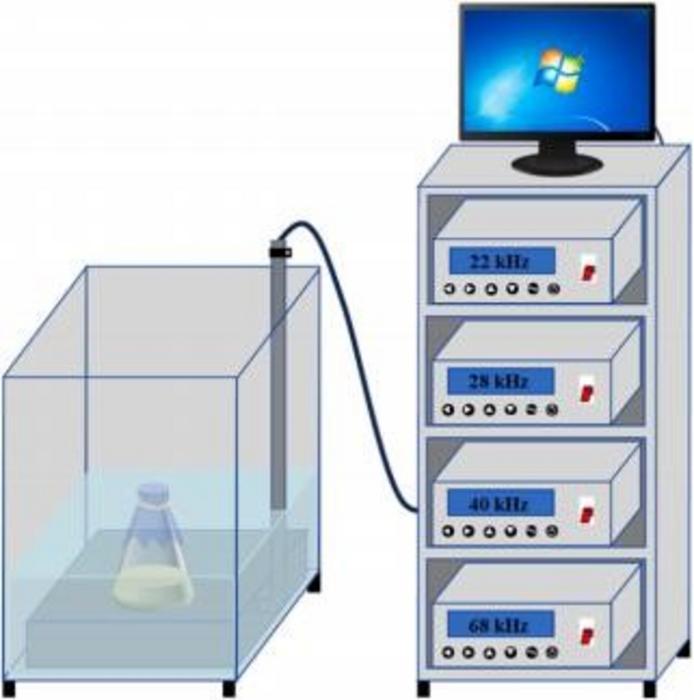
Credit: Rong Zhang et al
Traditional Chinese rice wine (RW) has been popular in China for thousands of years. The brewing process involves simultaneous saccharification and solid-state fermentation using mixed saccharifying starters, such as wheat starter and distiller’s yeast. However, the brewing medium contains a diverse array of microorganisms, and the quality of starters varies across regions. This leads to an unpredictable fermentation process and inconsistent RW product quality. In addition, traditionally fermented RW has several limitations including thin taste, long brewing time, slow product conversion and limited application of high-technology. Although some progress has been made in addressing the limitations of traditional brewing, the need for further research and innovation remains.
Ultrasound, as a new non-thermal physical processing technique, has extensively been utilized to overcome the drawbacks of conventional fermentation. Some studies have showed that the application of ultrasonic technology in brewing can enhance the fermentation efficiency and quality. To date, research on ultrasound-assisted fermentation has mainly focused on the pure culture fermentation process in the laboratory.
To that end, a new study published in the KeAi journal Food Physics, established an enzymatic brewing process for RW by simulating actual production. By adding α-amylase to liquefy the starch, it is hydrolyzed from long-chain starch to short-chain dextrin and oligosaccharides to assist saccharifying enzyme in converting starch into fermentable sugar.
The researchers, based in China, analyzed the impact of ultrasound on the physicochemical properties and volatile compounds during the fermentation process. They found that concentrations of isobutyl acetate, ethyl butyrate, ethyl hexanoate and phenethyl acetate exhibited significant increases of 58.03%, 107.70%, 31.84%, and 18.71%, respectively.
The findings suggest that the utilization of ultrasound in the brewing process could be feasible for simplifying the procedure, reducing brewing time and enhancing the volatile flavor profile of RW.
###
Contact the author: Rong Zhang, School of Food and Biological Engineering,Jiangsu University,Zhenjiang 212013,China. Email:[email protected]
The publisher KeAi was established by Elsevier and China Science Publishing & Media Ltd to unfold quality research globally. In 2013, our focus shifted to open access publishing. We now proudly publish more than 100 world-class, open access, English language journals, spanning all scientific disciplines. Many of these are titles we publish in partnership with prestigious societies and academic institutions, such as the National Natural Science Foundation of China (NSFC).
Journal
Food Physics
DOI
10.1016/j.foodp.2023.100006
Method of Research
Experimental study
Subject of Research
Cells
Article Title
Effect of ultrasound-assisted fermentation on physicochemical properties and volatile flavor compounds of Chinese rice wine
COI Statement
The authors declare that they have no known competing financial interests or personal relationships that could have appeared to influence the work reported in this paper.