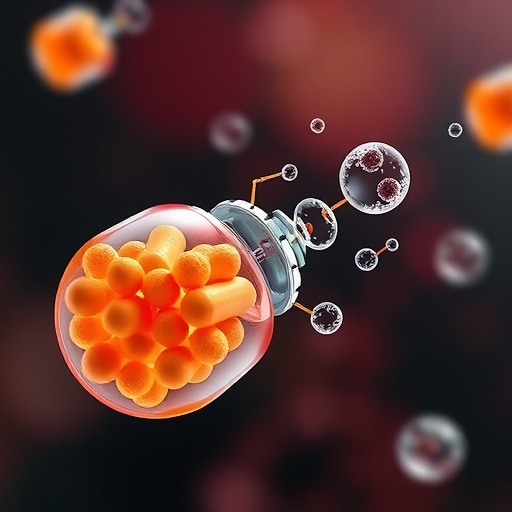
Researchers in Argentina have engineered microscopic capsules that not only shield probiotic bacteria from the harsh chemistry of the stomach but also preserve their remarkable ability to secrete tiny, medically valuable vesicles into the gut. The study, published in Applied Microbiology and Biotechnology, describes a whey protein–chitosan encapsulation system that boosted bacterial adhesion to intestinal mucus by roughly 77-fold compared with conventional formulations, while keeping the microorganisms alive and functionally active. To the authors’ knowledge, it is the first demonstration that spray-dried microcapsules can serve as a delivery platform for probiotic-derived extracellular vesicles, a class of “postbiotic” molecules that is attracting intense interest in the functional food and nutraceutical industries.
Probiotics are live microorganisms that, when administered in adequate amounts, confer a health benefit on the host. Yet their therapeutic promise has long been undermined by a practical problem: most ingested bacteria die before they ever reach the intestine. Stomach acid, bile salts and digestive enzymes decimate unprotected cells, and even the survivors often pass through the gut without adhering to the mucosal surface, limiting the time they have to interact with the intestinal wall. In recent years, scientists have come to appreciate that some of the health effects attributed to probiotics may actually be mediated not by the bacteria themselves but by the extracellular vesicles they release. These nanoscale lipid bubbles, typically 70 to 100 nanometers in diameter, carry proteins and other signaling molecules deep into the mucus layer and can modulate immune responses without involving live cells.
The research team, led by Cecilia L. D’Antoni and Oscar E. Pérez at the University of Buenos Aires and CONICET, set out to solve both problems simultaneously with a single delivery vehicle. They selected Lacticaseibacillus casei BL23, a well-characterized probiotic strain, and encapsulated it in a matrix built from two food-grade ingredients: whey protein isolate, a byproduct of cheese manufacturing, and chitosan, a natural polysaccharide derived from shellfish shells. Whey proteins form a protective gel-like layer around the cells, while chitosan is positively charged at intestinal pH, allowing it to bind electrostatically to the negatively charged mucus glycoproteins that line the gut. The result is a mucoadhesive shell that anchors the capsules to the intestinal surface instead of letting them wash through.
Getting the recipe right was far from trivial. The researchers used a statistical optimization approach known as central composite design to systematically vary the concentrations of whey protein isolate and chitosan and identify the formulation that best balanced several competing demands. Too much chitosan can be antimicrobial, harming the very bacteria the capsule is meant to protect; too little fails to confer mucoadhesion. The winner was a formulation containing 20 percent whey protein isolate and 0.5 percent chitosan, processed by spray drying. In this technique, a liquid suspension of bacteria and wall materials is atomized into a hot drying chamber, where droplets instantly lose their water and harden into particles. The resulting microcapsules were predominantly spherical and measured between 2 and 15 micrometers, a size range well suited to food applications.
The encapsulated bacteria emerged from the process with viable counts of 6.6 × 10⁹ colony-forming units per gram, comfortably within the ranges recommended for probiotic products. More importantly, the capsules proved extraordinarily sticky. In laboratory assays, the chitosan-containing formulation showed approximately 77 times greater mucoadhesion than capsules made of whey protein alone, a dramatic enhancement attributable to the electrostatic attraction between the cationic polysaccharide and anionic mucins. Greater adhesion means longer residence time at the intestinal interface, which in turn increases the window during which the encapsulated bacteria can proliferate, secrete their bioactive molecules and interact with the host.
Protection during gastrointestinal transit was equally impressive. When the researchers subjected both free and encapsulated bacteria to a simulated digestive journey, beginning with a gastric phase of low pH and pepsin followed by intestinal conditions, the difference was stark. Free bacteria suffered a loss of roughly 6 logarithmic units, the equivalent of a 99.9999 percent kill rate. Encapsulated bacteria lost only about 2 log units, meaning roughly 100 times more cells survived. For a supplement or functional food, that difference could determine whether a product delivers a meaningful dose of live culture to the intestine or essentially nothing at all.
The capsules also preserved what food scientists call fermentative capacity, the ability of the bacteria to ferment lactose and acidify milk. When reconstituted into milk, bacteria released from the capsules performed indistinguishably from never-encapsulated controls, and the resulting fermented products showed reduced syneresis, the unsightly separation of whey from the gel that plagues many commercial yogurts. That observation hints at a secondary commercial benefit: encapsulated cultures may produce structurally more stable fermented foods. Storage stability was confirmed at both 4 degrees Celsius and minus 20 degrees Celsius, covering the cold chain conditions typical of dairy products and frozen concentrates.
The study’s most novel claim, however, concerns the extracellular vesicles. Vesicle secretion is an active, energy-dependent process performed by living bacteria, and a harsh encapsulation procedure could plausibly damage the machinery responsible. The team demonstrated that it does not. Bacteria recovered from the microcapsules continued to secrete vesicles in the characteristic 70-to-100-nanometer range, and proteomic analysis showed these vesicles were enriched in p40 and p75, two well-studied proteins produced by L. casei that are associated with anti-inflammatory effects and intestinal epithelial protection. In other words, the capsules function not merely as a passive shield but as an in-situ bioreactor, delivering living, vesicle-secreting bacteria directly to the site where those vesicles are most likely to do good.
This dual capability, live bacteria plus preserved postbiotic secretion, matters because the two modes of action are complementary. Live cells can colonize the mucus layer and sustain production of beneficial molecules over time, while the vesicles themselves can diffuse into mucus and interact with host tissues even where live cells cannot penetrate. Previous work on extracellular vesicles as therapeutics has been hampered by delivery problems of its own: free vesicles administered orally face rapid degradation and poor targeting. By keeping the production line intact inside a mucoadhesive capsule, the new system effectively factories the vesicles at the intestinal wall, sidestepping the need to formulate and stabilize the vesicles separately.
The work, performed with institutional support from CONICET and Argentina’s national research agency and published as an open-access article, positions whey protein–chitosan microcapsules as a robust strategy for targeted delivery of postbiotic extracellular vesicles in nutraceutical and functional food development. Because both wall materials are inexpensive, food-grade and widely available, the formulation is amenable to industrial translation. The authors note that further studies will be needed to confirm the findings in animal models and humans, and to establish how long the encapsulated bacteria remain resident and productive in a living gut. But as a proof of principle, the study makes a compelling case that the next generation of probiotic products may deliver their benefits through tiny spherical couriers, 2 to 15 micrometers wide, engineered to stick, survive and secrete.
Subject of Research: Mucoadhesive whey protein isolate–chitosan microcapsules for the encapsulation and delivery of the probiotic Lacticaseibacillus casei BL23 and its extracellular vesicles
Subject of Research: Biology
Article Title: Mucoadhesive microcapsules for the delivery of probiotic-derived extracellular vesicles
Article References: D’Antoni, C. L., Corfield, R., Nemirovsky, S. I., Schebor, C., Rubinstein, A., Domínguez Rubio, A. P., & Pérez, O. E. (2026). Mucoadhesive microcapsules for the delivery of probiotic-derived extracellular vesicles. Applied Microbiology and Biotechnology. https://doi.org/10.1007/s00253-026-14025-3
Image Credits: AI Generated
DOI: 10.1007/s00253-026-14025-3
Keywords: Spray drying, Probiotics, Postbiotics, Extracellular vesicles, Chitosan, Whey protein isolate, Lacticaseibacillus casei BL23, Microencapsulation, Mucoadhesion, Functional foods
Cite Scienmag News
APA
MLA
Chicago
Drew Townsend. (September 4, 2026). Microcapsules deliver probiotic-derived extracellular vesicles via mucosal adhesion. Scienmag. https://scienmag.com/microcapsules-deliver-probiotic-derived-extracellular-vesicles-via-mucosal-adhesion/
Drew Townsend. “Microcapsules deliver probiotic-derived extracellular vesicles via mucosal adhesion.” Scienmag, 4 September 2026, https://scienmag.com/microcapsules-deliver-probiotic-derived-extracellular-vesicles-via-mucosal-adhesion/. Accessed 4 September 2026.
Drew Townsend. “Microcapsules deliver probiotic-derived extracellular vesicles via mucosal adhesion.” Scienmag. September 4, 2026. https://scienmag.com/microcapsules-deliver-probiotic-derived-extracellular-vesicles-via-mucosal-adhesion/
Copy citation
Download RIS
Tags: extracellular vesicles as postbioticsfunctional food and nutraceutical applications of probioticsfunctional foods and nutraceuticalsgut microbiome modulationgut microbiome modulation through microencapsulationimproving probiotic survival and adhesion in the gastrointestinal tractinnovative probiotic deliverymicrocapsule-based probiotic delivery systemsmicrocapsule-based probiotic therapymicroencapsulation for probiotic deliverymucosal adhesion enhancementmucosal adhesion enhancement for probioticsprobiotic protective delivery systemsprobiotic survival in gastrointestinal tractprobiotic-derived extracellular vesiclesprotection of probiotic bacteria from stomach acidityspray-dried microencapsulation technologyspray-dried probiotic microcapsulestargeted delivery of probiotic extracellular vesiclestargeted probiotic delivery platformswhey protein-chitosan microencapsulationwhey protein–chitosan microcapsules