

• HOME
  • NEWS
  • EXPLORE
    • CAREER
      • Companies
      • Jobs
    • EVENTS
    • iGEM
      • News
      • Team
    • PHOTOS
    • VIDEO
    • WIKI
  • BLOG
  • COMMUNITY
    • FACEBOOK
    • INSTAGRAM
    • TWITTER
Saturday, February 14, 2026
BIOENGINEER.ORG
No Result
View All Result
  • Login
  • HOME
  • NEWS
  • EXPLORE
    • CAREER
      • Companies
      • Jobs
        • Lecturer
        • PhD Studentship
        • Postdoc
        • Research Assistant
    • EVENTS
    • iGEM
      • News
      • Team
    • PHOTOS
    • VIDEO
    • WIKI
  • BLOG
  • COMMUNITY
    • FACEBOOK
    • INSTAGRAM
    • TWITTER
  • HOME
  • NEWS
  • EXPLORE
    • CAREER
      • Companies
      • Jobs
        • Lecturer
        • PhD Studentship
        • Postdoc
        • Research Assistant
    • EVENTS
    • iGEM
      • News
      • Team
    • PHOTOS
    • VIDEO
    • WIKI
  • BLOG
  • COMMUNITY
    • FACEBOOK
    • INSTAGRAM
    • TWITTER
No Result
View All Result
Bioengineer.org
No Result
View All Result
Home NEWS Science News Technology

Eco-Friendly Enzyme Production via Open Fermentation

Bioengineer by Bioengineer
January 20, 2026
in Technology
Reading Time: 4 mins read
0
blank
Share on FacebookShare on TwitterShare on LinkedinShare on RedditShare on Telegram

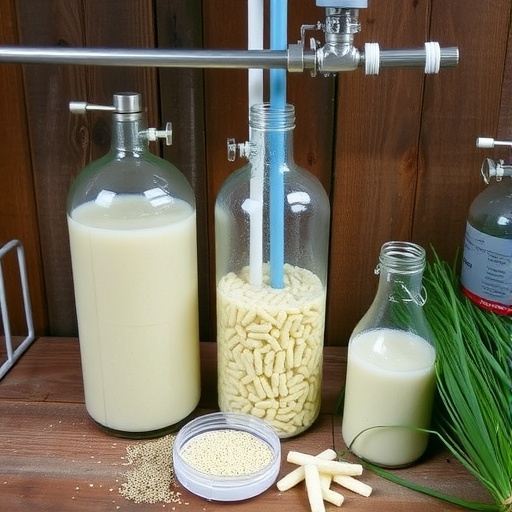
In an exciting development within the field of biotechnology, researchers have unveiled a groundbreaking approach to enzymatic production using a nonsterile open fermentation system. This innovative technique involves harnessing the capabilities of a specific strain of the genus Streptomyces, in combination with untreated agroindustrial substrates, to generate lignocellulolytic enzymes. The impact of such enzymes is vast, particularly in the processes of biomass conversion, where they play a crucial role in breaking down complex plant materials into simpler sugars useful for biofuel production and other applications.

Traditionally, the production of lignocellulolytic enzymes has required sterile conditions and refined substrates, leading to increased costs and limiting scalability. However, the new method espoused by the researchers presents a more sustainable approach. By using untreated agroindustrial residues, such as straw, wood chips, and other plant materials, the research team has effectively turned waste into wealth. These substrates not only reduce production expenses but also promote a circular bioeconomy by valorizing agricultural waste.

The main player in this fermentative process is the Streptomyces species, which is known for its versatility and robustness in enzyme production. Streptomyces are a group of Gram-positive bacteria renowned for their complex life cycle and metabolite production, including various enzymes. The researchers identified specific strains within this genus that exhibit superior lignocellulolytic activity, which is critical for breaking down the lignin and cellulose present in plant biomass.

Scientific experimentation involved optimizing multiple parameters of the fermentation process, such as temperature, pH, and substrate concentration, to enhance enzyme yield. The findings indicated that certain conditions significantly influenced the metabolic pathways of the Streptomyces, allowing them to thrive in a nonsterile environment while efficiently producing the desired enzymes. This optimization plays a pivotal role in scaling up the process for industrial applications.

Moreover, the application of nonsterile fermentation opens new avenues for research and industry collaboration. The ease of accessing agroindustrial substrates coupled with the ability to operate in open systems indicates a shift towards more environmentally friendly practices. Industries that rely on bioconversion processes stand to benefit immensely, as the reduction of necessary infrastructure and sterilization processes translates into lower operational costs.

The significance of lignocellulolytic enzymes cannot be overstated, particularly in the context of renewable energy. Enzymes capable of decomposing plant biomass into fermentable sugars are essential for biofuel production, providing an alternative to fossil fuels and contributing to a reduction in carbon emissions. Thus, the implications of this research extend beyond just enzyme production; it supports environmental sustainability and energy independence.

Furthermore, the research advocates for the exploration of additional microbial strains that may also thrive in similar fermentation conditions. The use of a diverse range of microbial populations can enhance the robustness of the enzyme profile generated during the fermentation process, potentially leading to smarter solutions for biomass conversion challenges. This adaptability not only strengthens the technical aspects of enzyme production but also introduces a more resilient biotechnological approach.

As industries seek to transition towards sustainable practices, this research can catalyze necessary changes in the bioeconomy. By utilizing nonsterile conditions and focusing on waste materials, bioprocessing can evolve into a more resource-efficient model. This is particularly relevant as the global demand for cleaner energy sources and greener production methods continues to rise.

The pathway to commercializing these enzymatic processes will inevitably involve collaboration among various stakeholders, including policymakers, researchers, and industry leaders. Advocating for supportive policies that foster research and collaboration will be critical in bringing these innovative biotechnological advancements to market. Additionally, public awareness and acceptance of bio-based products will play a vital role in their commercial success.

Research in this area also emphasizes the importance of interdisciplinary collaboration. By combining expertise from different fields such as microbiology, chemical engineering, and agricultural sciences, the potential to refine and implement these processes successfully is maximized. This cross-pollination of ideas not only enhances research quality but also accelerates time to market for novel biotechnological solutions.

In conclusion, the development of nonsterile open fermentation systems for producing lignocellulolytic enzymes using Streptomyces and untreated agroindustrial substrates represents a significant advancement in bioprocessing technology. This approach offers a dual benefit of sustainability and cost-effectiveness, making it an appealing option for industrial applications in biomass conversion. As the research progresses, further characterization of the Streptomyces strains and optimization of fermentation conditions will lead to increasingly efficient processes capable of meeting growing global demands for renewable energies and sustainable practices.

This research not only paves the way for innovative enzyme production methods but also contributes to the growing movement toward sustainable agriculture and responsible waste management. The future of biotechnological applications such as these holds great promise, signaling a conscientious shift in how industries approach resource utilization and environmental stewardship.

Subject of Research: Lignocellulolytic enzyme production using Streptomyces and agroindustrial substrates

Article Title: Nonsterile Open Fermentation for Producing Lignocellulolytic Enzymes Using a Streptomyces sp. and Untreated Agroindustrial Substrates

Article References:

Khushk, I., Qureshi, A.S., Ali, C.H. et al. Nonsterile Open Fermentation for Producing Lignocellulolytic Enzymes Using a Streptomyces sp. and Untreated Agroindustrial Substrates.
Waste Biomass Valor (2026). https://doi.org/10.1007/s12649-026-03482-6

Image Credits: AI Generated

DOI: https://doi.org/10.1007/s12649-026-03482-6

Keywords: Lignocellulolytic enzymes, Streptomyces, nonsterile fermentation, agroindustrial substrates, biotechnology, biomass conversion, sustainable practices

Tags: biofuel production advancementsbiomass conversion processescircular bioeconomy practiceseco-friendly enzyme productionlignocellulolytic enzymesnonsterile fermentation systemsopen fermentation techniquesreducing production costs in biotechnologyStreptomyces genus applicationssustainable biotechnology innovationsuntreated agroindustrial substratesvalorizing agricultural waste


Tags: Agroindustrial SubstratesAgroindustrial waste valorizationBased on the contenthere are 5 appropriate tags: **Nonsterile fermentationLignocellulolytic enzyme productionLignocellulolytic EnzymesNonsterile FermentationStreptomycesStreptomyces enzymessustainable biotechnology
Share14Tweet9Share2ShareShareShare2

Related Posts

Unveiling the Evolution of Sharp Vision: Insights from Lab-Grown Retinas

Unveiling the Evolution of Sharp Vision: Insights from Lab-Grown Retinas

February 13, 2026
Tracking Individuals Affected by Natural Disasters

Tracking Individuals Affected by Natural Disasters

February 13, 2026

Study Reveals Generative AI Can Hallucinate Alongside Users, Not Just at Them

February 13, 2026

Revolutionizing Intracellular Antibody Design with AI-Driven Protein Engineering

February 13, 2026

POPULAR NEWS

  • Imagine a Social Media Feed That Challenges Your Views Instead of Reinforcing Them

    Imagine a Social Media Feed That Challenges Your Views Instead of Reinforcing Them

    889 shares
    Share 354 Tweet 221
  • Digital Privacy: Health Data Control in Incarceration

    64 shares
    Share 26 Tweet 16
  • New Record Great White Shark Discovery in Spain Prompts 160-Year Scientific Review

    57 shares
    Share 23 Tweet 14
  • Epigenetic Changes Play a Crucial Role in Accelerating the Spread of Pancreatic Cancer

    55 shares
    Share 22 Tweet 14

About

We bring you the latest biotechnology news from best research centers and universities around the world. Check our website.

Follow us

Recent News

Here are several ways to rewrite that headline, depending on the “vibe” of your magazine: The “Cutting Edge” Approach Bridging the Gap: How Telehealth is Revolutionizing Genetic Care for Childhood Cancer Survivors The Virtual Clinic: Virtual Consults Break Down Barriers to Genetic Testing for Adult Survivors The Human-Interest Approach Lifesaving Connections: Telehealth Brings Expert Genetic Counseling to Childhood Cancer Survivors Everywhere No Specialist Nearby? No Problem. How Remote Care is Protecting the Future of Cancer Survivors Short & Punchy (Best for Social Media/Web) Virtual Genetics: A New Lifeline for Childhood Cancer Survivors Webcam Consults are Narrowing the Care Gap for Adult Survivors Telehealth: The New Frontier in Post-Cancer Genetic Screening Academic/Serious Overcoming Geographical Barriers: The Rise of Telegenetics in Long-Term Survivorship Care Closing the Access Gap: Telemedicine’s Vital Role in Genetic Services for Adult Survivors Which one should you choose? If your magazine is scholarly, go with the “Academic” options. If your magazine is consumer-facing/lifestyle, go with the “Human-Interest” options. If you need to drive clicks, go with the “Short & Punchy” options.

To give you the best rewrite, I have categorized these by the “vibe” of your magazine post. Since it is for February 2026, these titles lean into the future of oncology and proactive health. The “Cutting Edge” Approach (Best for Tech/Research focused feeds) The Next Frontier in Oncology: Sylvester’s February 2026 Breakthrough Brief Precision and Prevention: New Cancer Insights from Sylvester (Feb ‘26) Future-Proofing Your Health: The Sylvester Cancer Center Research Update Decoding Cancer: Advanced Strategies from Sylvester’s 2026 Tip Sheet The “Actionable & Health” Approach (Best for General Wellness readers) Smart Moves: Your February Guide to Cancer Prevention & Care Sylvester Cancer Center: Essential Health Takeaways for February 2026 Living Proactively: New Cancer Prevention Standards for the Year Ahead The Cancer Fighter’s Toolkit: Sylvester’s Latest Expert Recommendations The “Punchy & Modern” Approach (Best for Social Media/Newsletters) Sylvester’s Top Cancer Tips for Feb 2026 The February Edit: Innovations in Cancer Care Cancer Care 2026: What You Need to Know This Month Sylvester Intelligence: New Guidelines for Cancer Prevention The “Science Journalism” Approach (Best for a formal magazine header) Monthly Briefing: Breakthroughs in Clinical Oncology from Sylvester Current Trends in Cancer Research: The Sylvester February Report Reporting from Sylvester: New Paradigms in Early Detection and Treatment Which one should you choose? If your magazine is high-tech: Use “The Next Frontier in Oncology.” If your magazine is lifestyle-oriented: Use “Your February Guide to Cancer Prevention.” If your magazine is a quick news digest: Use “Sylvester’s Top Cancer Tips for Feb 2026.”

Here are a few ways to rewrite that headline for a science magazine, depending on the tone and focus you want to take: Focus on Urgency & Accuracy Outdated Famine Metrics are Failing the Hungry: Why Modern Data is Critical to Saving Lives The Deadly Lag: How Obsolete Mortality Benchmarks Mask the Onset of Mass Starvation Why Using Old Death Rate Models Means We’re Identifying Famines Too Late Focus on the Scientific/Analytical Aspect The Science of Starvation: Rethinking How We Measure Famine in a Changing World Beyond the Threshold: Why Current Mortality Benchmarks Underestimate Modern Crises Calibration Crisis: The Need for Real-Time Metrics in Humanitarian Science Short & Punchy (Social Media Friendly) When Metrics Fail: The Hidden Reality of Modern Famine Is Our Definition of Famine Costing Lives? Famine Detection is Broken. Here’s How to Fix It. Narrative / Provocative Waiting for the Bodies: The Dangerous Flaw in How We Declare Famine The Math of Survival: Why Famine Recognition Lags Behind Reality Main Recommendation: “The Deadly Delay: Why Outdated Mortality Benchmarks Miss the Early Signs of Famine” Why this works for a science magazine: It highlights a specific technical flaw (benchmarks) while emphasizing the real-world consequence (delay/mortality).

Subscribe to Blog via Email

Enter your email address to subscribe to this blog and receive notifications of new posts by email.

Join 74 other subscribers
  • Contact Us

Bioengineer.org © Copyright 2023 All Rights Reserved.

Welcome Back!

Login to your account below

Forgotten Password?

Retrieve your password

Please enter your username or email address to reset your password.

Log In
No Result
View All Result
  • Homepages
    • Home Page 1
    • Home Page 2
  • News
  • National
  • Business
  • Health
  • Lifestyle
  • Science

Bioengineer.org © Copyright 2023 All Rights Reserved.