A healthy diet and avoiding the news helped prevent anxiety and depression during COVID, even better than interacting with friends, following a routine, or pursuing hobbies. A preliminary finding about diet was published earlier this year and the final findings are presented at the ECNP conference in Vienna.
Credit: Joaquim Radua
A healthy diet and avoiding the news helped prevent anxiety and depression during COVID, even better than interacting with friends, following a routine, or pursuing hobbies. A preliminary finding about diet was published earlier this year and the final findings are presented at the ECNP conference in Vienna.
Dr Joaquim Radua led a team of Barcelona-based researchers who compared how various health activities could reduce anxiety and depression during the COVID pandemic.
He said: “We saw, of course, that the COVID-19 pandemic increased anxiety and depressive symptoms in the population. Health bodies recommended several behaviours to cope with them, but no studies had followed the effect of these behaviours on anxiety and depressive symptoms over time; there was no real evidence on how much they work. So we decided to test what worked best”.
The researchers followed 942 Spanish adults for one year. Every 2 weeks, the volunteers rated the frequency of 10 selected coping behaviours and noted their levels of anxiety and depression. At the end of the period, the researchers analysed which behaviours at a given time were associated with fewer anxiety/depressive symptoms in the subsequent four weeks.
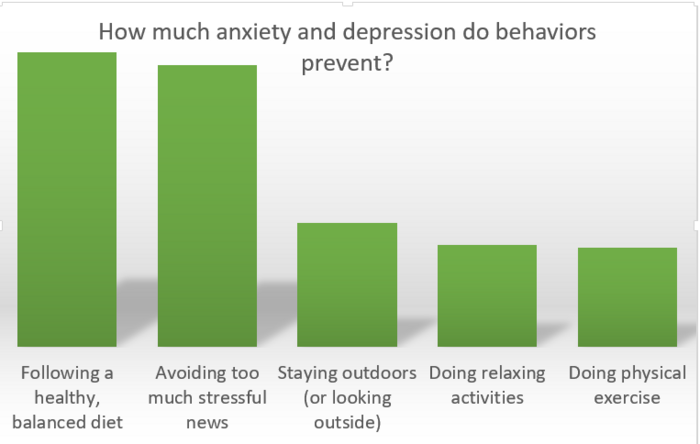
They found that some of the behaviours monitored were associated with coping better during the COVID pandemic. These included following a healthy/balanced diet, not reading news updates about COVID too often, physical exercise, staying outdoors, and drinking water. On the other hand, some behaviours that had been generally thought to be beneficial, such as talking with relatives or friends, or following a hobby, had a smaller influence on the mental health outcomes investigated in this study.
Dr Radua said, “This was a little surprising. Like many people, we had assumed that personal contact would play a bigger part in avoiding anxiety and depression during stressful times. The relationships between behaviours and symptoms were difficult to tease out because we were looking at what happens over time rather than just at a single moment of analysis. For example, in a previous pilot study, we found that those who followed a hobby showed less anxiety and depression. However, we did not know whether people first do hobbies and then feel relaxed/happy. Or conversely, people first feel relaxed/happy, and then these feelings make them follow hobbies. We wondered if, rather than the hobbies preventing depression, we were seeing that those who get depressed give up their hobbies. We also needed to correct the effect of past symptoms on future symptoms”.
He continued, “This shows what makes this study unique: it is based on evidence gathered over a long follow-up. We think it’s important that people continue to follow what works for them and that if you enjoy seeing friends or following a hobby, you continue to do so. However, on the basis of these results, we recommend that everybody follows a healthy/balanced diet, avoids watching stressful news too often, spends more time outdoors, does relaxing activities, and does physical exercise. Our work was centred on COVID, but we now need to see if these factors apply to other stressful circumstances. These simple behaviours may prevent anxiety and depression, and prevention is better than cure”.
Commenting, Professor Catherine Harmer, Director of the Psychopharmacology and Emotional Research Lab (PERL) at the University Department of Psychiatry in Oxford said:
“This is an interesting study focused on the kinds of coping behaviours that were associated with reduced depression and anxiety over a year of the covid-19 pandemic. A strength of the study is that it collected responses repeatedly in the same individuals, every 2 weeks, for a year. The authors then looked at which behaviours were most associated with depression and anxiety over the next 4 weeks (that is which predicted change in symptoms). The results suggested that healthy eating, avoiding stressful news, drinking water, staying outdoors and taking part in relaxing activities showed a protective effect on mental health during this stressful period. Interestingly, social contact and hobbies were less important than previously thought.
This study provides some important insights as to which behaviours may protect our mental health during times of significant stress. Future work is needed to test whether these associations are causal – is it these behaviours which cause improvements in mood or could it be the other way around – as we feel better we start to engage more positively with our environment?”
Professor Harmer was not involved in this work; this is an independent comment.
This work is presented at the 35th European College of Neuropsychopharmacology annual conference, which takes place in Vienna and online from 15-18 October. Up to 5000 delegates are expected to attend. The ECNP is Europe’s main organisation working in applied neuroscience. see https://www.ecnp.eu/Congress2022/ECNPcongress.
Method of Research
Observational study
Subject of Research
People