A new study in the American Journal of Preventive Medicine finds unhealthy worksite food purchases associated with unhealthy diet outside of work and more risk factors for diabetes and cardiovascular disease
Credit: American Journal of Preventive Medicine
Ann Arbor, May 22, 2019 – A new study in the American Journal of Preventive Medicine, published by Elsevier, demonstrated that employees at a large urban hospital who purchased the least healthy food in its cafeteria were more likely to have an unhealthy diet outside of work, be overweight and/or obese, and have risk factors for diabetes and cardiovascular disease, compared to employees who made healthier purchases. These findings contribute to a better understanding of the relationship of eating behaviors at work with overall diet and health and can help to shape worksite wellness programs that both improve long-term health outcomes and reduce costs.
“Employer-sponsored programs to promote healthy eating could reach millions of Americans and help to curb obesity, a worsening epidemic that too often leads to diabetes, cardiovascular disease, and cancer,” said lead investigator Anne N. Thorndike, MD, MPH, Division of General Internal Medicine, Department of Medicine, Massachusetts General Hospital, and Harvard Medical School, Boston, MA, USA.
Most Americans spend about half their waking hours at work and consume food acquired at work. Nearly a third of all US workers are obese, which has an impact beyond the individual’s health risks. Previous research has shown that obesity contributes to higher absenteeism, lower productivity, and higher healthcare expenses for employers. This study’s findings can lead to more effective strategies to encourage employees to choose healthier foods and reduce their risks for chronic conditions.
“Workplace wellness programs have the potential to promote lifestyle changes among large populations of employees, yet to date there have been challenges to developing effective programs. We hope our findings will help to inform the development of accessible, scalable, and affordable interventions,” noted Jessica L. McCurley, PhD, MPH, one of the study’s investigators and Postdoctoral Fellow at the Department of Medicine, Massachusetts General Hospital, and Harvard Medical School, Boston, MA, USA.
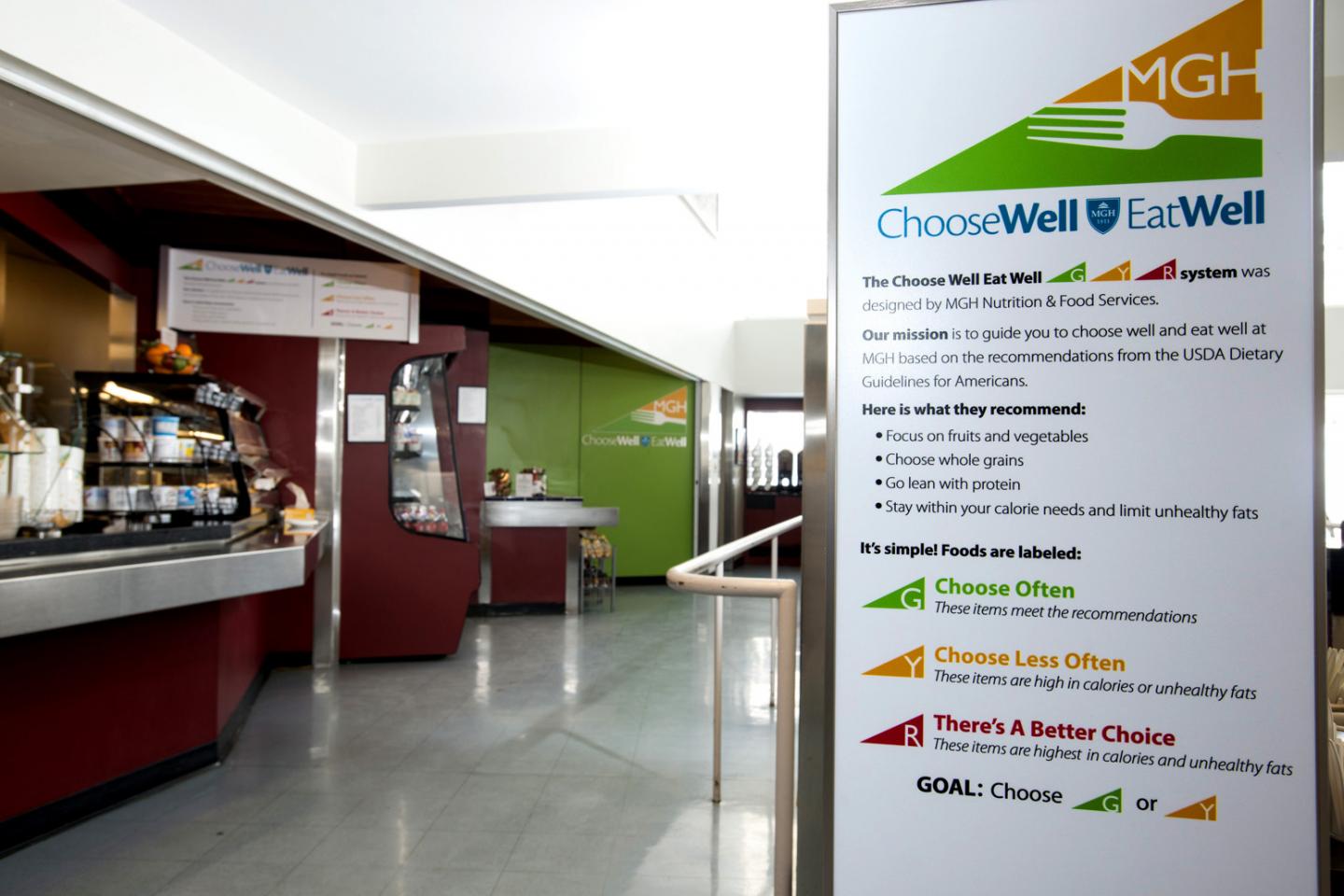
Participants were 602 Massachusetts General Hospital employees who regularly used the hospital’s cafeterias and were enrolled in a health promotion study in 2016?2018. As part of the hospital’s “Choose Well, Eat Well” program, foods and beverages in the hospital cafeterias have “traffic light” labels to indicate their healthfulness: green is healthy, yellow is less healthy, and red is unhealthy. Food displays have also been modified to put healthier choices in the direct line of sight, while unhealthy foods were made less accessible to reduce impulse purchases. “Simplified labeling strategies provide an opportunity to educate employees without restricting their freedom of choice. In the future, using purchase data to provide personalized nutritional feedback via email or text messaging is another option to explore to encourage healthy eating,” added Dr. Thorndike.
The study is a cross-sectional analysis of worksite food purchases from cash register data; food consumption reports from surveys; and cardio-metabolic test results, diagnoses, and medication information. Using cafeteria purchasing data, the investigators developed a Healthy Purchasing Score (HPS) to rate the dietary quality of employees’ overall purchases. The investigators compared participants’ HPS to the quality of their overall diet (using an online survey and tool developed by the National Cancer Institute), as well as to measures of obesity, diabetes, high blood pressure, and high cholesterol (data acquired through test results and self-reporting). The analysis showed that employees with the lowest HPS (least healthy purchases) had the lowest overall dietary quality and the highest risk for obesity, diabetes, and high blood pressure. Healthier purchases were associated with higher dietary quality and lower prevalence of obesity, hypertension, and prediabetes/diabetes.
###
Media Contact
Jillian B. Morgan
[email protected]
Related Journal Article
http://dx.