• HOME
  • NEWS
  • EXPLORE
    • CAREER
      • Companies
      • Jobs
    • EVENTS
    • iGEM
      • News
      • Team
    • PHOTOS
    • VIDEO
    • WIKI
  • BLOG
  • COMMUNITY
    • FACEBOOK
    • INSTAGRAM
    • TWITTER
Wednesday, May 13, 2026
BIOENGINEER.ORG
No Result
View All Result
  • Login
  • HOME
  • NEWS
  • EXPLORE
    • CAREER
      • Companies
      • Jobs
        • Lecturer
        • PhD Studentship
        • Postdoc
        • Research Assistant
    • EVENTS
    • iGEM
      • News
      • Team
    • PHOTOS
    • VIDEO
    • WIKI
  • BLOG
  • COMMUNITY
    • FACEBOOK
    • INSTAGRAM
    • TWITTER
  • HOME
  • NEWS
  • EXPLORE
    • CAREER
      • Companies
      • Jobs
        • Lecturer
        • PhD Studentship
        • Postdoc
        • Research Assistant
    • EVENTS
    • iGEM
      • News
      • Team
    • PHOTOS
    • VIDEO
    • WIKI
  • BLOG
  • COMMUNITY
    • FACEBOOK
    • INSTAGRAM
    • TWITTER
No Result
View All Result
Bioengineer.org
No Result
View All Result
Home NEWS Science News Biology

Early dispersal for quadrupedal cetaceans: amphibious whale from middle Eocene

Bioengineer by Bioengineer
November 8, 2019
in Biology
Reading Time: 2 mins read
0
IMAGE
Share on FacebookShare on TwitterShare on LinkedinShare on RedditShare on Telegram

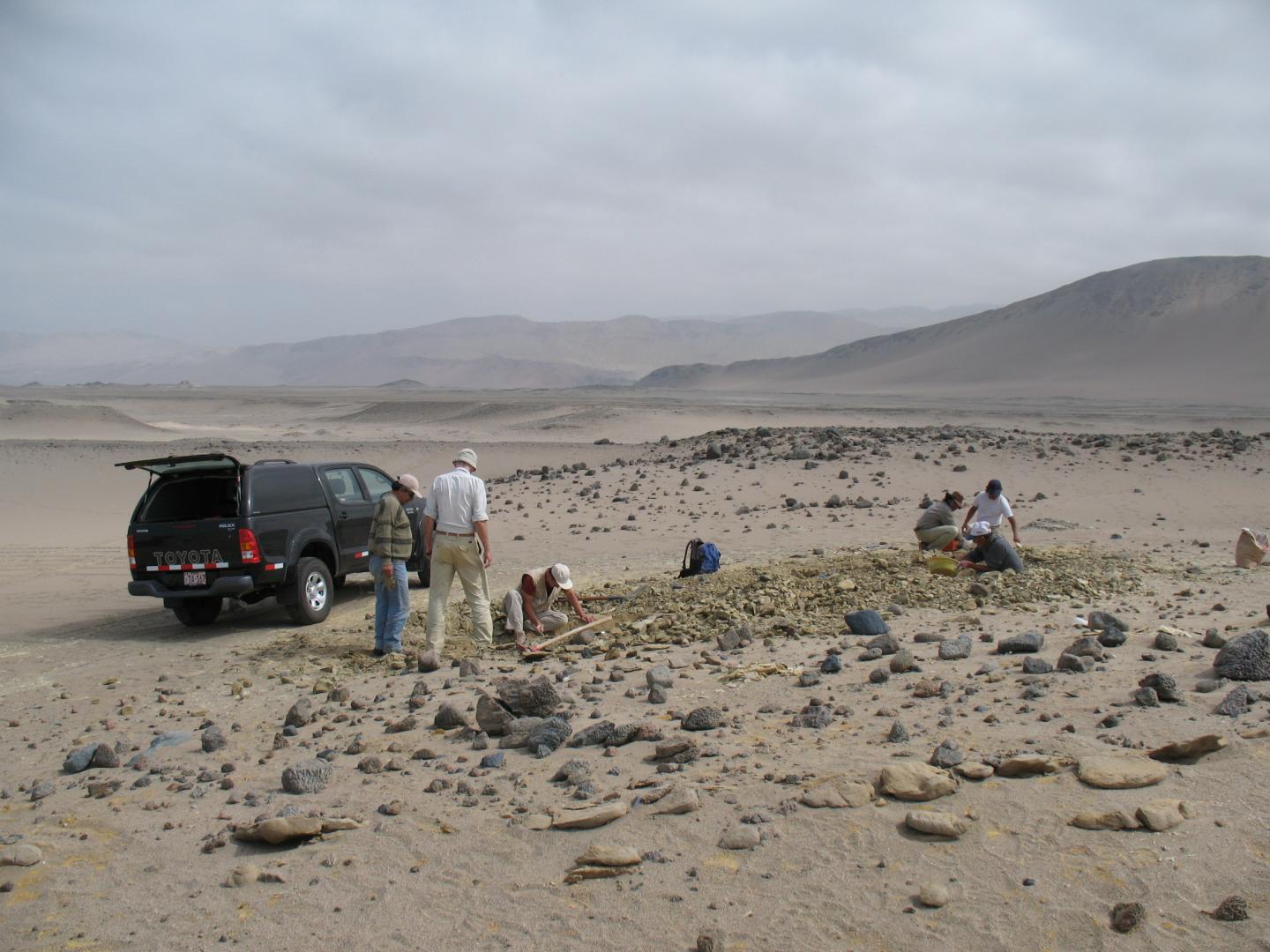
Early dispersal for quadrupedal cetaceans: an amphibious whale from the middle Eocene of the southeastern Pacific
IMAGE

Credit: O. Lambert.


Scientists have a relatively precise idea about where whales and their closest terrestrial relatives evolved more than 50 million years ago (early Eocene), thanks to the discovery of ancient cetacean fossils in India and Pakistan. Around 45 million years ago, four-legged whales (protocetids) gradually dispersed out of Asia, westward towards Africa and then reached the east coast of North America more than 41 million years ago. Due to the relatively fragmentary fossil record on both sides of the North Atlantic, questions remain about the path they took to make it to the New World and their locomotion abilities. The newly described species Peregocetus pacificus, from middle Eocene (42.6 million years old) deposits of the fossil rich Pisco Basin (southern coast of Peru), provides some answers. Lead author, Olivier Lambert, Royal Belgian Institute of Natural Sciences, Bruxelles,Belgium, presented the team’s findings at this year’s annual meeting of the Society of Vertebrate Paleontology held this year in Brisbane, Australia.

The importance of primitive whale, Peregocetus pacificus, lies in its completeness, location and age. This specimen represents the earliest skeleton of an amphibious whale from South America (and the whole Pacific). “The discovery of this new quadrupedal whale by our Peruvian colleague Mario Urbina was a great surprise for all of us. When we saw that most of the forelimb and hind limb elements were preserved (even including a kneecap and phalanges displaying marks of small hooves!) we realized that this was a major find”, Olivier Lambert stated. The specimen also includes mandibles, teeth, vertebrae, scapulae, pelvis, and many fore- and hind limb elements.

Sharing similarities with some western African protocetids, Peregocetus pacificus, supports the hypothesis that early quadrupedal whales crossed the South Atlantic from Africa to South America over 40 million years ago. These early whales nearly attained a circum-equatorial distribution with a combination of terrestrial and aquatic locomotion abilities less than 10 million years after their origin in south Asia. Using large, most likely webbed feet with long toes, Peregocetus likely used its hindlimbs for underwater locomotion. This discovery is not the first amazing fossil find from the Pisco Basin of Peru. “The Pisco Basin is an amazing region to study the evolution of marine mammals and other marine vertebrates. With rocks covering an interval of about 45 million years, we can follow the evolutionary history of many lineages, and interesting discoveries range from aquatic sloths and walrus-like dolphins to giant macroraptorial sperm whales and the oldest relatives of baleen whales”, co-author Giovanni Bianucci says.

###

About the Society of Vertebrate Paleontology

Founded in 1940 by thirty-four paleontologists, the Society now has more than 2,300 members representing professionals, students, artists, preparators, and others interested in VP. It is organized exclusively for educational and scientific purposes, with the object of advancing the science of vertebrate paleontology.
Journal Web site: Society of Vertebrate Paleontology: http://www.vertpaleo.org

Media Contact
Serena Weisman
[email protected]
301-634-7036
Tags: BiologyPaleontology
Share13Tweet8Share2ShareShareShare2

Related Posts

Cutting-Edge Genomic Techniques Reveal Unexpected Cellular Changes in the Aging Brain — Biology

Cutting-Edge Genomic Techniques Reveal Unexpected Cellular Changes in the Aging Brain

May 12, 2026
USC Researchers Initiate Study on the Most Advanced Lab-Grown Kidney Structures — Biology

USC Researchers Initiate Study on the Most Advanced Lab-Grown Kidney Structures

May 12, 2026

Childbirth in Humans Is Not Uniquely Challenging Among Mammals, New Research Shows

May 12, 2026

From Complexity to Clarity: Unraveling the “Topological Laws” Governing Cell Death

May 11, 2026
Please login to join discussion

POPULAR NEWS

  • Research Indicates Potential Connection Between Prenatal Medication Exposure and Elevated Autism Risk

    842 shares
    Share 337 Tweet 211
  • New Study Reveals Plants Can Detect the Sound of Rain

    728 shares
    Share 290 Tweet 182
  • Salmonella Haem Blocks Macrophages, Boosts Infection

    62 shares
    Share 25 Tweet 16
  • Breastmilk Balances E. coli and Beneficial Bacteria in Infant Gut Microbiomes

    57 shares
    Share 23 Tweet 14

About

We bring you the latest biotechnology news from best research centers and universities around the world. Check our website.

Follow us

Recent News

Erin Roby Shares ECI Science Journey Insights

Immunogenetics Advances Personalised Psoriasis Diagnosis, Treatment

New Study Uncovers Rigorous Selection Patterns in Social Relationships

Subscribe to Blog via Email

Enter your email address to subscribe to this blog and receive notifications of new posts by email.

Join 82 other subscribers
  • Contact Us

Bioengineer.org © Copyright 2023 All Rights Reserved.

Welcome Back!

Login to your account below

Forgotten Password?

Retrieve your password

Please enter your username or email address to reset your password.

Log In
No Result
View All Result
  • Homepages
    • Home Page 1
    • Home Page 2
  • News
  • National
  • Business
  • Health
  • Lifestyle
  • Science

Bioengineer.org © Copyright 2023 All Rights Reserved.