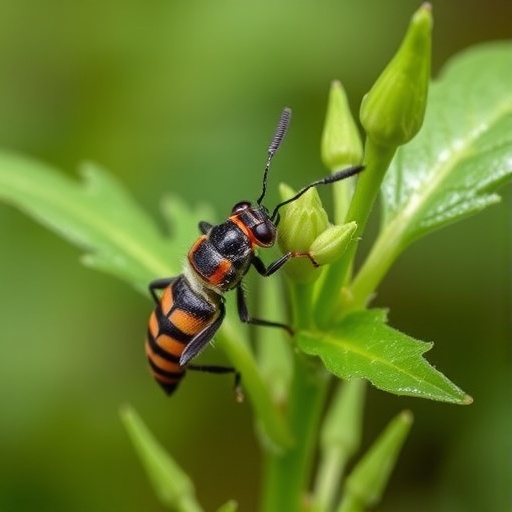
Across the European continent, the relentless invasion of agricultural and forest pests poses a critical threat to both food security and ecosystem stability. These pests, ranging from invasive insects to debilitating plant pathogens, annually obliterate up to 40% of global agricultural yields and imperil vast forested landscapes. Despite the gravity of these challenges, Europe has long suffered from fragmented and uncoordinated responses to pest outbreaks, often relying on isolated interventions that overlook the complex dynamics across the agri-food value chain. Addressing this glaring gap, the University of Warwick has spearheaded an ambitious €6 million Horizon Europe project, PhytoPRISM, designed to revolutionize how Europe detects, models, and manages these transboundary plant health threats with unprecedented precision and coherence.
PhytoPRISM stands at the technological frontier by integrating cutting-edge epidemiological models with empirical frontline expertise, enabling plant health authorities to visualize and optimize pest management strategies in a holistic manner. Until now, decision-makers grappled with disparate control measures without a systemic framework to understand their interactions or assess overall efficacy. PhytoPRISM’s innovative platform transcends these limitations by offering data-driven insights that elucidate the complex interplay between preventive actions, pest containment, and long-term mitigation techniques. This convergence enables smarter, faster, and more cost-efficient solutions that benefit stakeholders from growers to policymakers.
The project consortium is a formidable alliance of 15 research institutions and stakeholder organizations spanning eight countries, underscoring the critical importance of cross-border collaboration in managing pests that do not recognize political boundaries. Key partners include prestigious entities such as the University of Cambridge, Wageningen University, INRAE, Rothamsted Research, and the European and Mediterranean Plant Protection Organization (EPPO). This collaborative network empowers PhytoPRISM with a rich diversity of expertise ranging from molecular plant pathology to landscape epidemiology, elevating its capacity to tackle multifaceted pest challenges.
Globalization and climate change have accelerated the introduction and establishment of highly invasive species in Europe, disrupting native biodiversity and straining agroforestry systems. For example, pests like the Fall Armyworm and Emerald Ash Borer have rapidly expanded their ranges due to warmer temperatures and increased trade pathways. Currently, European pest management strategies often involve piecemeal applications of regulatory restrictions or pesticide treatments without synchronized frameworks. PhytoPRISM seeks to harmonize these efforts into an integrative platform that considers biological, environmental, and socio-economic factors simultaneously, yielding more resilient and adaptive responses.
In practice, PhytoPRISM’s platform employs advanced epidemiological modeling to simulate pest spread scenarios and test the effectiveness of various intervention strategies. Using continuous data assimilation and machine learning algorithms, the system adapts in real time to emerging threats, providing decision-makers with predictive analytics to allocate resources optimally. This ensures that investment in control measures delivers maximum impact by preventing redundancy or counterproductive overlaps. Importantly, the tool also facilitates contingency planning, enabling early warning for potential outbreaks and rapid mobilization of response teams.
A particularly salient feature of PhytoPRISM is its participatory co-design approach, involving plant health authorities, agricultural producers, foresters, and technical advisors throughout the development process. This ensures the platform is not only scientifically robust but also user-centric and operationally feasible. Training modules, e-learning resources, and scenario planning tools complement the core analytics, fostering knowledge exchange and capacity building across Europe’s pest control community. By enhancing preparedness, the project anticipates reducing economic losses, safeguarding biodiversity, and diminishing dependency on environmentally damaging synthetic pesticides.
The platform will be rigorously validated using six emblematic European quarantine pests which exemplify diverse ecological and economic risks. These case studies include notorious species such as Xylella fastidiosa, which has devastated olive groves, and Citrus Black Spot, severely impacting Mediterranean citrus cultivation. Beyond these focal pests, the system architecture is designed for scalability, with applicability to over sixty related quarantine species. This extensibility ensures sustained relevance as new pests emerge, strengthening Europe’s strategic resilience over the long term.
Experts from the European Food Safety Authority (EFSA) and EPPO emphasize the criticality of PhytoPRISM in delivering harmonized, science-based risk management protocols. Dr. Antonio Vicent of IVIA applauds the project’s capacity to enhance international trade safety, particularly by protecting vulnerable crops like citrus. Meanwhile, Dr. Rob Tanner from EPPO underscores the platform’s potential to integrate agricultural, forestry, and natural ecosystems into a unified defense strategy. This unified approach aligns with broader EU commitments to Sustainable Development Goals, including sustainable agriculture, climate action, and biodiversity conservation.
Crucially, PhytoPRISM is emblematic of renewed scientific cooperation between the UK and EU under the Horizon Europe programme, defying recent political challenges to research collaboration. The UK’s leadership role underlines its continuing commitment to European plant health security and highlights how transnational partnerships are essential to confront challenges that extend beyond national jurisdictions. By pooling resources and expertise, PhytoPRISM exemplifies how collective intelligence can overcome the complexities of globalized pest threats.
Beyond immediate pest control, the project promises significant ecological benefits by encouraging integrated pest management that reduces pesticide reliance. This shift promotes healthier soils, water quality, and pollinator populations, contributing to the broader environmental sustainability agendas of European agriculture and forestry sectors. Moreover, by enhancing economic efficiency along the value chain, PhytoPRISM aids competitiveness and food system resilience, critical in the face of increasing climate uncertainty and supply chain disruptions.
In sum, PhytoPRISM represents a paradigm shift towards anticipatory, system-oriented plant health management. By bridging scientific innovation and practical implementation, the platform empowers stakeholders to counter the pervasive threat of invasive pests effectively. Its holistic vision—from modeling pest pathways to facilitating stakeholder collaboration—signals a new era in safeguarding Europe’s agricultural productivity and forest ecosystems. As the project progresses, its methodologies and outcomes are poised to serve as a global blueprint in combating the escalating crisis of transboundary plant pests.
Subject of Research: Development of an integrated platform for coordinated European response to transboundary agricultural and forest pest invasions.
Article Title: PhytoPRISM: Revolutionizing Europe’s Defense Against Devastating Plant Pests Through Integrated Modeling and Collaboration.
News Publication Date: Not specified.
Web References: https://cordis.europa.eu/project/id/101287943
Keywords: PhytoPRISM, plant pests, agricultural biosecurity, forest health, epidemiological modeling, pest management, invasive species, EU Horizon Europe, transboundary threats, integrated platform, pest control strategies, sustainable agriculture
Tags: agri-food value chain pest responsedata-driven pest containment strategiesepidemiological modeling for plant healthEuropean plant pest crisis managementfood security threats from pestsforest pest invasion EuropeHorizon Europe agricultural projectsintegrated pest management Europeinvasive insect impact on cropsplant pathogen detection technologytransboundary agricultural pest controlUniversity of Warwick plant health research