• HOME
  • NEWS
  • EXPLORE
    • CAREER
      • Companies
      • Jobs
    • EVENTS
    • iGEM
      • News
      • Team
    • PHOTOS
    • VIDEO
    • WIKI
  • BLOG
  • COMMUNITY
    • FACEBOOK
    • INSTAGRAM
    • TWITTER
Sunday, June 28, 2026
BIOENGINEER.ORG
No Result
View All Result
  • Login
  • HOME
  • NEWS
  • EXPLORE
    • CAREER
      • Companies
      • Jobs
        • Lecturer
        • PhD Studentship
        • Postdoc
        • Research Assistant
    • EVENTS
    • iGEM
      • News
      • Team
    • PHOTOS
    • VIDEO
    • WIKI
  • BLOG
  • COMMUNITY
    • FACEBOOK
    • INSTAGRAM
    • TWITTER
  • HOME
  • NEWS
  • EXPLORE
    • CAREER
      • Companies
      • Jobs
        • Lecturer
        • PhD Studentship
        • Postdoc
        • Research Assistant
    • EVENTS
    • iGEM
      • News
      • Team
    • PHOTOS
    • VIDEO
    • WIKI
  • BLOG
  • COMMUNITY
    • FACEBOOK
    • INSTAGRAM
    • TWITTER
No Result
View All Result
Bioengineer.org
No Result
View All Result
Home NEWS Science News Health

E. coli gain edge by changing their diets in inflammatory bowel disease

Bioengineer by Bioengineer
November 5, 2019
in Health
Reading Time: 3 mins read
0
IMAGE
Share on FacebookShare on TwitterShare on LinkedinShare on RedditShare on Telegram

IMAGE

Credit: Getty Images


What if you had to plan your outings based on how your stomach felt that day or where the nearest restroom is located? For many people with inflammatory bowel disease (IBD), their guts have an inordinate effect on their daily quality of life.

One of the most common forms of IBD, called Crohn’s disease, is characterized by inflammation within the digestive tract and can lead to severe diarrhea, pain and weight loss. What causes IBD is still a mystery, but scientists now know that the gut microbiome, composed of the trillions of bacteria that make their home inside the intestines, are key players.

In a new paper in Nature Microbiology, Michigan Medicine researchers describe how bad bacteria gain a foothold over good bacteria in IBD and how something as simple as a diet change might reverse it. “The same bacteria are present in healthy and inflamed digestive tracts,” says Nobuhiko Kamada, Ph.D., of the division of gastroenterology in the department of internal medicine. “They just change their competition. We wondered what is the mechanism behind this?”

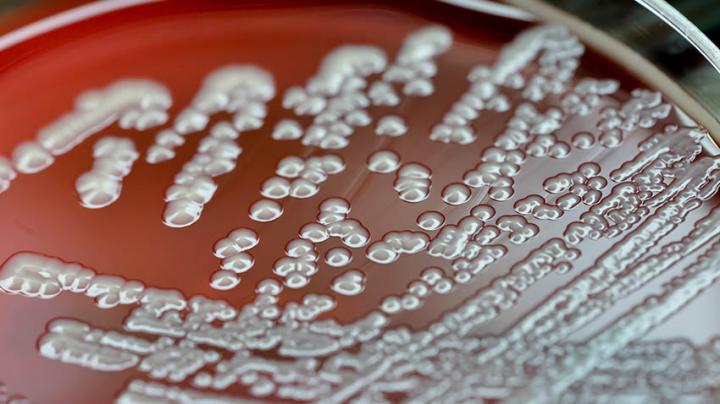
Although E. coli, the notorious bacteria behind many cases of food poisoning, is present in a normal healthy gut, the disease-causing form of the bacteria is able to outcompete its more benign cousins when the gut is inflamed. In earlier work within the Michigan Microbiome Project , Kamada’s team showed that the bad version of E. coli is usually held in check by good E. coli and other beneficial bacterial species through the metabolism of carbohydrates, the preferred source of nutrients for E. coli. Under inflammation however, the amount of good bacterial species is reduced, leaving less available sugar for E. coli to use and grow. Yet, the disease-causing E. coli are still able to take over.

The team hypothesized that the bad E. coli must change their dietary preference from sugar to something else, giving it an edge over other bacteria. In fact, their experiments with mouse models found that the bad E. coli developed a taste for amino acids, particularly serine, when their environment was inflamed. “We found that pathogenic E. coli had upregulated genes for serine metabolism,” said first author Sho Kitamoto, Ph.D., a research fellow in Kamada’s lab. Furthermore, the team was able to control the overgrowth by feeding mice with IBD a low serine diet.

Together, these findings hint at a possible mechanism for controlling bad bacteria through nutrition. “Of course, we could use antibiotics to kill the bad bacteria,” says Kamada. “But the gut microbiota plays a beneficial role to the hosts biology, and antibiotics kill the good guys along with the bad guys.”

They hope to eventually collaborate with clinicians to investigate the effects of personalized therapeutic diets for patients with IBD. Says Kamada, “We have to carefully consider a patient’s disease status. One type of diet might be effective in patients under remission but not in patients with active disease.”

###

Paper cited: “Dietary l-serine confers a competitive fitness advantage to Enterobacteriaceae in the inflamed gut”, Nature Microbiology. DOI: 10.1038/s41564-019-0591-6

Media Contact
Kelly Malcom
[email protected]

Original Source

https://labblog.uofmhealth.org/lab-report/e-coli-gain-edge-by-changing-their-diets-inflammatory-bowel-disease

Related Journal Article

http://dx.doi.org/10.1038/s41564-019-0591-6

Tags: BacteriologyCell BiologyDiet/Body WeightGastroenterologyInternal MedicineMedicine/HealthNutrition/Nutrients
Share12Tweet8Share2ShareShareShare2

Related Posts

Tracking Lanthanide-Labeled Microplastics in Plants

June 25, 2026

Neural Design Enables Zero-Shot Drug-Binding Proteins

June 25, 2026

Genomic Insights into Human Skin Fungi Diversity

June 25, 2026

Chiral Laser Gyroscopes Surpass Lock-In Limit

June 25, 2026
Please login to join discussion

POPULAR NEWS

  • Saying Goodbye to PGY-6: Pediatric Fellowship Realities

    103 shares
    Share 41 Tweet 26
  • Multi-Hospital Study Reveals Long Covid Burden Is Twice as High as Current Estimates

    92 shares
    Share 36 Tweet 23
  • Detection of EDCs in Breast Milk and Infant Urine Up to Six Months Highlights Early Exposure Risks

    77 shares
    Share 31 Tweet 19
  • New Drug Candidate Developed at McMaster Shows Potential for Treating Brain Cancer

    58 shares
    Share 23 Tweet 15

About

We bring you the latest biotechnology news from best research centers and universities around the world. Check our website.

Follow us

Recent News

Tracking Lanthanide-Labeled Microplastics in Plants

POSTECH Researchers Slash Cost of Reconstituted Cell-Free Systems by 95%

AI and Physics Collaborate to Design Advanced Hydrogen Storage Materials

Subscribe to Blog via Email

Success! An email was just sent to confirm your subscription. Please find the email now and click 'Confirm' to start subscribing.

Join 82 other subscribers
  • Contact Us

Bioengineer.org © Copyright 2023 All Rights Reserved.

Welcome Back!

Login to your account below

Forgotten Password?

Retrieve your password

Please enter your username or email address to reset your password.

Log In
No Result
View All Result
  • Homepages
    • Home Page 1
    • Home Page 2
  • News
  • National
  • Business
  • Health
  • Lifestyle
  • Science

Bioengineer.org © Copyright 2023 All Rights Reserved.