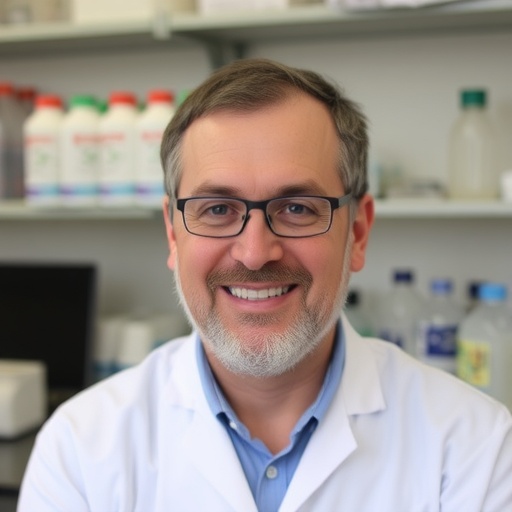
Dr. Oren Moscovitz from the Scojen Institute of Synthetic Biology at Reichman University has recently won a prestigious research grant from the joint funding initiative MOST-DGF, organized by Israel’s Ministry of Science and the German Research Foundation. This competitive program is designed to foster collaborative research ventures between Israeli and German scientists. Moscovitz’s project aims to address one of oncology’s most daunting challenges: developing novel therapies for triple negative breast cancer (TNBC), a cancer subtype notorious for its aggressive nature, high mortality rates, and limited therapeutic options.
TNBC accounts for approximately 15-20% of all breast cancer cases and is characterized by the absence of estrogen receptors, progesterone receptors, and HER2 expression on tumor cells. These molecular traits render conventional hormone-based treatments and HER2-directed therapies ineffective, leaving patients with chemotherapy as the primary option. Sadly, chemotherapy often results in poor prognosis due to both inherent resistance and acquired treatment failures. In response to these unmet needs, Dr. Moscovitz’s research endeavors epitomize the frontline in synthetic biology approaches aiming to revolutionize cancer immunotherapy.
At the heart of this innovative research lies the engineering of multifunctional antibodies capable of recognizing and binding multiple cancer-specific targets simultaneously. In their recently published study, Moscovitz and his team unveiled a groundbreaking method to design antibodies with dual specificity, enabling them to adhere concurrently to distinct antigens expressed on different cancer cell populations. This strategy is particularly promising for heterogeneous tumors like TNBC, where cancer cells can vary substantially in their molecular markers, often leading to immune evasion and resistance to mono-targeted therapies.
The engineered bispecific antibodies leverage molecular design principles that enhance recognition precision and binding avidity. By engaging two independent epitopes on separate cancer cell subtypes, these synthetic molecules can effectively circumvent the common problem of antigen loss variants that tumors use as escape mechanisms. This dual-targeting capability not only increases the therapeutic breadth but also mitigates the emergence of resistant cell clones, a critical factor in prolonging treatment efficacy.
In vivo experiments using murine models have demonstrated the remarkable efficacy of these engineered antibodies. The preclinical data indicate that treated mice bearing human TNBC xenografts showed significant tumor regression and survival benefits compared to control groups receiving conventional antibody therapies. Moreover, the antibodies exhibited a favorable safety profile with minimal off-target toxicity, underpinning the translational potential of this approach for clinical development.
The new grant funding is earmarked to expand mechanistic studies to dissect how these dual-specific antibodies exert their anti-tumor effects at the molecular and cellular levels. A detailed understanding of antibody-mediated immune activation, tumor cell apoptosis, and modulation of the tumor microenvironment will be crucial for optimizing therapeutic protocols and predicting patient responsiveness. Additionally, comprehensive safety assessments will be conducted, encompassing cytokine release profiles and immunogenicity evaluations to ensure clinical viability.
This research project embraces an interdisciplinary collaboration model, bringing together expertise from Reichman University and HOPP Children’s Cancer Hospital in Heidelberg, Germany. Dr. Christian Seitz, a distinguished oncologist specializing in pediatric cancers, contributes invaluable clinical insights and access to advanced experimental platforms, fostering a dynamic exchange of scientific knowledge. Such international partnerships underscore the global imperative to innovate effective treatments for aggressive malignancies through shared expertise and resource integration.
Beyond TNBC, the novel antibody engineering platform holds broad applicability across diverse cancer types characterized by tumor heterogeneity and immune resistance. The potential to customize bispecific antibodies as personalized immunotherapies tailored to individual tumor antigen profiles represents a paradigm shift in targeted oncology. These advancements could herald a new era of precision medicine, providing durable and adaptable treatment options for patients with historically poor outcomes.
The implications of these findings extend to the realm of synthetic biology, where modular design principles and bioengineering techniques are harnessed to create next-generation therapeutics. By merging molecular engineering with immunology, this research exemplifies how synthetic antibody platforms can overcome biological complexity and immune evasion—a significant bottleneck in current cancer immunotherapy strategies. This approach exemplifies innovation at the interface of biology and engineering.
In summary, Dr. Moscovitz’s award-winning research propels the fight against triple negative breast cancer forward by engineering antibodies that enhance specificity, efficacy, and resistance to tumor immune escape. The project’s rigorous preclinical validation, multidisciplinary collaboration, and forward-looking translational goals position it as a vanguard in the landscape of synthetic biology-driven cancer treatments. It vividly illustrates how targeted molecular design can forge novel therapeutic modalities against formidable diseases like TNBC.
Subject of Research: Innovative bispecific antibody engineering for targeted therapy of triple negative breast cancer.
Article Title: (Not provided)
News Publication Date: (Not provided)
Web References: (Not provided)
References: (Not provided)
Image Credits: (Not provided)
Keywords: Life sciences
Tags: cancer treatment resistanceDr. Oren Moscovitzimmunotherapy innovationsIsraeli German scientific collaborationMOST-DGF Research Grantmultifunctional antibodies in cancer therapynovel therapeutic approaches for TNBConcology challengesReichman UniversityScojen Institute for Synthetic Biologysynthetic biology in medicinetriple-negative breast cancer research