• HOME
  • NEWS
  • EXPLORE
    • CAREER
      • Companies
      • Jobs
    • EVENTS
    • iGEM
      • News
      • Team
    • PHOTOS
    • VIDEO
    • WIKI
  • BLOG
  • COMMUNITY
    • FACEBOOK
    • INSTAGRAM
    • TWITTER
Tuesday, September 1, 2026
BIOENGINEER.ORG
No Result
View All Result
  • Login
  • HOME
  • NEWS
  • EXPLORE
    • CAREER
      • Companies
      • Jobs
        • Lecturer
        • PhD Studentship
        • Postdoc
        • Research Assistant
    • EVENTS
    • iGEM
      • News
      • Team
    • PHOTOS
    • VIDEO
    • WIKI
  • BLOG
  • COMMUNITY
    • FACEBOOK
    • INSTAGRAM
    • TWITTER
  • HOME
  • NEWS
  • EXPLORE
    • CAREER
      • Companies
      • Jobs
        • Lecturer
        • PhD Studentship
        • Postdoc
        • Research Assistant
    • EVENTS
    • iGEM
      • News
      • Team
    • PHOTOS
    • VIDEO
    • WIKI
  • BLOG
  • COMMUNITY
    • FACEBOOK
    • INSTAGRAM
    • TWITTER
No Result
View All Result
Bioengineer.org
No Result
View All Result
Home NEWS Science News

Dormancy relief, storage protocols for uhaloa seeds

Bioengineer by Bioengineer
November 17, 2016
in Science News
Reading Time: 2 mins read
0
Share on FacebookShare on TwitterShare on LinkedinShare on RedditShare on Telegram
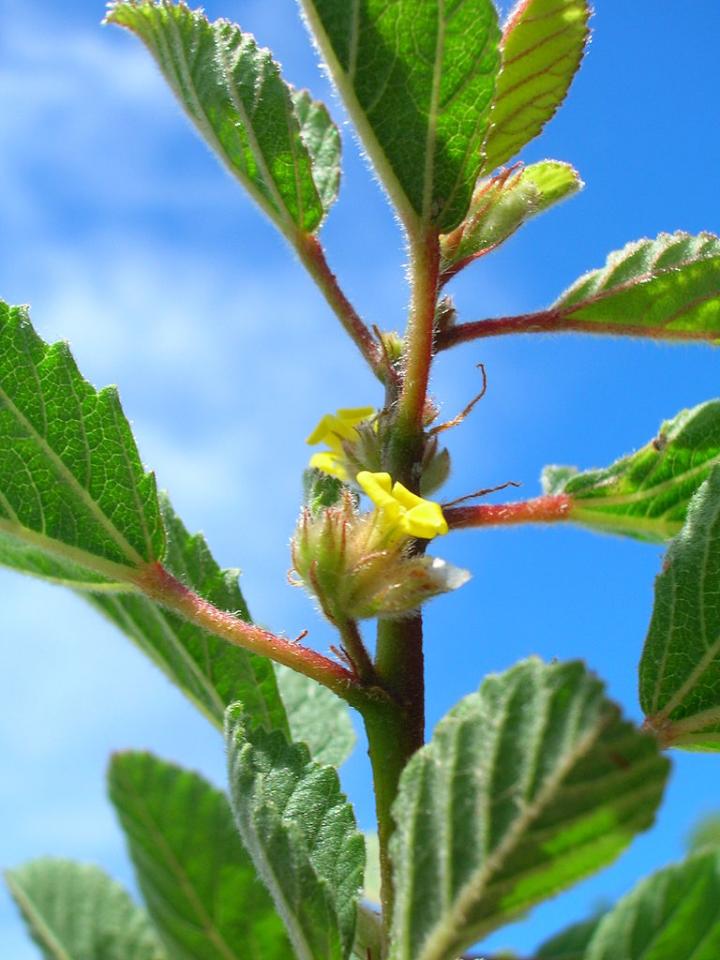
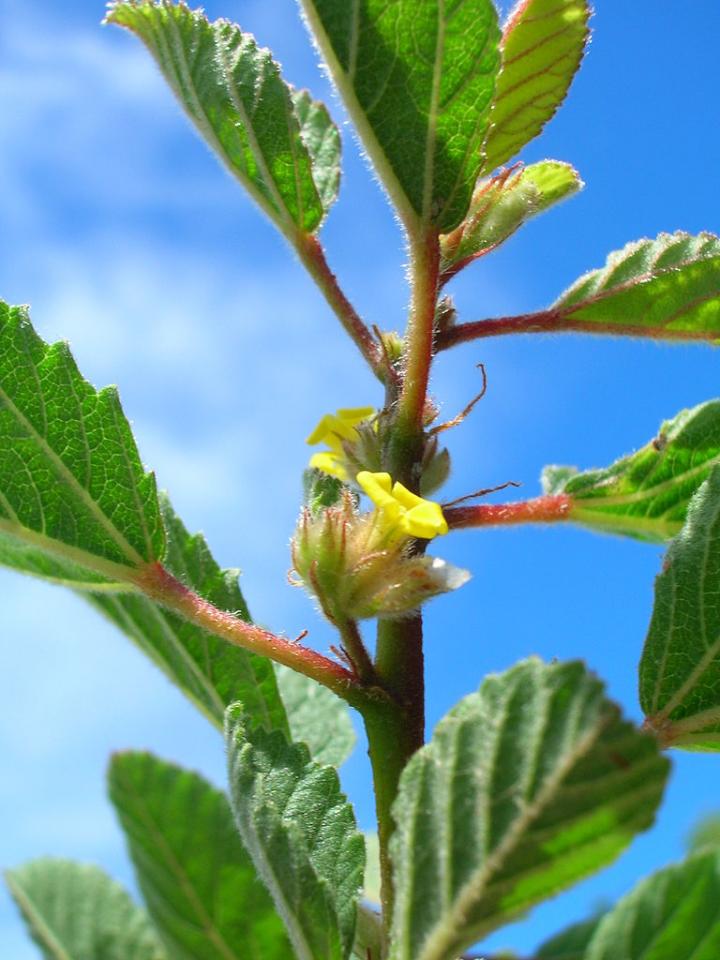
IMAGE

Credit: Photo courtesy of Forest and Kim Starr.

HONOLULU, HI – Uhaloa (Waltheria indica) is a pantropical shrub species found in the Americas, Mexico, and Brazil. In Hawaii, uhaloa is widely classified as a native plant. A team of scientists at the University of Hawaii at Manoa published a research study that contains recommendations for long-term storage and utilization of uhaloa from seed stock. The protocols can inform sustainability methods for uhaloa, a plant that has been identified for expanded use as a roadside groundcover in lowland dry ecosystems.

Scott Lukas, Joseph DeFrank, and Orville Baldos from the Department of Tropical Plant and Soil Sciences at the University of Hawaii at Manoa designed a study (HortScience, September 2106) to determine physical dormancy breaking mechanisms of uhaloa seeds in which they evaluated seed germination in response to manual and mechanical scarification and exposure to dry heat and hot water emersion. The study also assessed the impact of storage humidity and duration at 5 °C on viability and germination response of nonscarified and scarified seeds.

The researchers tested uhaloa seeds after hand scarification, dry heat temperature exposure, hot water exposure, and mechanical abrasion in an electric drum scarifier. "The elucidation of physical dormancy was determined through hand scarification, resulting in 96% germination compared with 8% of nonscarified seeds, but is not practical on a large-scale basis," said corresponding author Scott Lukas. The greatest "practical dormancy relief" was achieved using a mechanical electric drum scarifier lined with 80-grit sandpaper for a duration of 15 or 30 seconds, which produced 95% and 99% germination, respectively. Seeds immersed in boiling water for 3 and 5 seconds resulted in 58.6% and 57.7% germination, respectively. Additional analyses showed that dormancy relief through dry heat exposure was inferior to other relief methods, producing 39% germination at 75 °C for 60 minutes.

Nonscarified seeds exhibited minimal loss of viability during 10 months of storage at 5 °C at 12% and 50% relative humidity (RH), but a significant decline in viability of scarified seeds was detected.

The authors recommended protocols for the utilization of uhaloa from seed stock. "If seeds are not needed immediately after harvest, store at 5 °C at either 12% or 50% RH. When seeds are desired for use, scarify using an electric drum scarifier with 80-grit sandpaper for 30 seconds to relieve physical dormancy. Once the seeds are scarified, viability will decline significantly after 2 months of storage at low temperatures," the authors said.

###

The complete study and abstract are available on the ASHS HortScience electronic journal web site: http://hortsci.ashspublications.org/content/51/9/1184.abstract

Founded in 1903, the American Society for Horticultural Science (ASHS) is the largest organization dedicated to advancing all facets of horticultural research, education, and application. More information at ashs.org

Media Contact

Michael W. Neff
[email protected]
703-836-4606
@ASHS_Hort

http://www.ashs.org

############

Story Source: Materials provided by Scienmag

Share12Tweet8Share2ShareShareShare2

Related Posts

β-Sitosterol from Ipomoea carnea Jacq. As a promising anti-inflammatory agent: Evidence from in silico modeling and in vitro validation

β-Sitosterol from Ipomoea carnea Jacq. As a promising anti-inflammatory agent: Evidence from in silico modeling and in vitro validation

August 31, 2026
Design, fabrication and characterization of a wearable Fiber Bragg grating sensor for cardiorespiratory monitoring using finger plethysmography

Design, fabrication and characterization of a wearable Fiber Bragg grating sensor for cardiorespiratory monitoring using finger plethysmography

August 31, 2026

KAIST opens the era of industrial-scale microbial foods, proposing growth strategies for the next-generation protein market

August 31, 2026

Virologist awarded $2 million NIH grant to investigate how virus-infected cells live and die

August 31, 2026
Please login to join discussion

POPULAR NEWS

  • β-Sitosterol from Ipomoea carnea Jacq. As a promising anti-inflammatory agent: Evidence from in silico modeling and in vitro validation

    29 shares
    Share 12 Tweet 7
  • Design, fabrication and characterization of a wearable Fiber Bragg grating sensor for cardiorespiratory monitoring using finger plethysmography

    29 shares
    Share 12 Tweet 7
  • KAIST opens the era of industrial-scale microbial foods, proposing growth strategies for the next-generation protein market

    29 shares
    Share 12 Tweet 7
  • Virologist awarded $2 million NIH grant to investigate how virus-infected cells live and die

    29 shares
    Share 12 Tweet 7

About

We bring you the latest biotechnology news from best research centers and universities around the world. Check our website.

Follow us

Recent News

β-Sitosterol from Ipomoea carnea Jacq. As a promising anti-inflammatory agent: Evidence from in silico modeling and in vitro validation

Design, fabrication and characterization of a wearable Fiber Bragg grating sensor for cardiorespiratory monitoring using finger plethysmography

KAIST opens the era of industrial-scale microbial foods, proposing growth strategies for the next-generation protein market

Subscribe to Blog via Email

Enter your email address to subscribe to this blog and receive notifications of new posts by email.

Join 85 other subscribers
  • Contact Us

Bioengineer.org © Copyright 2023 All Rights Reserved.

Welcome Back!

Login to your account below

Forgotten Password?

Retrieve your password

Please enter your username or email address to reset your password.

Log In
No Result
View All Result
  • Homepages
    • Home Page 1
    • Home Page 2
  • News
  • National
  • Business
  • Health
  • Lifestyle
  • Science

Bioengineer.org © Copyright 2023 All Rights Reserved.