Credit: Mary Ann Liebert, Inc., publishers
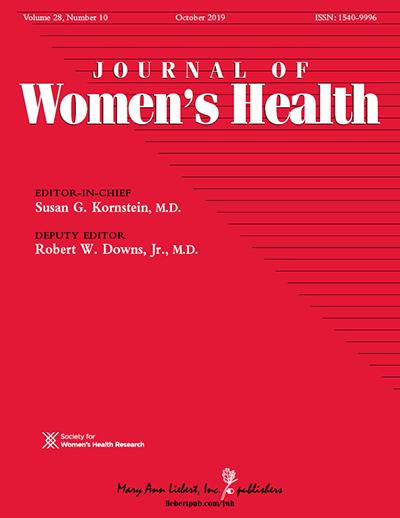
New Rochelle, NY, October 29, 2019–New research suggests that women’s feminine hygiene practices – in particular vaginal douching and use of feminine powder – may be associated with higher levels of volatile organic compounds (VOCs) in their blood. A new study that used biomarkers to link use of feminine hygiene products to VOC exposure is published in Journal of Women’s Health, a peer-reviewed publication from Mary Ann Liebert, Inc., publishers. Click here to read the full-text article on the Journal of Women’s Health website through November 30, 2019.
The article entitled “Exposure to Volatile Organic Compounds and Use of Feminine Hygiene Products among Reproductive-Aged Women in the United States” was coauthored by Ning Ding, MPH, Stuart Batterman, PhD, and Sung Kyun Park, ScD, School of Public Health and College of Engineering, University of Michigan, Ann Arbor. Feminine hygiene products also included tampons, sanitary napkins, sprays, wipes, and other products. The researchers showed that black women used vaginal douching significantly more and had significantly higher whole blood concentrations of 1,4-dichlorobenzene (DCB). Use of feminine powder was significantly associated with higher blood concentrations of ethylbenzene. These products may be a direct source of VOC exposure or they may be related to other activities that increase exposure.
Susan G. Kornstein, MD, Editor-in-Chief of Journal of Women’s Health and Executive Director of the Virginia Commonwealth University Institute for Women’s Health, Richmond, VA, states: “Based on the findings of this study, feminine hygiene products that expose the vulvovaginal tissue to harmful VOCs should be avoided, especially during pregnancy.”
###
Research reported in this publication was supported by the National Institutes of Health under Award Number P30-ES017885. The content is solely the responsibility of the authors and does not necessarily represent the official views of the National Institutes of Health.
About the Journal
Journal of Women’s Health, published monthly, is a core multidisciplinary journal dedicated to the diseases and conditions that hold greater risk for or are more prevalent among women, as well as diseases that present differently in women. Led by Editor-in-Chief Susan G. Kornstein, MD, Executive Director of the Virginia Commonwealth University Institute for Women’s Health, Richmond, VA, the Journal covers the latest advances and clinical applications of new diagnostic procedures and therapeutic protocols for the prevention and management of women’s healthcare issues. Complete tables of content and a sample issue may be viewed on the Journal of Women’s Health website. Journal of Women’s Health is the official journal of Society for Women’s Health Research (https:/
About the Publisher
Mary Ann Liebert, Inc., publishers is a privately held, fully integrated media company known for establishing authoritative peer-reviewed journals in many promising areas of science and biomedical research, including LGBT Health, Transgender Health, Population Health Management, and Breastfeeding Medicine. Its biotechnology trade magazine, GEN (Genetic Engineering & Biotechnology News), was the first in its field and is today the industry’s most widely read publication worldwide. A complete list of the firm’s 90 journals, books, and newsmagazines is available on the Mary Ann Liebert, Inc., publishers website.
Media Contact
Kathryn Ryan
[email protected]
914-740-2250
Original Source
https:/
Related Journal Article
http://dx.