Scientists develop a stable and inexpensive photocatalyst using earth-abundant materials for the eco-friendly production of methane from CO2
Credit: DGIST
The escalating carbon dioxide (CO2) emissions and the consequent acceleration of climate change are alarming, and it has proven challenging to find feasible ways to actively reduce the concentration of CO2 in the atmosphere. What if we drew inspiration from photosynthesis, the process by which plants use sunlight to convert CO2 and water into useful chemicals?
In a recent study published in Applied Catalysis B: Environmental, Prof Su-Il In and researchers from Daegu Gyeongbuk Institute of Science and Technology (DGIST) in Korea developed a novel photocatalyst for converting CO2 into hydrocarbon fuels. Their approach is based around the concept of “Z-scheme” charge transfer mechanism in heterostructured photocatalysts, where the interfaces between two different materials play a central role in chemical processes that resemble the electron transfers in natural photosynthesis.
They reinforced reduced titanium nanoparticles edges with dicopper oxide (Cu2O) nanoparticles through photo-deposition, a unique yet relatively simple and inexpensive procedure. The rich electron density of reduced titania at the interface helps neutralize positive charges, called “electron holes,” in Cu2O, which otherwise accumulate excessively and lead to photocorrosion. Moreover, the geometric configuration of the resulting interfaces allows both materials to be exposed to the reactive medium and jointly enhance photocatalytic performance, in contrast to core-shell structures previously developed to avoid photocorrosion. Apart from its remarkable CO2 conversion capabilities, the proposed photocatalyst has other benefits, as Prof In explains: “Aside from showing stable performance for 42 hours under continuous operation, the proposed photocatalyst is composed of earth-abundant materials, which greatly adds to its economic viability.”
The development and adoption of viable methods to convert CO2 into fuel would have both environmental and economic benefits. In this regard, Prof In remarks: “Photocatalytic CO2 reduction is applicable in processes that produce huge volumes of CO2, like thermal power stations and industrial fermentation facilities (distilleries). Integrating this technology in such facilities will give them access to inexpensive and abundant fuel and cuts in carbon emission taxes.” Needless to say, cheaper energy would have positive ripple effects in all the economy, and this study shows a promising way to get there while going green at the same time.
###
Reference
Authors: Shahzad Ali1,2, Junho Lee1, Hwapyong Kim1, Yunju Hwang1, Abdul Razzaq2, Jin-Woo Jung3, Chang-Hee Cho3, Su-Il In1,4*
Title of original paper: Sustained, photocatalytic CO2 reduction to CH4 in a continuous flow reactor by earth-abundant materials: Reduced titania-Cu2O Z-scheme heterostructures
Journal: Applied Catalysis B: Environmental
DOI: 10.1016/j.apcatb.2020.119344
Affiliations: 1Department of Energy Science & Engineering, DGIST
2Department of Chemical Engineering, COMSATS University Islamabad
3Department of Emerging Materials Science, DGIST
4Linde + Robinson Laboratories, California Institute of Technology
*Corresponding author’s email: [email protected]
About Daegu Gyeongbuk Institute of Science and Technology (DGIST)
Daegu Gyeongbuk Institute of Science and Technology (DGIST) is a well-known and respected research institute located in Daegu, Republic of Korea. Established in 2004 by the Korean Government, the main aim of DGIST is to promote national science and technology, as well as to boost the local economy.
With a vision of “Changing the world through convergence”, DGIST has undertaken a wide range of research in various fields of science and technology. DGIST has embraced a multidisciplinary approach to research and undertaken intensive studies in some of today’s most vital fields. DGIST also has state-of-the-art-infrastructure to enable cutting-edge research in materials science, robotics, cognitive sciences, and communication engineering.
Website: https:/
About the author
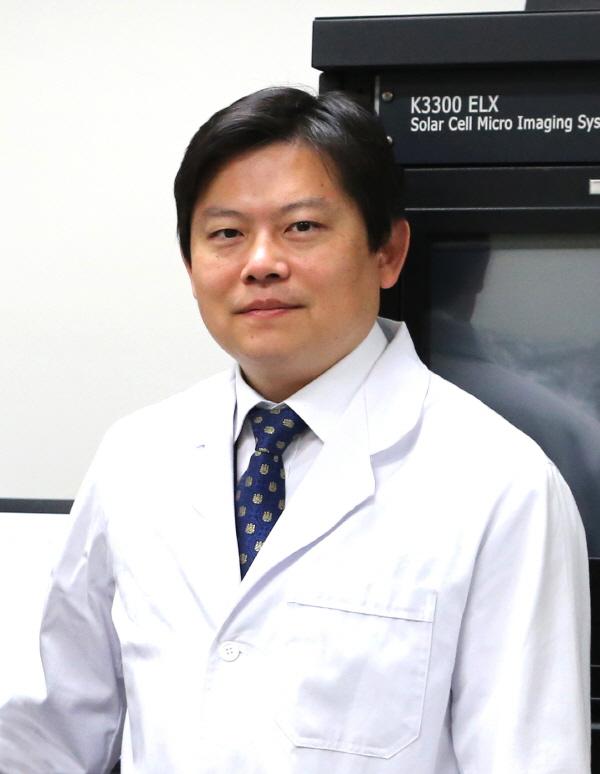
Prof. Su-Il In has been working at DGIST (Daegu Gyeongbuk Institute of Science & Technology) since 2012. He served as Dean of International and External Affairs from 2016 to 2017. He received his Ph.D. in Chemistry from the University of Cambridge in 2008. Subsequently, he became a postdoctoral researcher at the Technical University of Denmark by 2010. He then joined Pennsylvania State University as a postdoctoral researcher in the Department of Chemistry before joining DGIST. Prof. In’s ongoing research includes the synthesis and analysis of functional nano (bio)-materials for environment-friendly renewable energy, such as betavoltaic cells, heterogeneous catalysis and biocatalysts.
Media Contact
Kwanghoon Choi
[email protected]
Original Source
https:/
Related Journal Article
http://dx.