In a compelling breakthrough for freshwater biodiversity monitoring, researchers have demonstrated that environmental DNA (eDNA) metabarcoding offers a transformative leap over traditional biomonitoring methods. Led by Dr. Mehrdad Hajibabaei at the University of Guelph’s Centre for Biodiversity Genomics, this pioneering study applied cutting-edge DNA sequencing techniques to assess ecological diversity in eastern Ontario’s waterways, revealing a far richer and more nuanced picture of freshwater life than previously recorded. This advancement opens new vistas for conservation biology, ecological assessment, and environmental management amid escalating anthropogenic pressures on aquatic ecosystems worldwide.
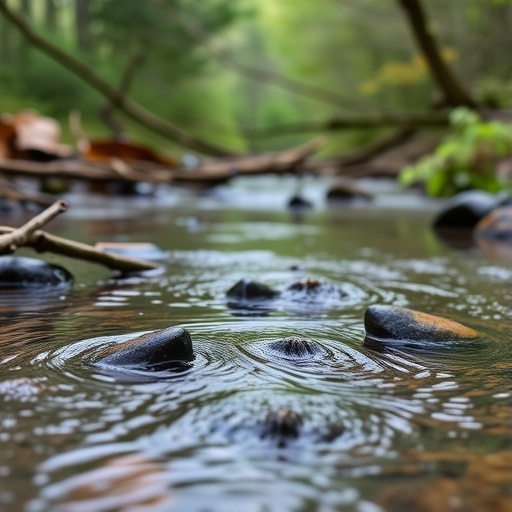
The research focused on benthic macroinvertebrates—organisms such as insect larvae, crustaceans, and other small aquatic fauna—key bioindicators of freshwater ecosystem health. These organisms inhabit streambeds and are sensitive to environmental changes, making them critical for monitoring water quality. Over a decade or more, traditional morphology-based surveys had painstakingly cataloged these communities across 18 streams in the South Nation River watershed, a predominantly agricultural landscape permeated with complex land-use practices including intensive farming and urban development.
Using eDNA metabarcoding, the research team collected bulk environmental samples during the summer and fall of 2023, extracting genetic material shed by organisms within the streams. High-throughput sequencing technologies were then employed to analyze these samples, enabling parallel identification of hundreds of taxa with species-level precision. Remarkably, a single year of this DNA-based approach unearthed 282 species—an astonishing 261 species went undetected in the traditional morphological records spanning 15 years. Conversely, morphology-based methods found only 22 unique species missed by eDNA, highlighting a paradigm shift in biodiversity detection sensitivity.
Site-level analyses further underscored these findings. DNA metabarcoding consistently revealed significantly greater species richness, averaging 59 species per site compared to a mere 15 detected by conventional means. Moreover, the molecular approach unveiled a vast hidden diversity, with nearly 44 percent of species present at isolated, single sites. This degree of fine-scale spatial resolution emphasizes the ecological complexity of freshwater habitats and suggests prior underestimations of species distributions inherent to morphology-dependent surveys.
Beyond mere species inventories, the DNA approach delivered enhanced ecological insights. Statistical models discerned clear distinctions in stream communities corresponding to land-use types—agriculturally dominated, forested, or mixed—highlighting the impacts of human activities on aquatic biodiversity. Agricultural streams exhibited signatures of elevated conductivity, turbidity, and altered pH, consistent with fertilizer runoff and soil disturbance, whereas forested streams maintained higher dissolved oxygen and richer biodiversity metrics, reinforcing the critical role of forest ecosystems as refugia for freshwater life.
One compelling revelation of this study is the ability of eDNA metabarcoding to detect subtle yet ecologically meaningful shifts in community composition—early warning signals of ecosystem stress often missed by traditional monitoring. Given the accelerating pace of global environmental change—driven by factors such as agriculture expansion, urbanization, pollution, and climate fluctuations—these sensitive detection capabilities offer a vital tool for timely interventions and adaptive management strategies.
Traditional morphology-based biomonitoring, exemplified by Ontario’s Benthos Biomonitoring Network, has long been hamstrung by reliance on expert taxonomists, laborious specimen processing, and frequent inability to resolve species-level identifications, especially for immature or cryptic taxa. Impressively, over 90 percent of specimens in some survey years remained unidentified at species resolution. This taxonomic bottleneck limits the granularity and accuracy of bioassessment programs, constraining effective conservation action.
In stark contrast, the eDNA metabarcoding workflow circumvents these limitations by employing universal genetic markers and next-generation sequencing, automating identification processes with higher reproducibility and throughput. This method also captures taxa traditionally overlooked in morphology-based studies, including elusive insect and crustacean lineages, thereby furnishing a more comprehensive biodiversity inventory critical for robust ecological modeling and risk assessment.
Integrating eDNA techniques into existing freshwater biomonitoring schemes holds enormous promise for scaling efforts across diverse geographies, particularly where mixed land-use pressures and environmental stressors are rampant. Reduced dependence on specialized taxonomic skills coupled with rapid data generation enhances the feasibility and cost-effectiveness of wide-scale deployment. This democratization of biodiversity assessment has profound implications for policymakers, environmental agencies, and conservation practitioners striving to meet global sustainability goals.
Nevertheless, the researchers emphasize that DNA metabarcoding is not a wholesale replacement but rather a complementary advance. Traditional morphology-based approaches retain unique value for longitudinal data continuity, morphological trait analyses, and certain ecological contexts. The envisioned future is a hybridized, integrative biomonitoring framework combining rapid, scalable genomic screening with targeted taxonomic validation, yielding a synergistic understanding unattainable by either method alone.
Ultimately, this study exemplifies a watershed moment in ecological biomonitoring, showcasing eDNA metabarcoding’s revolutionary capacity to unravel the intricacies of freshwater ecosystems with unprecedented resolution. As global freshwater habitats face mounting anthropogenic threats, harnessing such molecular tools becomes imperative for safeguarding biodiversity, ensuring ecosystem services, and fostering resilient aquatic environments for generations to come.
This research was conducted by the Hajibabaei lab in collaboration with Agriculture and Agri-Food Canada (AAFC) and South Nation Conservation authority. The landmark paper, titled “Fine-Scale Ecological Biomonitoring in a Large, Complex Agriculturally Impacted Watershed via eDNA Metabarcoding,” has been published in the journal Molecular Ecology. Funding was generously provided by the New Frontiers in Research Fund, the Illumina Foundation, Environment and Climate Change Canada, and the Canadian Safety and Security Program.
Subject of Research: Animals
Article Title: Fine-Scale Ecological Biomonitoring in a Large, Complex Agriculturally Impacted Watershed via eDNA Metabarcoding
News Publication Date: 15-May-2026
Web References: 10.1111/mec.70377
Image Credits: Hajibabaei lab
Keywords: Biodiversity, Aquatic ecology, Ecological modeling, Natural resources, DNA synthesis, DNA, Population genetics
Tags: advances in freshwater biomonitoringanthropogenic impact on freshwateraquatic bioindicators of water qualitybenthic macroinvertebrate assessmentconservation biology toolsDNA sequencing in ecologyecological assessment methodsenvironmental DNA metabarcodingfreshwater biodiversity monitoringhigh-throughput sequencing environmental samplesOntario stream ecosystemsSouth Nation River watershed study