• HOME
  • NEWS
  • EXPLORE
    • CAREER
      • Companies
      • Jobs
    • EVENTS
    • iGEM
      • News
      • Team
    • PHOTOS
    • VIDEO
    • WIKI
  • BLOG
  • COMMUNITY
    • FACEBOOK
    • INSTAGRAM
    • TWITTER
Monday, May 18, 2026
BIOENGINEER.ORG
No Result
View All Result
  • Login
  • HOME
  • NEWS
  • EXPLORE
    • CAREER
      • Companies
      • Jobs
        • Lecturer
        • PhD Studentship
        • Postdoc
        • Research Assistant
    • EVENTS
    • iGEM
      • News
      • Team
    • PHOTOS
    • VIDEO
    • WIKI
  • BLOG
  • COMMUNITY
    • FACEBOOK
    • INSTAGRAM
    • TWITTER
  • HOME
  • NEWS
  • EXPLORE
    • CAREER
      • Companies
      • Jobs
        • Lecturer
        • PhD Studentship
        • Postdoc
        • Research Assistant
    • EVENTS
    • iGEM
      • News
      • Team
    • PHOTOS
    • VIDEO
    • WIKI
  • BLOG
  • COMMUNITY
    • FACEBOOK
    • INSTAGRAM
    • TWITTER
No Result
View All Result
Bioengineer.org
No Result
View All Result
Home NEWS Science News Biology

DNA-ROM: New grant aims for memory chips based on DNA

Bioengineer by Bioengineer
July 17, 2018
in Biology
Reading Time: 2 mins read
0
Share on FacebookShare on TwitterShare on LinkedinShare on RedditShare on Telegram
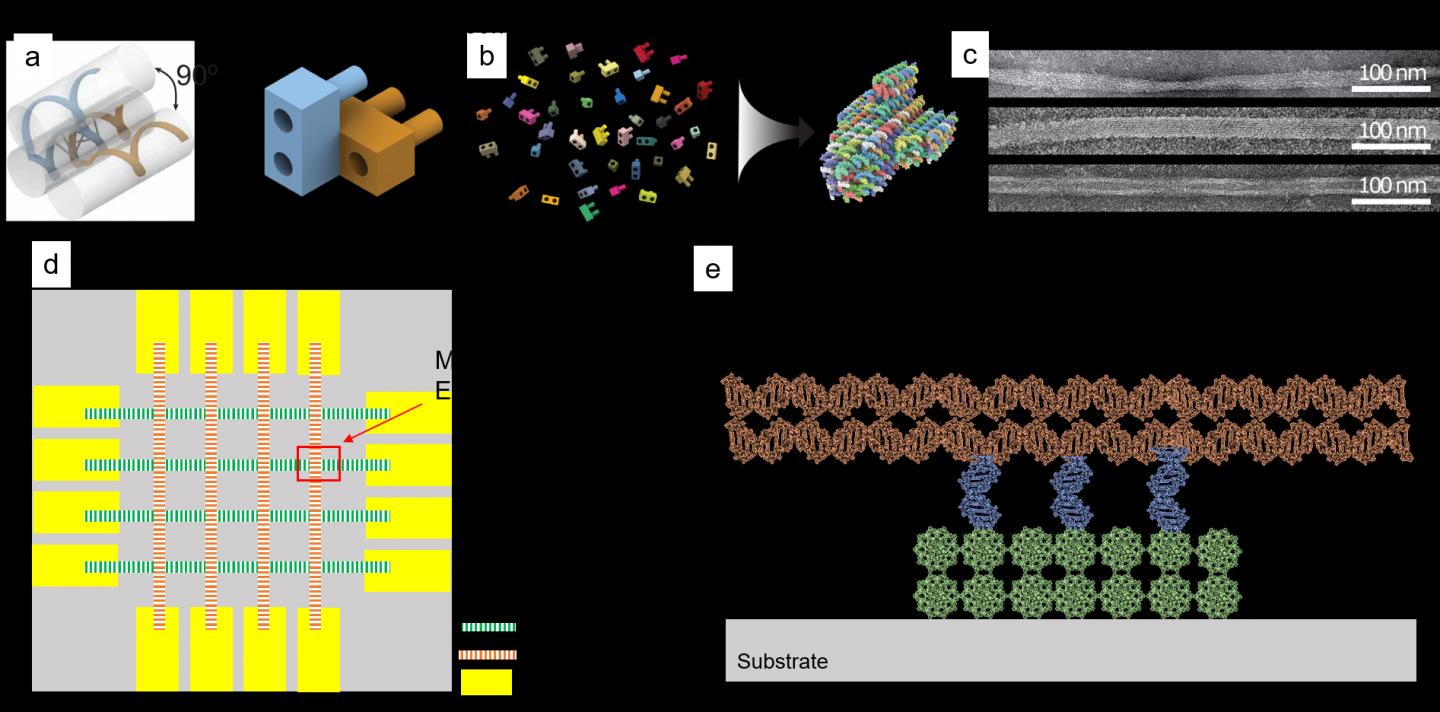
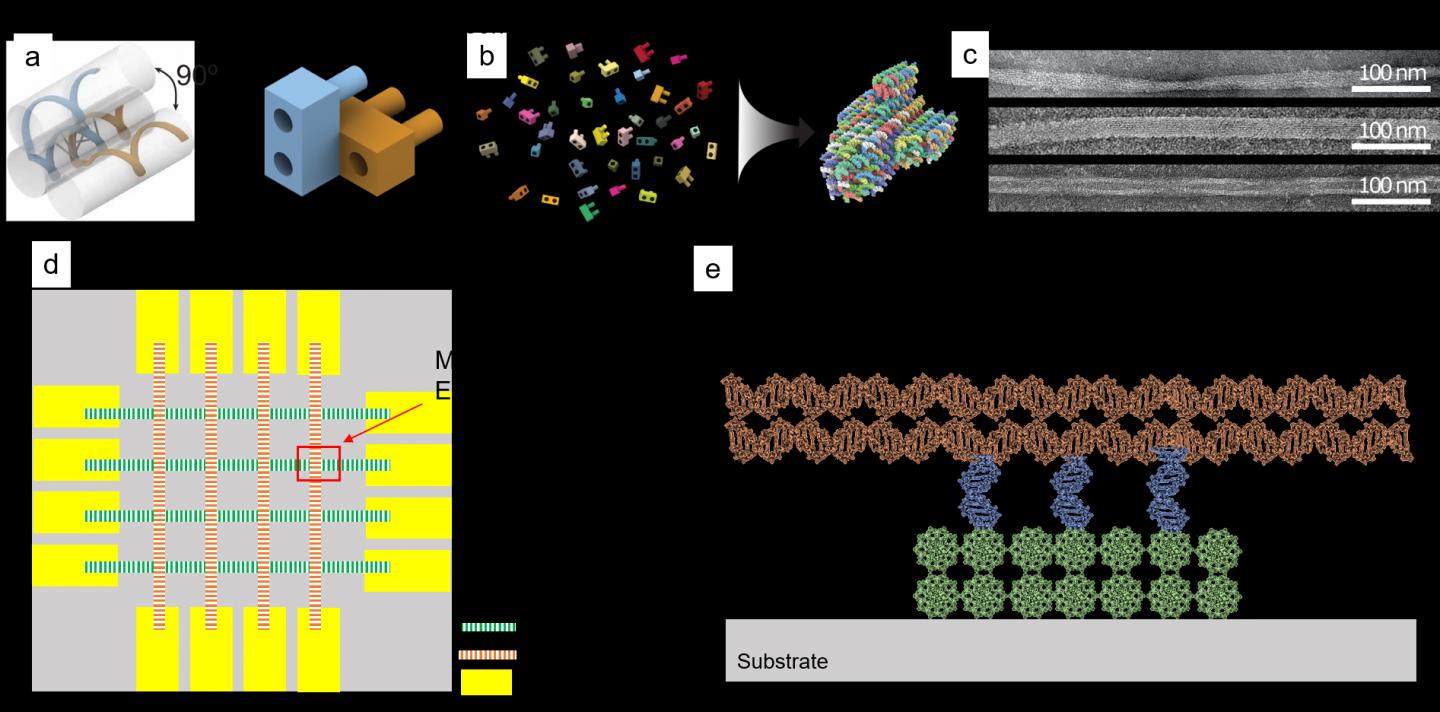
IMAGE

Credit: (Josh Hihath, UC Davis; Yonggang Ke, Emory University)

Josh Hihath is trying to fuse biology and electrical engineering and to build new types of electronic memory based on DNA. Hihath, professor in the UC Davis Department of Electrical and Computer Engineering, is principal investigator of a grant just funded by the Semiconductor Synthetic Biology for Information Processing and Storage Technologies (SemiSynBio) program. SemiSynBio is a partnership between the National Science Foundation, the Semiconductor Research Corporation and the Intelligence Advanced Research Projects Activity.

Advances in memory technology have helped make more advanced and compact devices possible. But electronic memory consumes quite a lot of power, can be difficult to read and write and has a limited lifespan.

But billions of years ago, nature came up with a system for system for storing information: DNA. The average human stores 40 exabytes – 40 million Terabytes – of information in their DNA every day and DNA can potentially remain stable for thousands of years

The goal of the new project, which includes co-principal investigators M.P. Anantram at the University of Washington and Yonggang Ke at Emory University as well as Hihath's lab at UC Davis, is to create a DNA-based read-only memory (ROM) that can be programmed, read electronically and interface with electronic devices. The researchers will develop ways to grow tiny strands or "nanowires" of DNA between electrodes.

Information stored in DNA

For biological purposes, DNA stores information as a series of chemical bases, adenosine, cytosine, guanine and thiamine, represented the letters ACGT. This code is "read" by enzymes to make proteins.

Hihath's proposed DNA-ROM will instead store information based on the electrical properties of the DNA molecules. Different DNA molecules have different electrical conductance and these electrical properties – rather than the DNA letter code itself – could represent ones and zeroes in digital information.

The electrical properties of DNA can be influenced by the base sequence, length of the molecule, and the number of strands in a junction.

Total grant funding is for $1.5 million over three years, divided between the three campuses. The grant is among $12 million in grants from the SemiSynBio program announced July 17.

###

Media Contact

Andy Fell
[email protected]
530-752-4533
@ucdavisnews

http://www.ucdavis.edu

Share12Tweet8Share2ShareShareShare2

Related Posts

How Diet Shapes Evolution: The Science Behind What You Eat — Biology

How Diet Shapes Evolution: The Science Behind What You Eat

May 18, 2026
In-Depth Analysis Reveals Advances in Multiple Sclerosis Research Models — Biology

In-Depth Analysis Reveals Advances in Multiple Sclerosis Research Models

May 18, 2026

Uncovering C. elegans Immunity via Genetic Screens

May 16, 2026

Single mother must adapt swiftly — the survival of her colony depends on it

May 15, 2026
Please login to join discussion

POPULAR NEWS

  • Research Indicates Potential Connection Between Prenatal Medication Exposure and Elevated Autism Risk

    845 shares
    Share 338 Tweet 211
  • New Study Reveals Plants Can Detect the Sound of Rain

    731 shares
    Share 292 Tweet 182
  • Salmonella Haem Blocks Macrophages, Boosts Infection

    62 shares
    Share 25 Tweet 16
  • Breastmilk Balances E. coli and Beneficial Bacteria in Infant Gut Microbiomes

    58 shares
    Share 23 Tweet 15

About

We bring you the latest biotechnology news from best research centers and universities around the world. Check our website.

Follow us

Recent News

Durvalumab and HAIC-FOLFOX Advance Liver Cancer Treatment

Transformer Model Predicts Energy-Adaptive Glycopeptide Spectra

Social Exclusion in Midlife Caregivers Explored Through Photos

Subscribe to Blog via Email

Enter your email address to subscribe to this blog and receive notifications of new posts by email.

Join 82 other subscribers
  • Contact Us

Bioengineer.org © Copyright 2023 All Rights Reserved.

Welcome Back!

Login to your account below

Forgotten Password?

Retrieve your password

Please enter your username or email address to reset your password.

Log In
No Result
View All Result
  • Homepages
    • Home Page 1
    • Home Page 2
  • News
  • National
  • Business
  • Health
  • Lifestyle
  • Science

Bioengineer.org © Copyright 2023 All Rights Reserved.