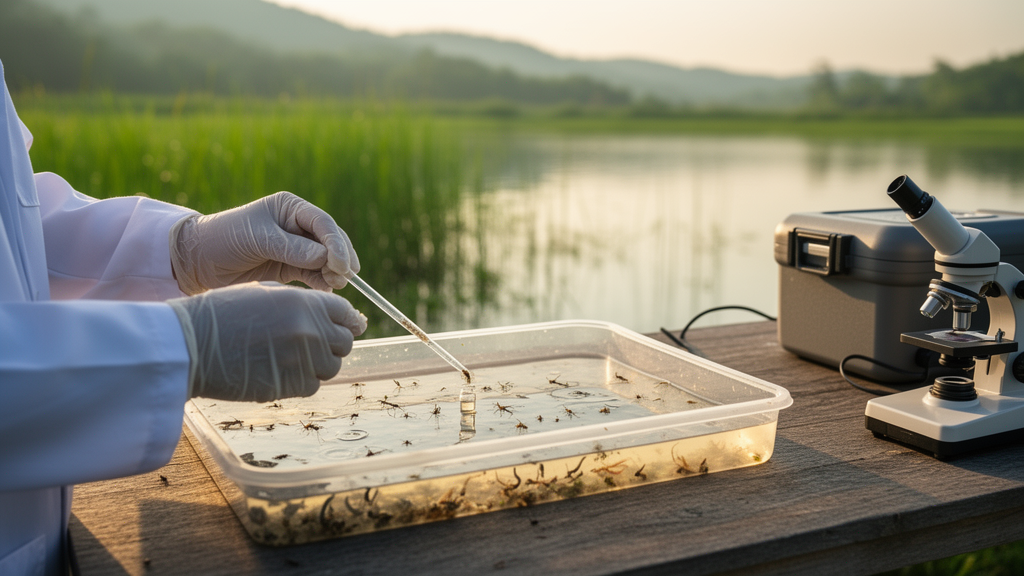
A survey of aquatic macroinvertebrates in Kwan Phayao, a large freshwater lake in northern Thailand, has combined traditional morphology with DNA barcoding to chart the lake’s invertebrate diversity and gauge its water quality. The study, published in BMC Zoology, analyzed 203 representative samples collected from the lake and found that genetic methods uncovered far more taxonomic detail than visual identification alone.
Morphological examination sorted the samples into 13 orders, 7 classes and 3 phyla. But when the researchers sequenced a mitochondrial marker, cytochrome c oxidase subunit I (COI), and compared the sequences against reference databases alongside phylogenetic analysis and the Automatic Barcode Gap Discovery (ABGD) method, they distinguished 86 distinct taxa across 37 genera and 29 families. The gap between the two approaches reflects a well-known problem in freshwater biology: many macroinvertebrates look nearly identical as adults or larvae, and identifying them reliably requires taxonomic expertise that is increasingly scarce.
DNA barcoding did not solve every problem. Only 25.62 percent of the samples could be confidently assigned to a species level, because reference databases for tropical freshwater invertebrates remain incomplete. Without a matching reference sequence, a barcode can show that two specimens differ genetically without revealing what species either one belongs to. The authors note this limitation directly, framing the work as an assessment of the challenges of barcoding as much as a biodiversity inventory.
Beyond taxonomy, the study applied the barcoded and morphologically identified taxa to biological water quality assessment. Using physicochemical parameters together with two biotic indices adapted for Thailand, the Biological Monitoring Working Party Thai modification (BMWPThai) and the Average Score Per Taxon Thai modification (ASPTThai), the researchers concluded that the water quality of Kwan Phayao is moderate.
The accurate identifications also carried practical value beyond monitoring. The study detected taxa with potential public health relevance and economically valuable decapod species, providing preliminary information that the authors say can support sustainable management and planning of fisheries resources in the lake ecosystem. Kwan Phayao supports local fisheries, and knowing which invertebrates live there helps clarify the base of the food web on which fish, and the people who harvest them, depend.
For researchers working in tropical freshwater systems, the results underline a dual message. Molecular methods can substantially refine diversity estimates where morphology reaches its limits, yet their usefulness is capped by the completeness of reference libraries, which in understudied regions still leave most specimens unassigned at the species level.
Subject of Research: Aquatic macroinvertebrate diversity and water quality assessment in Kwan Phayao, Thailand, using morphology and DNA barcoding.
Article Title: Assessment of aquatic macroinvertebrate diversity and water quality in Kwan Phayao, Thailand: integrating morphology and DNA barcoding
Article References: Panprommin, D., Panyaros, W., Jaidet, J., Bualoi, N., Rungphet, S., Wangkahart, E., & Panase, P. (2026). Assessment of aquatic macroinvertebrate diversity and water quality in Kwan Phayao, Thailand: integrating morphology and DNA barcoding. BMC Zoology. https://doi.org/10.1186/s40850-026-00282-2
Image Credits: AI Generated
DOI: 10.1186/s40850-026-00282-2
Keywords: DNA barcoding, aquatic macroinvertebrates, Kwan Phayao, water quality, COI, BMWPThai, ASPTThai, freshwater ecology, Thailand, biodiversity, Assessment, aquatic
News Source: Juliet Wilcox. (October 29, 2026). DNA Barcoding Reveals Hidden Diversity in a Thai Lake’s Macroinvertebrates. Scienmag.