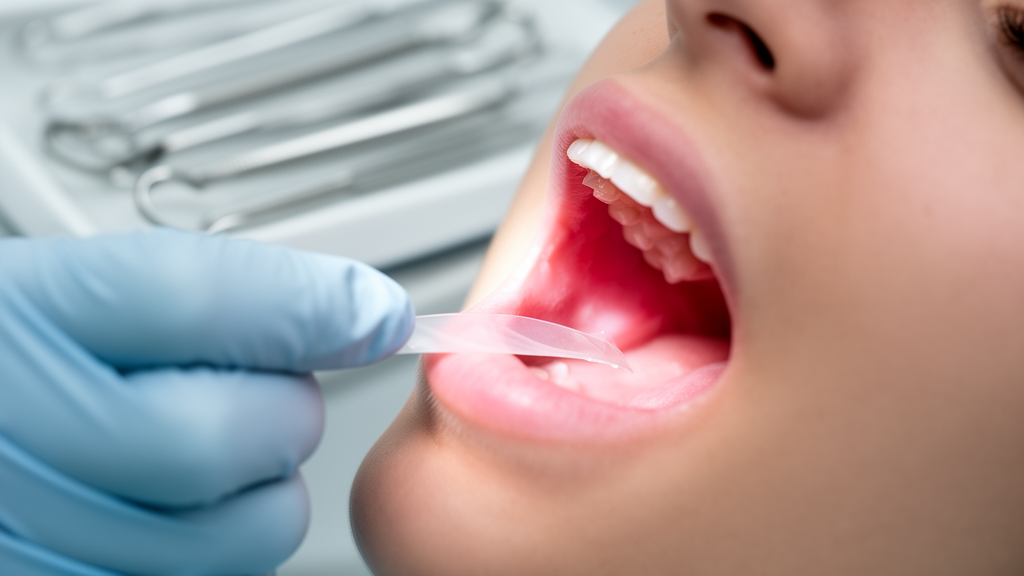
Periodontitis, the chronic infection that destroys the tissues anchoring our teeth, is quietly becoming one of the world’s most burdensome diseases. Researchers estimate that more than 1.5 billion people will suffer from severe periodontitis by 2050, and that tooth loss linked to the condition could affect over 660 million individuals worldwide. The disease takes hold in the periodontal pocket, the narrow space between a tooth and its surrounding gum, where hundreds of bacterial species, including roughly sixty varieties of anaerobic spirochetes, colonize the oxygen-starved environment. Organisms such as Treponema denticola and Porphyromonas gingivalis are well established drivers of gum inflammation, alveolar bone loss and, ultimately, tooth loss. While dentists can halt disease progression with mechanical cleaning and, in many cases, adjunctive antibiotics, the widespread use of systemic antimicrobials is fueling the global crisis of antibiotic resistance, prompting scientists to look for smarter, more targeted ways to deliver drugs exactly where they are needed.
A team of pharmaceutical scientists in India has now developed a thin, flexible film loaded with amixicile, a next-generation antimicrobial, designed to be placed directly into the diseased gum pocket. The work, published in Discover Chemistry, describes how the researchers combined amixicile with two film-forming polymers, the natural polysaccharide pullulan and the synthetic, water-soluble polymer polyvinyl alcohol, to create a locally applied treatment for periodontitis. Amixicile is a derivative of the antiparasitic drug nitazoxanide and works through an unusual mechanism: it inhibits pyruvate-ferredoxin oxidoreductase, or PFOR, a key enzyme in the energy metabolism of anaerobic bacteria. By binding to thiamine pyrophosphate, a cofactor the enzyme depends on, amixicile prevents pyruvate from binding, blocking the formation of acetyl-CoA and carbon dioxide and thereby starving anaerobic pathogens of energy. Crucially, every oral Treponema species studied so far relies on PFOR, making amixicile a particularly promising candidate against periodontal pathogens, while its high selectivity for anaerobic organisms keeps it relatively non-toxic to host tissues.
The choice of polymers was equally deliberate. Pullulan, a fermentation product of the fungus Aureobasidium pullulans, is non-ionic, bio-erodible and biocompatible, with outstanding film-forming ability; it is already used in commercial oral care films sold internationally under the Listerine brand. Its many hydroxyl groups make it highly water-soluble, so it absorbs water, swells and breaks down, helping entrapped drug molecules diffuse out. Polyvinyl alcohol complements this by adding mechanical strength through intermolecular hydrogen bonding, improving the film’s elasticity, wettability and swelling behavior. Together, the two polymers form a matrix that is strong enough to be handled and inserted into a gum pocket yet dissolves quickly enough to release its payload. The films themselves were made by solvent casting: the polymers were dissolved in water, amixicile was stirred into the homogeneous blend, and the solution was cast into petri plates and dried in a hot air oven at 80 degrees Celsius before being trimmed into two-by-two-centimeter squares.
Before formulating, the team established how much drug is actually needed to stop microbial growth. Using a broth dilution method, they determined that the minimum inhibitory concentration of amixicile against both Pseudomonas aeruginosa and Candida albicans was 20 micrograms per milliliter. The minimum bactericidal concentration against Pseudomonas aeruginosa and the minimum fungicidal concentration against Candida albicans were both 25 micrograms per milliliter. The choice of test organisms reflects the complex ecology of periodontal pockets: Candida albicans is the most prevalent fungus in both healthy and diseased oral cavities and has been shown to facilitate invasion of gingival epithelial cells by Porphyromonas gingivalis, while Pseudomonas aeruginosa, though not a primary periodontal pathogen, can thrive in the low-oxygen niches of periodontal pockets, forming biofilms and secreting virulence factors such as phenazines and pyocyanin that sustain inflammation and tissue destruction.
To optimize the formulation rather than rely on trial and error, the researchers employed a central composite design, a statistical approach that systematically varies the concentrations of pullulan and polyvinyl alcohol and models their effects on two critical quality attributes: in-vitro drug release and tensile strength. Nine formulations were produced and evaluated. Drug content across the batches ranged from 87.7 to 97.4 percent, indicating that amixicile was evenly dispersed throughout the films. Drug release over five minutes ranged from about 81.8 to 95.2 percent, with formulations A1 and A6 performing best. The regression analysis revealed that both polymers increased drug release, but pullulan’s linear coefficient, 4.80, was nearly three times that of polyvinyl alcohol, 1.69, confirming that the hydrophilic polysaccharide was the dominant driver of dissolution. A low interaction coefficient showed the two polymers acted largely through their individual effects rather than synergistically on release.
Tensile strength told a complementary story. The strongest film, batch A1, withstood 12.8 newtons per square centimeter, a result attributed to high polymer concentrations producing dense chain entanglement and extensive hydrogen bonding. But excessive rigidity can compromise elasticity and patient comfort during periodontal application, so the strongest film was not necessarily the best. Batches with low polymer content, A2 through A5, ranged from just 1.02 to 5.23 newtons per square centimeter, reflecting weak matrix cohesion. Batch A6, with moderate polymer levels, achieved 10.78 newtons per square centimeter, striking what the authors describe as the ideal balance between structural stability and flexibility. The statistical models for both responses were validated by analysis of variance, with model F-values of 119.88 for drug release and 22.51 for tensile strength, and prediction errors for the optimized batch of only 0.41 percent for release and 2.13 percent for mechanical strength.
The optimized formulation, containing 300 milligrams of pullulan and 200 milligrams of polyvinyl alcohol, was then put through a full battery of characterization tests. The yellow film was uniform and smooth, with an average thickness of 0.06 millimeters, a weight of 0.0125 grams, and a folding endurance of 200 folds, indicating robust mechanical integrity. Its pH of 6 falls within the natural range of the oral cavity during gingival infections, minimizing irritation risk, and it disintegrated completely in about one minute, enabling rapid drug release. In-vitro diffusion through a cellophane membrane reached 78.6 percent over 70 minutes, notably longer than the five-minute release window, because only one side of the film contacted the membrane. When tested against fresh sheep gingival mucosa, ex-vivo diffusion reached 65.1 percent, with a steady-state flux of 0.93 micrograms per square centimeter per minute, about 16 percent lower than the in-vitro value, a reduction the researchers attribute to the additional diffusional and partitioning resistance of biological tissue.
Perhaps the most striking results came from the antimicrobial testing. Using an agar-well diffusion assay, the optimized film produced a zone of inhibition of 35 millimeters against Pseudomonas aeruginosa and 28 millimeters against Candida albicans. A plain pullulan film without drug showed much smaller zones, 18 and 22 millimeters respectively, meaning the drug-loaded film enlarged the inhibition zone by 94.4 percent against the bacterium and 27.3 percent against the fungus, differences that were statistically significant. The particularly large effect against Pseudomonas aeruginosa makes mechanistic sense, since that organism depends directly on the PFOR pathway that amixicile disables, whereas the eukaryotic fungus is affected through a less direct route. These findings suggest the film could suppress both the bacterial and fungal contributors to periodontal infection at the site where they do their damage.
The broader significance of this work lies in its approach to a stubborn clinical problem. Deep periodontal pockets, those exceeding four millimeters, are often inaccessible to thorough cleaning because of tooth structure, which is precisely why localized delivery systems that place antimicrobials directly at the infection site, prolonging drug contact time while limiting systemic exposure, have attracted so much research attention. A dissolvable film that releases over 95 percent of its drug within minutes, then sustains diffusion for over an hour, could offer clinicians a non-invasive, easy-to-insert option that avoids the resistance risks of systemic antibiotics. The authors are careful to note that the road to the clinic is not yet complete: preclinical periodontal efficacy testing, mucosal safety and toxicity studies, bioadhesion and residence time measurements, microbiological efficacy against clinically relevant periodontal organisms, and eventually clinical trials will all be required before therapeutic use can be established. Still, the convergence of a mechanistically novel antimicrobial, well-characterized biocompatible polymers, and rigorous statistical optimization makes this amixicile film a compelling candidate in the fight against a disease poised to affect billions.
Subject of Research: Development of an amixicile-loaded pullulan and polyvinyl alcohol composite film for localized drug delivery in periodontitis treatment
Article Title: Amixicile loaded polyvinyl alcohol and pullulan composite film for localized periodontal treatment
Article References: Kandekar, U., Davkare, P., Pandit, A., Chaudhari, P., Chavan, M., Sayare, A., & Kolhe, R. (2026). Amixicile loaded polyvinyl alcohol and pullulan composite film for localized periodontal treatment. Discover Chemistry, 3(1), Article 573. https://doi.org/10.1007/s44371-026-01011-x
Image Credits: AI Generated
DOI: 10.1007/s44371-026-01011-x
Keywords: amixicile, periodontitis, pullulan, polyvinyl alcohol, drug delivery film, PFOR inhibitor, antimicrobial, periodontal pocket, solvent casting, central composite design, Pseudomonas aeruginosa, Candida albicans
News Source: Bethany Barker. (October 9, 2026). Dissolvable Gum Film Delivers Next-Generation Antibiotic Straight Into Periodontal Pockets. Scienmag.