• HOME
  • NEWS
  • EXPLORE
    • CAREER
      • Companies
      • Jobs
    • EVENTS
    • iGEM
      • News
      • Team
    • PHOTOS
    • VIDEO
    • WIKI
  • BLOG
  • COMMUNITY
    • FACEBOOK
    • INSTAGRAM
    • TWITTER
Sunday, May 17, 2026
BIOENGINEER.ORG
No Result
View All Result
  • Login
  • HOME
  • NEWS
  • EXPLORE
    • CAREER
      • Companies
      • Jobs
        • Lecturer
        • PhD Studentship
        • Postdoc
        • Research Assistant
    • EVENTS
    • iGEM
      • News
      • Team
    • PHOTOS
    • VIDEO
    • WIKI
  • BLOG
  • COMMUNITY
    • FACEBOOK
    • INSTAGRAM
    • TWITTER
  • HOME
  • NEWS
  • EXPLORE
    • CAREER
      • Companies
      • Jobs
        • Lecturer
        • PhD Studentship
        • Postdoc
        • Research Assistant
    • EVENTS
    • iGEM
      • News
      • Team
    • PHOTOS
    • VIDEO
    • WIKI
  • BLOG
  • COMMUNITY
    • FACEBOOK
    • INSTAGRAM
    • TWITTER
No Result
View All Result
Bioengineer.org
No Result
View All Result
Home NEWS Science News Biology

Discovery of hippocampal mossy cell involvement to maximize antidepressant effects

Bioengineer by Bioengineer
May 24, 2019
in Biology
Reading Time: 2 mins read
0
IMAGE
Share on FacebookShare on TwitterShare on LinkedinShare on RedditShare on Telegram

IMAGE

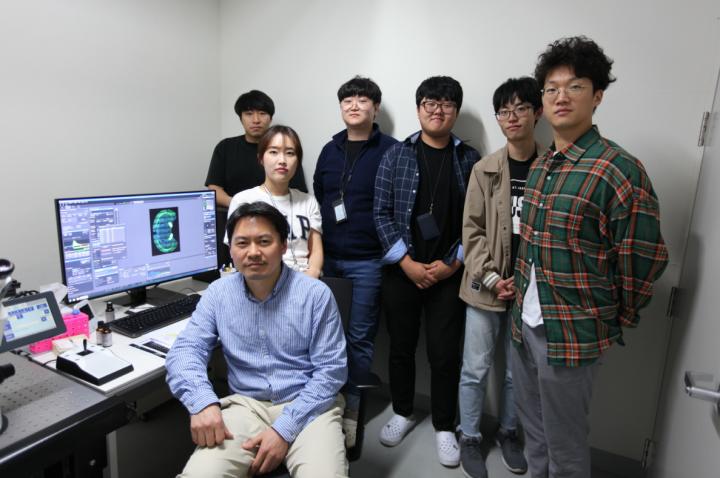
Credit: ©DGIST

DGIST faculty clarified that the fundamental neural circuit mechanism involved in antidepressant efficacy to treat depression, one of serious mental diseases in today’s society. This is expected to contribute to the development of next antidepressant that can advance the effects and speed of treatment in the future.

DGIST announced on Thurs., May 16th that Professor Yong-Seok Oh’s research team at the Department of Brain-Cognitive Science discovered that the activity changes of mossy cells that located in the hippocampus1 which associated with emotion regulation play a crucial role in the treatment efficacy of serotoninergic2 antidepressant.

Depression is a serious mental disease that can not only devastates the quality of the life of patients and families but can also even lead to suicide in an extreme case. South Korea has had the highest suicide rates among OECD countries (24.3 people per population of 100,000 as of 2017) and a total of 566.4 billion KRW has been spent on medical fees, showing that depression is becoming a socioeconomically serious problem.

Although serotonin antidepressant (SSRI3 and SNRI4) are most widely prescribed to treat depression, they have limitations such as high drug-resistance, various side-effects, and treatment effect delays. Serotonin increases immediately within 1 hour after the antidepressant is administered, but treatment effects such as patients’ emotional improvement appear after 2-3 weeks at the fastest and takes more than 2 months on average. Such delay in treatment effects has indicated that serotonin does not only determine the efficacy but also shows efficacy by inducing long-lasting neuronal plastic changes in emotional control neural circuit. Yet, such mechanism has not been elucidated so far.

###

1 Hippocampus is located under the cerebral cortex in the allocortex and in primates it is in the medial temporal lobe. It is responsible for learning, long-term memory and space concept, cognition, and emotional behavioral control.

2 Serotonin is contained in brain, internal organs, thrombocyte, and mastocyte and exists in the central nervous system of humans and animals to control happiness. It is the primary target of antidepressant.

3 SSRI (Selective Serotonin Reuptake Inhibitors) selectively inhibits the reuptake of serotonin, a neurotransmitter that has antidepressant effect, by increasing serotonin, and is also used in treating anxiety disorder and panic disorder.

4 SNRI (Serotonin-noradrenaline Reuptake Inhibitor is an antidepressant that inhibits the reuptake of serotonin and noradrenalin, the neurotransmitter inside brain.

Media Contact
Yong-Seok Oh
[email protected]

Original Source

https://www.dgist.ac.kr/site/en/html/sub06/060202.html?mode=V&no=d2cde40ab716019e59052eb45e229cae

Related Journal Article

http://dx.doi.org/10.1038/s41380-019-0384-6

Tags: BiochemistryBiologyBiomechanics/BiophysicsBiotechnologyGeneticsMolecular Biology
Share13Tweet8Share2ShareShareShare2

Related Posts

Uncovering C. elegans Immunity via Genetic Screens — Biology

Uncovering C. elegans Immunity via Genetic Screens

May 16, 2026
Single mother must adapt swiftly — the survival of her colony depends on it — Biology

Single mother must adapt swiftly — the survival of her colony depends on it

May 15, 2026

Why Are Nearly Everyone Right-Handed? It Might Be Linked to How We Learned to Walk

May 15, 2026

Excessive Neuronal Activity Initiates Severe Autoimmune Brain Disorder

May 15, 2026
Please login to join discussion

POPULAR NEWS

  • Research Indicates Potential Connection Between Prenatal Medication Exposure and Elevated Autism Risk

    844 shares
    Share 338 Tweet 211
  • New Study Reveals Plants Can Detect the Sound of Rain

    730 shares
    Share 291 Tweet 182
  • Salmonella Haem Blocks Macrophages, Boosts Infection

    62 shares
    Share 25 Tweet 16
  • Breastmilk Balances E. coli and Beneficial Bacteria in Infant Gut Microbiomes

    58 shares
    Share 23 Tweet 15

About

We bring you the latest biotechnology news from best research centers and universities around the world. Check our website.

Follow us

Recent News

Age Discrimination Affects Healthcare Use in India

Lavandula-Zn(II) Hybrid Shields Steel from Corrosion

Targeted Radiotherapy Extends Control of Early-Stage Breast Cancer Spread

Subscribe to Blog via Email

Enter your email address to subscribe to this blog and receive notifications of new posts by email.

Join 82 other subscribers
  • Contact Us

Bioengineer.org © Copyright 2023 All Rights Reserved.

Welcome Back!

Login to your account below

Forgotten Password?

Retrieve your password

Please enter your username or email address to reset your password.

Log In
No Result
View All Result
  • Homepages
    • Home Page 1
    • Home Page 2
  • News
  • National
  • Business
  • Health
  • Lifestyle
  • Science

Bioengineer.org © Copyright 2023 All Rights Reserved.