Spontaneous regression of herniated lumbar disc fragments occurs in a substantial proportion of patients managed with conservative care, yet current evidence indicates that local vascular and immune access by host tissues, rather than the death of nucleus pulposus cells within the fragment, is the primary biological driver of tissue clearance. In a comprehensive narrative review published in Frontiers in Cell and Developmental Biology, a multidisciplinary research team evaluated preclinical degeneration models, cellular assays, animal herniation studies, and longitudinal human imaging data to resolve whether regulated cell death actively promotes fragment elimination. The investigators found that while regulated cell-death programs such as apoptosis, pyroptosis, necroptosis, ferroptosis, and PANoptosis deplete matrix-producing cells in the intact disc, empirical evidence demonstrating that nucleus pulposus cell death actively causes fragment clearance in herniated tissue remains sparse, indirect, and largely associative.
Lumbar disc herniation represents a widespread cause of low back pain and radiculopathy, frequently prompting surgical intervention when nerve compression or persistent pain fails to resolve. However, clinical meta-analyses demonstrate that nonsurgical care leads to spontaneous resorption in approximately sixty-seven percent of patients across clinical presentations. The probability of regression depends heavily on mechanical morphology: meta-analytic pooling indicates that bulging discs resorb in roughly thirteen percent of cases, protrusions in fifty-three percent, extrusions in seventy percent, and sequestered fragments in ninety-three percent. Despite these established morphological patterns, the precise cellular interactions responsible for fragment clearance have remained unresolved. Clinical reviews have cataloged systemic, anatomical, and radiological predictors, but they have consistently struggled to distinguish whether nucleus pulposus cell death initiates host recruitment or merely represents a passive byproduct of mechanical extrusion, microenvironmental stress, and inflammatory tissue degradation.
To assess the state of mechanistic evidence, the authors conducted structured searches across PubMed and the China National Knowledge Infrastructure from database inception through August 2026, evaluating studies across four analytical dimensions: experimental model, cellular compartment, inferential causal strength, and translational maturity. Under progressive degeneration, nutrient deprivation, inflammatory cytokines such as tumor necrosis factor-alpha and interleukin-1-beta, reactive oxygen species, and mechanical overloading deplete the sparse nucleus pulposus cell population. This loss compromises extracellular matrix synthesis, drives aggrecan and type II collagen degradation, accelerates disc-height collapse, and promotes nociceptive sensitization, providing a robust rationale for cytoprotective therapeutic interventions in retained discs.
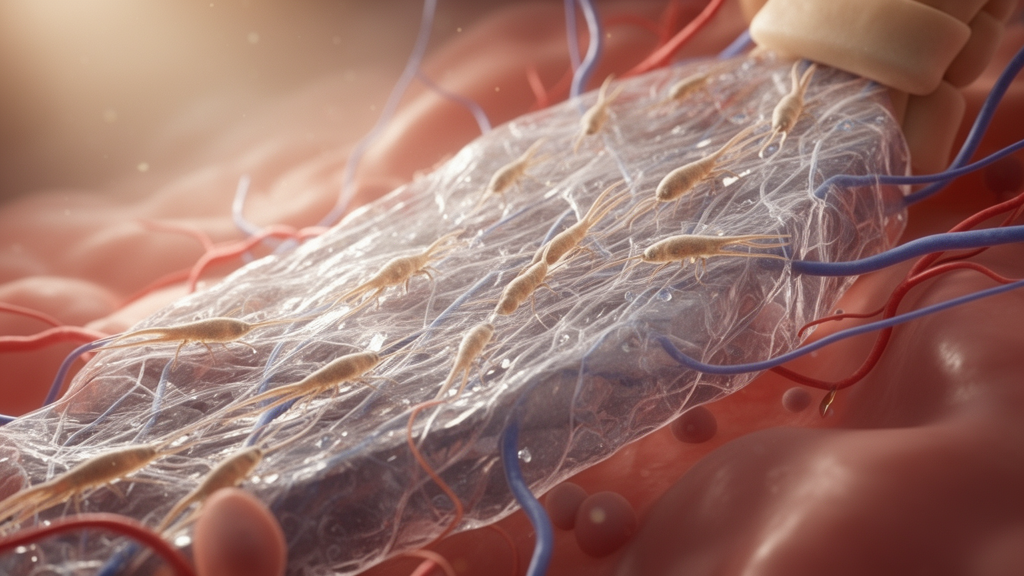
The review establishes that host-driven clearing mechanisms operating at this interface possess the strongest experimental support. In particular, neovascularization advances into the herniated material, establishing vascular conduits that deliver circulating leukocytes into previously unvascularized tissue. Ultrastructural evaluations of human surgical specimens show functional microvessels penetrating alongside active macrophages that engulf fragmented matrix. Experimental studies in rodent puncture models demonstrate that depleting host macrophages causes a significant enlargement of herniated tissue, whereas introducing exogenous bone marrow-derived macrophages reduces histological hernia volume by approximately forty-four percent, establishing a direct causal contribution for host phagocytes in animal models.
Macrophage recruitment triggers a cooperative proteolytic cascade with resident disc cells that dismantles the dense extracellular matrix. Infiltrating macrophages secrete matrix metalloproteinase-7, which cleaves and solubilizes membrane-bound tumor necrosis factor-alpha, while disc cells produce matrix metalloproteinase-3 to generate chemotactic gradients that draw additional leukocytes into the lesion. Single-cell RNA sequencing and immunohistochemical analyses of human surgical specimens reveal a diverse, continuous spectrum of macrophage phenotypes displaying markers such as CD68, CD86, CCR7, CD163, and CD206, reflecting simultaneous pro-inflammatory degradation and remodeling activities. Despite this intense enzymatic activity, the presence of regulated cell-death markers within resorbing tissue does not confirm that nucleus pulposus cells actively orchestrate their own disposal, as bulk tissue assays cannot separate signals arising from disc chondrocytes, endothelial cells, infiltrating granulocytes, or scavenging macrophages.
To resolve these competing observations, the authors formulated an accessibility framework that conceptualizes host vascular and immune access as a testable biological modifier operating across four hierarchical levels. At the top level, anatomical compartment serves as a visible clinical proxy, dividing retained discs from extruded fragments. Below this sits local vascular and immune accessibility, which determines the physical delivery of neovessels, phagocytes, and fluid exchange. The third level encompasses the local microenvironment and cellular composition, including oxygen tension, pH, cytokine exposure, and mechanical unloading, which collectively determine whether dying cells engage apoptosis, pyroptosis, necroptosis, or ferroptosis. The fourth level accounts for post-extrusion temporal kinetics, distinguishing an early hypothetical pro-resorptive inflammatory phase spanning approximately days three to fourteen from prolonged, maladaptive inflammation that sustains chronic radicular pain.
The framework directly explains why anatomical extrusion alone does not guarantee tissue resorption, noting that substantial intrafragment heterogeneity exists within individual sequestered fragments. Rather than viewing anatomical herniation as an automatic trigger for resorption, the framework predicts that the association between nucleus pulposus cell death and structural clearance will strengthen only in microenvironments where measured vascular and immune access is sufficiently high to couple cell death with host clearance.
In their assessment of pharmacological literature, the authors identified an asymmetric body of evidence heavily weighted toward cytoprotection rather than clearance induction. Numerous natural compounds and traditional Chinese medicine formulations, including Duhuo Jisheng decoction, Bushen Huoxue formula, berberine, wogonin, quercetin, resveratrol, and spermidine, show consistent cytoprotective effects in cell culture and rodent disc-degeneration models by suppressing apoptosis, mitigating oxidative damage, inhibiting endoplasmic reticulum stress, and restoring protective autophagic flux. Conversely, pharmacological studies claiming to accelerate herniation resorption, such as investigations of Yiqi Huoxue decoction or constituent embinin, rely on indirect surrogate markers or uncontrolled patient cohorts without verifying cell-specific causality. The review emphasizes that no pharmacological agent has demonstrated a true context-dependent reversal of activity capable of simultaneously preserving retained disc cells while selectively promoting clearance in extruded fragments under matched conditions.
Rigorous verification of the proposed accessibility model will require experimental designs that move beyond descriptive histology and bulk biomarker measurements. The authors outline specific criteria necessary to demonstrate causality, including the selective genetic or pharmacological perturbation of a defined cell-death pathway strictly within nucleus pulposus cells, accompanied by longitudinal volumetry to confirm that altered cell death precedes dimensional regression. Such studies must incorporate rescue experiments and robust controls to ensure that observed outcomes do not stem from non-specific inflammatory signaling or direct alterations in host macrophage viability. In clinical research, prospective observational cohorts should pair serial quantitative magnetic resonance imaging with multi-marker immunohistochemistry on surgical specimens, evaluating whether peripheral contrast enhancement reliably mirrors CD34-positive vessel density and CD68-positive macrophage infiltration across standardized clinical timeframes.
The authors caution that fragment shrinkage, parent-disc structural integrity, and clinical pain relief represent distinct, uncoupled biological endpoints that must not be conflated in experimental or clinical settings. Longitudinal imaging studies reveal that substantial reductions in herniation volume do not consistently correlate with symptom relief, as inflammatory mediators like tumor necrosis factor-alpha, interleukin-1-beta, and nerve growth factor can sensitize dorsal root ganglion neurons independently of mechanical compression. The framework therefore functions strictly as an experimental model to guide mechanistic research, rather than a clinical justification for therapies aimed at inducing cell death.
Subject of Research: Vascular and immune accessibility as modifiers of nucleus pulposus cell death and lumbar disc resorption
Article Title: Vascular and immune accessibility as a modifier of nucleus pulposus cell-death consequences in lumbar disc herniation
Article References: Huang, W., Ren, Y., Hu, W., Jiang, C., Xiao, P., Jiang, Y., Cheng, G., & Hu, C. (2026). Vascular and immune accessibility as a modifier of nucleus pulposus cell-death consequences in lumbar disc herniation. Frontiers in Cell and Developmental Biology, 14, 1977175. https://doi.org/10.3389/fcell.2026.1977175
Image Credits: AI Generated
DOI: 10.3389/fcell.2026.1977175
Keywords: lumbar disc herniation, nucleus pulposus, spontaneous resorption, regulated cell death, macrophages, neovascularization, cellular accessibility, intervertebral disc degeneration, apoptosis, pyroptosis, matrix metalloproteinases, radiculopathy, efferocytosis, ferroptosis, necroptosis, conservative care, cartilaginous endplate, narrative review
News Source: Drew Townsend. (November 11, 2026). Disc Fragment Resorption May Depend on Immune Access Rather Than Cell Death. Scienmag.