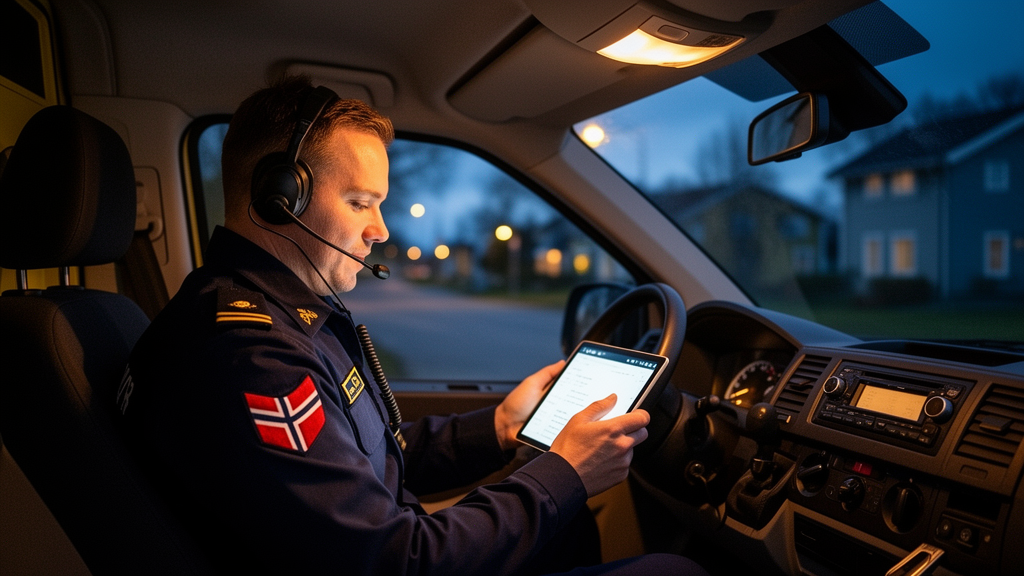
Norwegian paramedics see real potential in digital health technologies for handling non-emergency ambulance calls, but fragmented information systems and restricted access to patient records are holding them back, according to a qualitative interview study published in BMC Emergency Medicine.
Researchers conducted 12 semi-structured interviews with paramedics involved in Norwegian ambulance care, recruiting participants through purposive and snowball sampling. The interviews were audio-recorded, transcribed verbatim and analysed using reflexive thematic analysis following Braun and Clarke’s six-phase framework, with NVivo 15 and Microsoft Excel supporting data organisation.
The study’s context is a well-established Norwegian emergency care system facing an ageing population and rising prevalence of chronic disease, which the authors say creates a growing need to explore how digital tools could support decision-making in prehospital non-emergency situations. Technologies such as telehealth, remote monitoring, wearables, portable medical devices, communication platforms and artificial intelligence-based decision-support systems have shown promise elsewhere, yet their implementation in Norway remains limited.
Four themes emerged from the analysis. The first concerned digital support for call assessment and ambulance resource allocation. The second focused on digital patient information for shared situational awareness. The third addressed digital communication for interprofessional consultation and care coordination, and the fourth covered digital diagnostics for conveyance and non-conveyance decisions, a choice that determines whether a patient is transported to hospital or left in another care pathway.
Across these themes, participants reported concrete barriers: fragmented information systems, restricted access to patient records, limitations in communication technologies and insufficient diagnostic support.
At the same time, the paramedics identified a range of opportunities. These included video-supported assessment, interoperable patient information, real-time clinical data sharing, multiparty consultation and point-of-care diagnostics.
A key nuance in the findings is that the perceived value of these technologies was not automatic. Participants judged their usefulness as dependent on reliability, usability and integration with professional roles and healthcare services. A tool that works in isolation, or that conflicts with how paramedics actually work, was seen as offering little benefit.
The authors conclude that digital health technologies were perceived as having the potential to support decision-making in prehospital non-emergency situations by reducing uncertainty and supporting appropriate care pathways. They argue that digital transformation should prioritise integrated, context-sensitive systems that augment paramedics’ professional judgement, and note that such systems may enable timely, coordinated and patient-centred care while remaining responsive to evolving clinical needs and care environments.
As an exploratory qualitative study based on 12 interviews with Norwegian paramedics, the research captures perceptions and experiences rather than measuring clinical outcomes. It does, however, map in detail where paramedics believe digital support would help most, and which practical conditions, reliable information, interoperability, usable communication, diagnostic support and clear cross-service responsibilities, would need to be met for those benefits to materialise.
Subject of Research: Paramedics' perceptions of digital health technologies for prehospital non-emergency decision-making in Norway
Article Title: Challenges and opportunities in using digital health technologies for decision-making in prehospital non-emergency situations in Norway: a qualitative study
Article References: Pikkarainen, M., Saidi, T., Westnes, E., Gazerani, P., Korostynska, O., Pavel, N., & Häikiö, K. (2026). Challenges and opportunities in using digital health technologies for decision-making in prehospital non-emergency situations in Norway: a qualitative study. BMC Emergency Medicine. https://doi.org/10.1186/s12873-026-01811-5
Image Credits: AI Generated
DOI: 10.1186/s12873-026-01811-5
Keywords: digital health, paramedics, prehospital care, qualitative study, Norway, telehealth, decision support, interoperability, point-of-care diagnostics, emergency medicine, Challenges, opportunities
News Source: Ophelia Keating. (October 28, 2026). Digital tools could ease paramedic decisions in non-emergency calls, Norwegian study finds. Scienmag.