• HOME
  • NEWS
  • EXPLORE
    • CAREER
      • Companies
      • Jobs
    • EVENTS
    • iGEM
      • News
      • Team
    • PHOTOS
    • VIDEO
    • WIKI
  • BLOG
  • COMMUNITY
    • FACEBOOK
    • INSTAGRAM
    • TWITTER
Wednesday, October 28, 2026
BIOENGINEER.ORG
No Result
View All Result
  • Login
  • HOME
  • NEWS
  • EXPLORE
    • CAREER
      • Companies
      • Jobs
        • Lecturer
        • PhD Studentship
        • Postdoc
        • Research Assistant
    • EVENTS
    • iGEM
      • News
      • Team
    • PHOTOS
    • VIDEO
    • WIKI
  • BLOG
  • COMMUNITY
    • FACEBOOK
    • INSTAGRAM
    • TWITTER
No Result
View All Result
Bioengineer.org
No Result
View All Result
Home NEWS Science News Biology

Field Guide Aims to Make Vertebrate Sampling More Useful for Pathogen Research

by
October 28, 2026
in Biology
Reading Time: 2 mins read
0
Field Guide Aims to Make Vertebrate Sampling More Useful for Pathogen Research

Field Guide Aims to Make Vertebrate Sampling More Useful for Pathogen Research

Share on FacebookShare on TwitterShare on LinkedinShare on RedditShare on Telegram

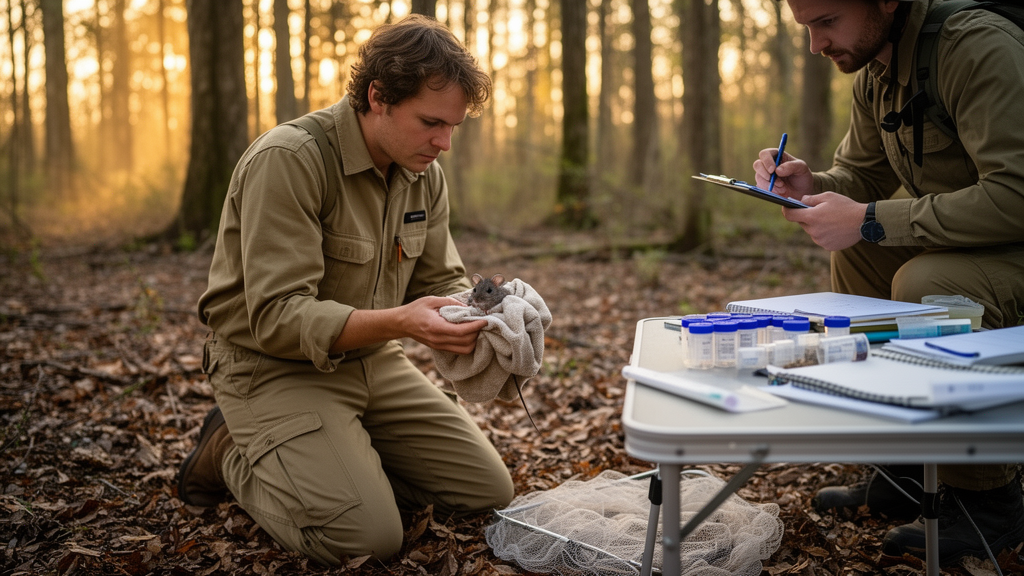
The review addresses a practical gap: natural history museums increasingly hold specimens relevant to pathobiology, yet standardized field protocols and datasheets are still needed to make the most of vouchers and associated samples gathered through both lethal and non-lethal approaches. Without such standardization, the authors contend, material collected in the field may fall short of what downstream laboratory analyses require.

To close that gap, the authors provide a comprehensive guide to optimizing vertebrate sample collection for downstream pathobiological applications. The guide covers a range of sample types, including whole blood, serum, swab samples such as cloacal and nasopharyngeal swabs, ectoparasites, and organ tissues, with recommendations tailored to both lethal and non-lethal sampling designs.

The authors also address the selection of appropriate storage buffers under varied field conditions, with the stated intention of preserving nucleic acids and immunological analytes, the molecular and immunological targets that laboratory assays depend on.

Recognizing that fieldwork rarely happens in ideal conditions, the review ranks collection methods according to two criteria: their pathobiological utility and their feasibility in resource-constrained or remote environments. This ranking is intended to help researchers working with limited budgets, equipment or infrastructure choose methods that still yield high-quality material for downstream assays.

The authors conclude that intentional, pathobiology-focused sampling significantly expands the scientific utility of biodiversity collections. They present scalable recommendations designed to let researchers navigate budgetary, logistical and biosafety constraints while ensuring high-quality material for laboratory testing, thereby promoting an interdisciplinary approach to global health monitoring.

As a review article, the paper synthesizes and organizes existing best practices rather than reporting new experimental results. Its recommendations are planning-oriented: they describe how samples should be collected and handled to support future analyses, not the outcomes of any particular study testing those methods in the field. The authors frame the work as a bridge between field biologists and pathobiologists, two communities whose priorities and constraints often differ.

The review is open access and carries a permanent DOI, with the published version noting that the article was shared early to provide faster access to peer-reviewed, accepted research and remains subject to further edits before the final Version of Record.

Subject of Research: Best practices for collecting and preserving vertebrate field samples for pathobiological research

Article Title: Optimizing pathogen-based sampling methods for vertebrate field research

Article References: Fitzgerald, K. E., Brook, C. E., Grewe, F., Ferguson, A. W., & Ruhs, E. C. (2026). Optimizing pathogen-based sampling methods for vertebrate field research. BMC Zoology. https://doi.org/10.1186/s40850-026-00289-9

Image Credits: AI Generated

DOI: 10.1186/s40850-026-00289-9

Keywords: pathobiology, vertebrate sampling, One Health, natural history museums, cold chain, specimen preservation, pandemic preparedness, wildlife conservation, field protocols, sample storage buffers, biodiversity collections, BMC Zoology

News Source: Kristina Jarvis. (October 28, 2026). Field Guide Aims to Make Vertebrate Sampling More Useful for Pathogen Research. Scienmag.

Tags: biodiversity collectionsBMC Zoologycold chainfield protocolsnatural history museumsOne HealthPandemic Preparednesspathobiologysample storage buffersspecimen preservationvertebrate samplingwildlife conservation
Share12Tweet7Share2ShareShareShare1

Related Posts

New method reads sequencing errors directly from overlapping reads to spot rare mutations

New method reads sequencing errors directly from overlapping reads to spot rare mutations

October 28, 2026
Optimized Fermentation Boosts Streptococcus suis Biomass for Inactivated Vaccine Testing

Optimized Fermentation Boosts Streptococcus suis Biomass for Inactivated Vaccine Testing

October 28, 2026

Endothelial protein CCDC92 found to restrain early atherosclerosis through STAT1 degradation

October 28, 2026

H&E Slide Spatial Features Explain Gene Expression Beyond Cell-Type Mix

October 28, 2026

POPULAR NEWS

  • How an industrial apparel brand stitches narrative into fabric, thread and label

    How an industrial apparel brand stitches narrative into fabric, thread and label

    29 shares
    Share 12 Tweet 7
  • New Open-Access Journal Biomedical Materials Science Launches to Link Materials Innovation with Patient Care

    29 shares
    Share 12 Tweet 7
  • Berberine Eases Diabetic Kidney Damage by Tuning a Renal Sugar-Transport Switch

    29 shares
    Share 12 Tweet 7
  • Palmitoylation Enzyme ZDHHC5 Emerges as Driver of Neutrophil Inflammation in COPD

    29 shares
    Share 12 Tweet 7

About

We bring you the latest biotechnology news from best research centers and universities around the world. Check our website.

Follow us

Recent News

AI pathology scoring flags longer survival on pembrolizumab in metastatic triple-negative breast cancer

New method reads sequencing errors directly from overlapping reads to spot rare mutations

From Nanoemulsion-Templated Drug Nanoparticles to Machine Learning Property Prediction: The Research Path of Lucas Attia

Subscribe to Blog via Email

Enter your email address to subscribe to this blog and receive notifications of new posts by email.

Join 85 other subscribers
  • Contact Us

Bioengineer.org © Copyright 2023 All Rights Reserved.

Welcome Back!

Login to your account below

Forgotten Password?

Retrieve your password

Please enter your username or email address to reset your password.

Log In
No Result
View All Result
  • Homepages
    • Home Page 1
    • Home Page 2
  • News
  • National
  • Business
  • Health
  • Lifestyle
  • Science

Bioengineer.org © Copyright 2023 All Rights Reserved.